
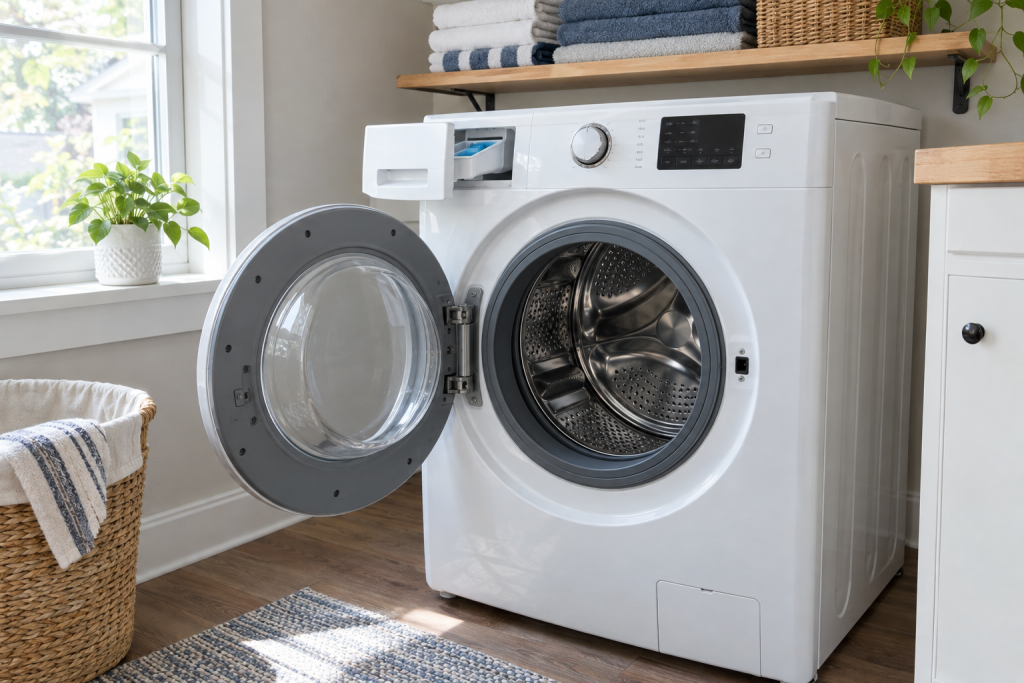
Cleaning a washing machine takes about an hour of hands-on work: wipe the door gasket, soak the detergent drawer, clear the drain pump filter, then run the hottest empty cycle with a cleaner, bleach, or vinegar. Do it once a month and the musty smell, grey residue, and black mildew flecks on your clothes stop showing up.
Quick steps: cleaning a washing machine
- Unplug the washer and pull the detergent drawer.
- Soak the drawer in hot water, scrub, and wipe the empty housing.
- Peel back the door gasket and wipe out the mildew and debris.
- Open the lower panel and empty the drain pump filter (front loaders).
- Run the Clean Washer or hottest cycle with a cleaner tablet, bleach, or vinegar.
- Run a plain hot rinse, wipe the drum dry, and leave the door open.
Tools and materials
- Washer cleaner tablets (Affresh, Tide, or store brand) or 1 cup chlorine bleach or 2 cups white vinegar
- Baking soda (1/2 cup, optional for vinegar method)
- Microfiber cloths (3-4)
- Old toothbrush or small grout brush
- Spray bottle with 1:1 vinegar and water
- Shallow pan or tray and a towel for the pump filter
- Rubber gloves
- Flathead screwdriver or putty knife for the access panel
Safety first
Unplug the machine before pulling the drawer or opening the pump filter. Never mix bleach and vinegar in the same cycle; the combination releases chlorine gas. Pick one, rinse, then use the other on a different day if you want both.
Step 1: Unplug the washer and pull the detergent drawer
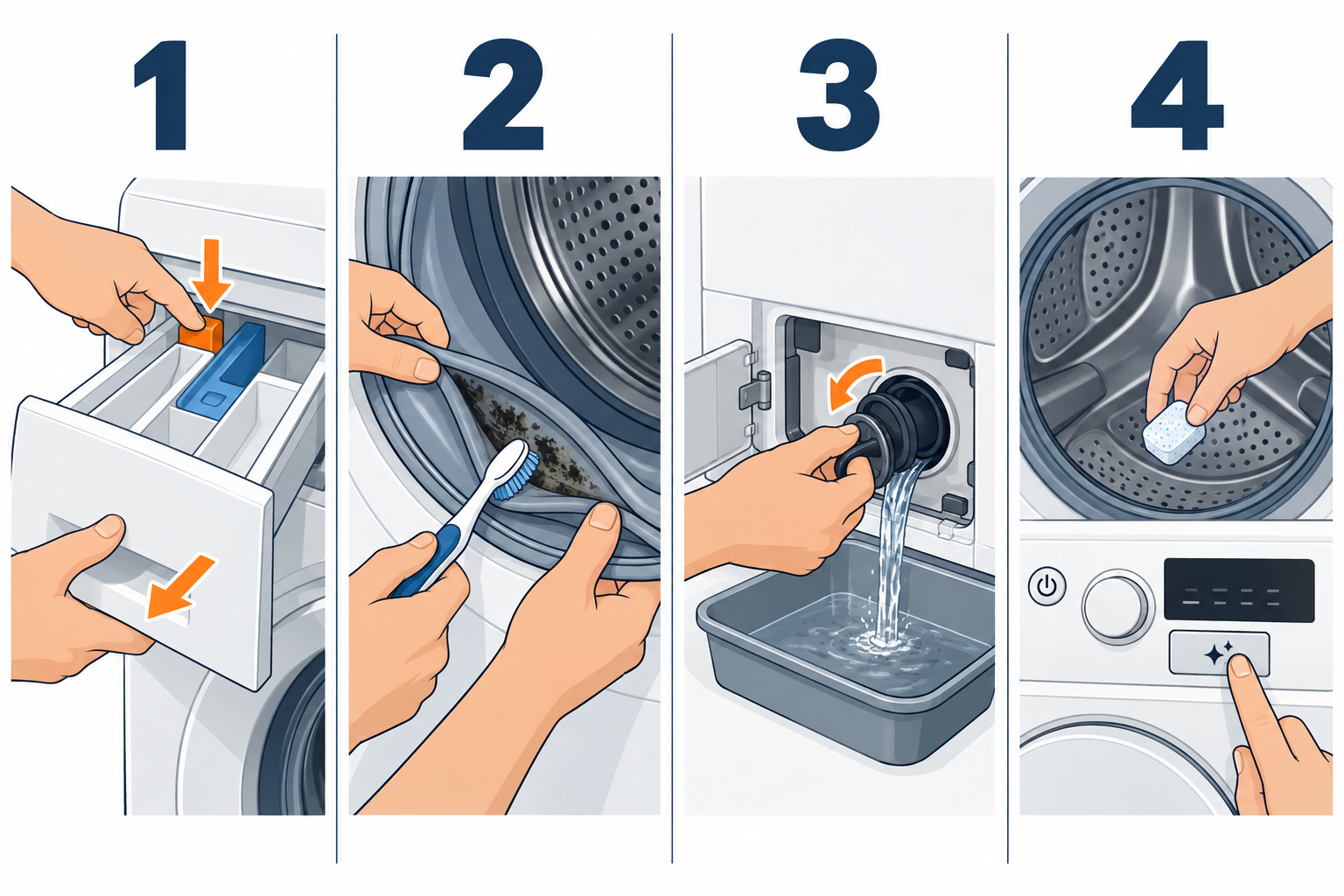
Pull the plug or flip the breaker so nothing starts while your hand is behind a panel. Then slide the detergent drawer all the way out. Most drawers have a release tab, usually a blue or grey tab in the fabric softener slot, that you press down to lift the drawer free.
Look at the back of the drawer and the roof of the slot. You will find a tan or black slime of dried detergent, softener, and mold. That buildup is the source of a surprising share of washer smells, and the main cycle never touches it.
On a top loader with a dispenser cup on the agitator, twist the cup off. If the dispenser is built into the lid, just note the slots. You will clean them with the toothbrush in the next step.
Step 2: Soak and scrub the drawer and housing
Drop the drawer in a sink of hot tap water with a squirt of dish soap. Let it sit 10 minutes. Scrub every channel with the toothbrush, especially under the softener siphon cap, which pops off. Dried softener in that siphon is why softener sometimes sits in the drawer unused.
While it soaks, spray the empty drawer housing with the vinegar solution and let it sit for five minutes. Reach in with a cloth wrapped over your finger and wipe the ceiling of the cavity. Mold lives up there where water sprays in. Use the toothbrush on the water jets at the top.
Dry the drawer with a cloth and slide it back only after the housing is wiped out. If you put a wet drawer into a wet housing, you are rebuilding the problem.
Pro tip
Skip fabric softener for a month after cleaning. It is the stickiest thing that goes through the dispenser and it coats the drum and gasket with a waxy film that feeds mildew. Wool dryer balls do the same job without the residue.
Step 3: Clean the door gasket (front loaders)
Open the door and pull the inner lip of the grey rubber gasket toward you. The fold at the bottom traps hair, coins, socks, and a slick black ring of mildew. Pull out any debris first. Then spray the fold with the vinegar solution, wait five minutes, and wipe with a cloth. Use the toothbrush on the drain holes at the bottom of the gasket so water can escape after the cycle.
If the black spots do not wipe off, they have stained the rubber. Lay a cloth soaked in a 1:4 bleach and water mix in the fold for 15 minutes, then wipe and rinse. Stains that survive that are permanent, and the gasket is still fine as long as it is not torn or crumbling.
Check the outer edge of the gasket where it meets the door glass. Wipe the glass too. Streaks there are detergent film, and they are a sign you are using more detergent than the machine needs.
Top loaders have no door gasket, but they do have a lip under the rim of the tub and under the lid. Wipe both with the vinegar cloth. Grime hides on the underside of the lid near the hinge.
Step 4: Empty the drain pump filter
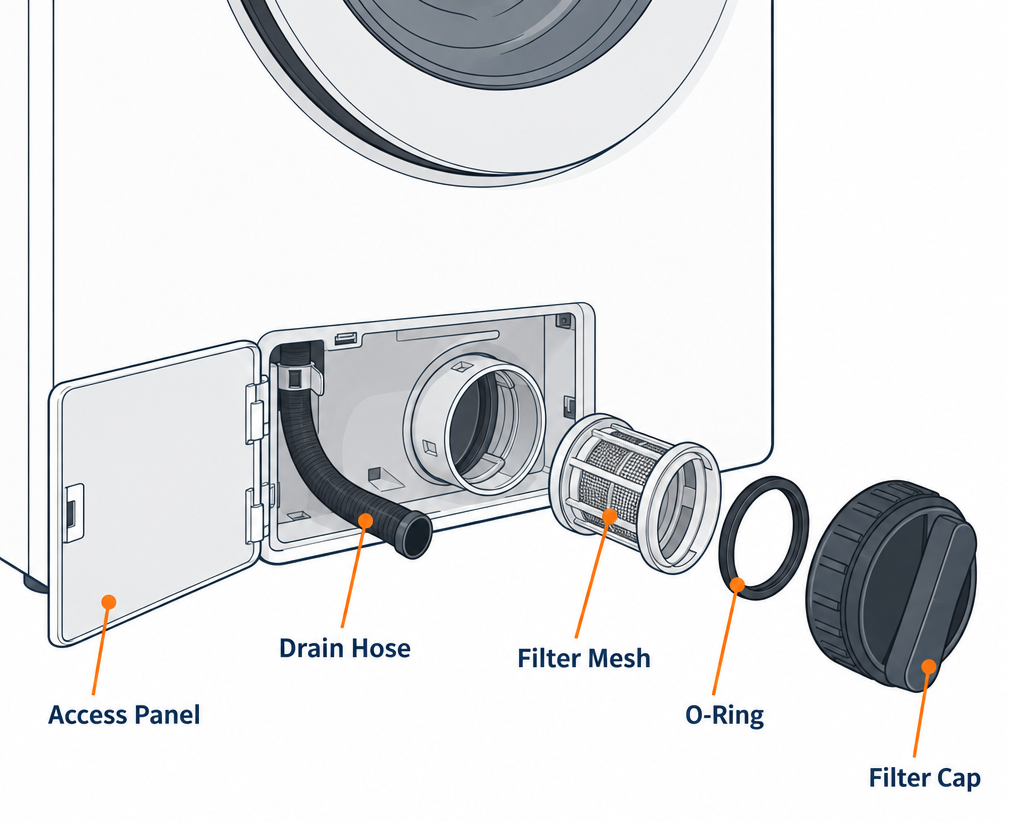
This is the step most people skip, and it is where the worst smells live. On a front loader, look for a small square or rectangular door at the bottom front of the machine, usually bottom right. Pop it open with a fingernail or a flathead screwdriver.
Behind it you will see a round cap with a handle, about the size of a hockey puck. Before turning it, lay a towel on the floor and put a shallow pan underneath. There is up to a quart of standing water in there. Many machines also have a short rubber drain hose with a plug next to the cap. Pull that out, remove its plug, and let it drain into the pan first.
Turn the cap counterclockwise and pull the filter straight out. Expect lint, hair, bobby pins, and a greasy coating that smells like a pond. Rinse it under the tap and scrub the slots with the toothbrush. Shine a flashlight into the opening and pull out anything the filter missed. Screw it back in hand tight, clockwise, until it stops. Overtightening cracks the plastic housing, and a cracked housing leaks every cycle.
Most top loaders have no user-accessible pump filter. A few newer models hide one behind a lower front panel. Check the manual before prying.
Pro tip
A loose or cross-threaded pump filter cap is the number one reason a front loader leaks from the bottom right corner after a cleaning. If you see water there on the next load, pull the cap, check the O-ring is seated, and reinstall it.
Step 5: Run the Clean Washer cycle with your cleaner
Plug the machine back in. Pick one cleaning method and run it with the drum empty.
Cleaner tablets. Drop one Affresh or Tide Washing Machine Cleaner tablet in the empty drum, not the drawer. Run the Clean Washer, Tub Clean, or Sanitize cycle. If your machine has none of those, pick the longest hot cycle with an extra rinse. A pack of 5-6 tablets runs $10-15 at a big box store, so each cleaning costs about $2. This is the method every major manufacturer lists in the owner’s manual, and it works better than anything in your pantry on heavy buildup.
Chlorine bleach. Pour 1 cup into the bleach dispenser or directly into the empty drum, then run the same hot cycle. Bleach kills mold on contact and costs pennies. It will not dissolve the waxy detergent scum as well as a tablet.
White vinegar and baking soda. Pour 2 cups of white vinegar into the detergent drawer or drum and run the hot cycle. When it finishes, sprinkle 1/2 cup baking soda into the drum and run a second hot cycle. Vinegar dissolves mineral scale and deodorizes, and the baking soda scrubs film off the drum. Keep the vinegar out of the rubber gasket fold between cycles. Vinegar is 5 percent acetic acid, which is mild, but soaking rubber in it month after month dries it out.
Whichever you use, the cycle runs 60-90 minutes on most machines. Do not add clothes. Do not add detergent.
Step 6: Rinse, wipe dry, and leave the door open
Run one more empty cycle on hot with nothing added. This flushes loosened gunk and leftover cleaner so it does not end up on your next load of white shirts. On a tablet, the manufacturer says a rinse is optional. After bleach, run the rinse.
Open the door and wipe the drum, the gasket fold, the door glass, and the drawer housing with a dry cloth. Leave the door and drawer cracked open from now on between loads. A closed front loader is a sealed, wet, dark box, and that is exactly what mildew needs.
The expected result is a drum that smells like nothing, a gasket that wipes clean and white or grey instead of slimy, and no grey flecks on the next dark load. If the smell is back in a week, something was skipped. Usually it is the pump filter or the drawer housing.
Front-load vs top-load differences
| Task | Front loader | Top loader |
|---|---|---|
| Door gasket | Clean every month, drain holes included | None; wipe tub rim and lid underside |
| Pump filter | User cap behind lower door, clean monthly | Usually not accessible |
| Dispenser | Pull-out drawer, soak monthly | Agitator cup or lid slots, scrub with brush |
| Cleaner placement | Empty drum | Fill tub on hot, add cleaner, let soak 30-60 min, then finish cycle |
| Between loads | Door and drawer open | Lid open |
Top loaders with an agitator hide grime under the agitator cap and in the gap between the inner basket and outer tub. If your top loader smells even after a cleaning cycle, fill it with hot water, add 1 cup bleach, pause the cycle for an hour, then let it finish. The long soak reaches the outer tub that the normal wash never flushes.
Why the smell comes back
Three things cause almost all washer mildew and buildup, and the cleaning cycle only fixes them temporarily.
Too much detergent is the big one. High-efficiency washers need 1-2 tablespoons of HE detergent for a normal load. The cap line on most bottles is two to three times that. The excess never rinses out and becomes food for mold.
Cold water washing is the second. Cold cycles save energy, but they never dissolve detergent fully and never reach the 140°F that kills mildew. Run one hot load a week, or run the cleaning cycle monthly.
A closed door is the third. Every front loader needs air between loads.
Troubleshooting
| Symptom | Likely cause | Fix |
|---|---|---|
| Musty smell returns within days | Pump filter or drawer housing skipped | Clean both, then run a second cleaner cycle |
| Black flecks on clean clothes | Mildew breaking off the gasket or outer tub | Bleach soak in gasket fold; run two back-to-back hot bleach cycles |
| Water on the floor after cleaning | Pump filter cap loose or O-ring unseated | Remove cap, reseat O-ring, tighten by hand |
| Softener sits in the drawer | Siphon cap clogged with dried softener | Pop cap off, soak and scrub, reassemble |
| Washer will not drain after filter cleaning | Filter installed off-thread or debris in pump impeller | Remove filter, check impeller spins freely, reinstall straight |
| Cleaning cycle does not get hot | Machine on cold water supply or heater failed | Check the hot valve at the wall is open; if water is still cold, the internal heater needs a repair |
| Smell is sewage, not mildew | Dry P-trap in the standpipe or drain hose pushed too far down | Pull hose up so it sits 4-8 inches into the standpipe; pour water down the standpipe |
A sewage smell near the washer is not a cleaning problem. If the standpipe is dry or the drain hose is pushed so far in that it siphons, you get sewer gas every time the drum empties. That fix belongs in a general washing machine repair job rather than a scrub-down.
While you are in the laundry room with the washer pulled out, look at the clothes dryer vent too. A lint-packed duct is a bigger hazard than a dirty washer and takes about the same amount of time to clear.
How often to clean a washing machine
Once a month is the standard most manufacturers print in the manual, and many machines flash a “Clean Washer” reminder after 30 cycles for that reason. Push it to every two weeks if you have a humid laundry room, wash cloth diapers or pet bedding, or run mostly cold cycles. A quick wipe of the gasket and a cracked-open door after every load does more over a year than any single deep clean.
When to call a pro
Call an appliance repair technician if the machine leaks from somewhere other than the pump filter cap, if the cleaning cycle never heats the water, if the drum smells burnt, or if the drain pump hums without draining. A worn outer tub bearing, a split gasket that you can see daylight through, or a failed heater element are all repair jobs, not cleaning jobs. Expect $150-400 for a gasket replacement and $300-400 for a pump.
FAQ
Can I clean a washing machine with vinegar and bleach together?
No. Mixing bleach and vinegar makes chlorine gas. Use one, run a plain hot rinse, and if you want the other, use it on a different cleaning day.
Is vinegar bad for a washing machine?
In monthly doses, no. Vinegar is a weak acid and rinses out. The concern is repeated soaking of rubber seals and hoses, so keep it to the cycle rather than leaving it pooled in the gasket, and do not pour it into every load.
How do I clean a washer that has no Clean Washer cycle?
Use the longest hot cycle, usually Whites, Heavy Duty, or Sanitize, with an extra rinse turned on. Add the cleaner to the empty drum. On a top loader, pause the cycle after the tub fills and let it soak for an hour before resuming.
Why does my washing machine smell like rotten eggs?
Sulfur smell is bacteria, not mildew, and it usually comes from the drain pump filter or a drain hose that has sunk too far into the standpipe and is siphoning. Clean the filter first, then check that the hose sits only 4-8 inches into the standpipe, or less if your manual says so (GE specifies no more than 5 inches on top loaders and Whirlpool no more than 4.5 inches).
Do cleaner tablets work better than homemade mixes?
On a lightly dirty machine, vinegar and baking soda do fine. On a machine with months of buildup, a tablet or bleach cycle wins. The tablets are formulated to dissolve detergent scum, which vinegar only softens.