
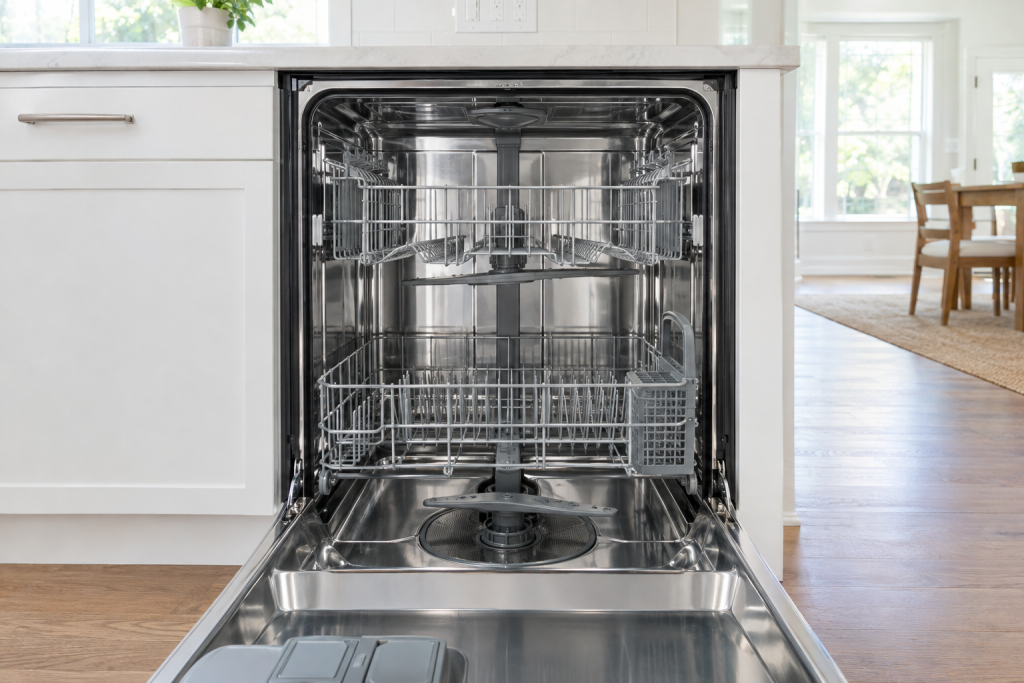
Pull the filter, scrub it under hot water, clear the spray arm holes, wipe the door gasket, then run an empty hot cycle with a cup of white vinegar or a dishwasher cleaner tablet. The whole job takes under an hour of hands-on time and costs almost nothing, and it fixes the two complaints that send most people searching: a sour smell and cloudy, gritty dishes.
Quick steps: dishwasher cleaning
- Empty the dishwasher and pull out the bottom rack.
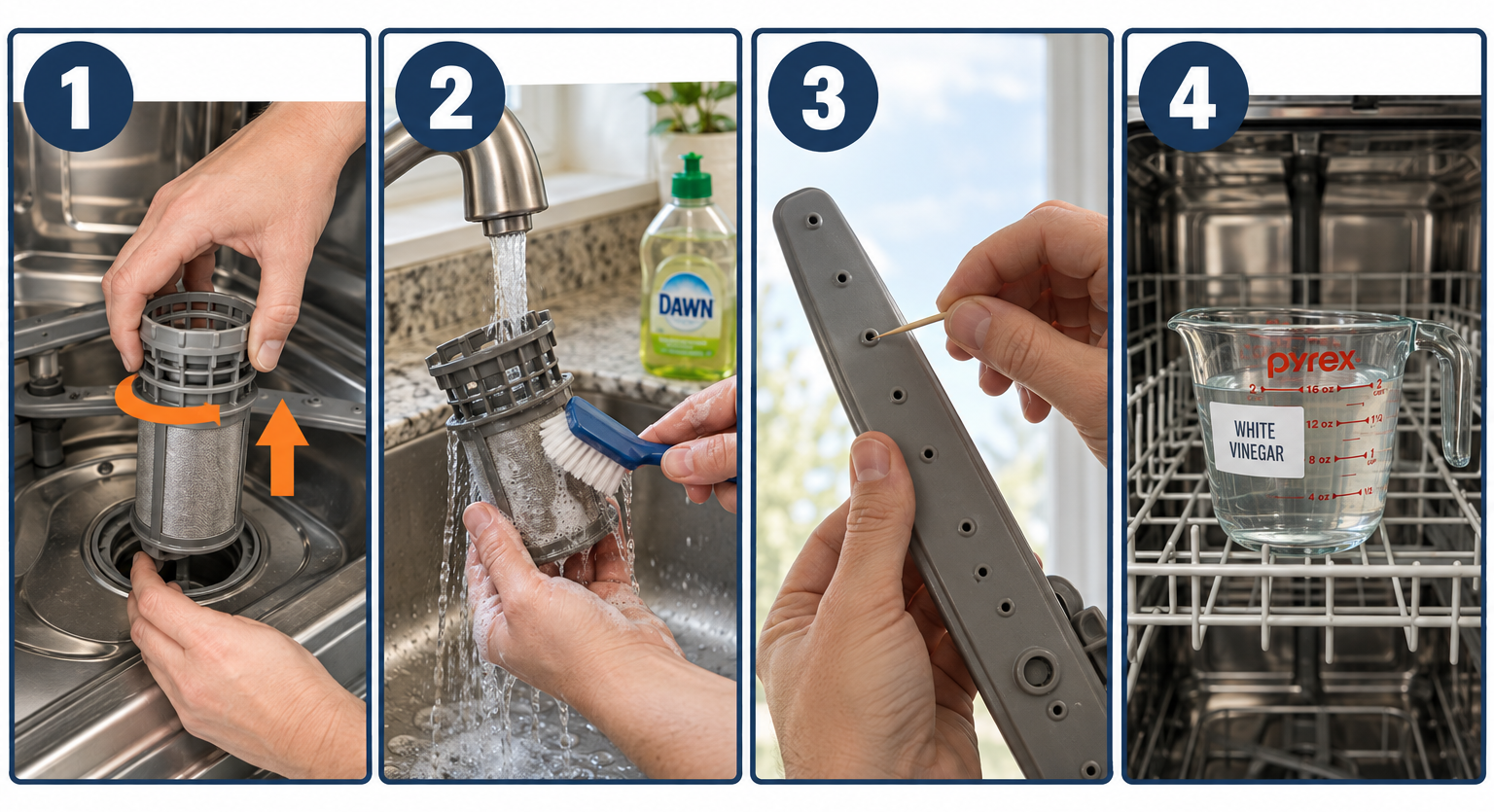
- Twist out the cylinder filter and scrub it with dish soap and a soft brush.
- Unclip the spray arms and poke out clogged holes with a toothpick.
- Wipe the door gasket, door edges, and detergent cup with a damp cloth.
- Run an empty hot cycle with 1 cup of white vinegar in a bowl on the top rack.
- Sprinkle 1 cup of baking soda on the floor and run a short hot cycle.
- Wipe the exterior with the grain if it is stainless steel.
Tools and materials
- Distilled white vinegar (1 cup, 5% acidity)
- Baking soda (1 cup)
- Dishwasher cleaner tablet, optional (Affresh, Finish, or Cascade Dishwasher Cleaner)
- Dish soap
- Soft-bristle brush or old toothbrush
- Wooden toothpick or thin wire
- Microfiber cloths (2-3)
- Dishwasher-safe glass measuring cup or bowl
- Stainless steel cleaner or a few drops of mineral oil for the exterior
Safety first
Let the machine cool before you reach inside after a cycle; the heating element and water can top 140°F. Never mix vinegar with bleach or run bleach in a stainless steel tub.
Step 1: Empty the dishwasher and clear the sump
Take out every dish and slide the bottom rack all the way out. Most racks lift off the rails once they clear the stops; set it in the sink. Now look at the floor of the tub. The round or rectangular grate near the back center is the sump cover, and the cylinder sticking up through it is the filter.
Pick out anything you can see: broken glass, pasta, a stray olive pit, the plastic label that peeled off a jar. Food that sits here is what makes a dishwasher smell like a drain.
Check the rack while it is out. Chipped vinyl coating on the tines will rust and leave orange spots on dishes. A rack repair kit with tine caps and touch-up paint typically costs $15-40 at major retailers and is a quick fix.
Step 2: Remove and scrub the filter
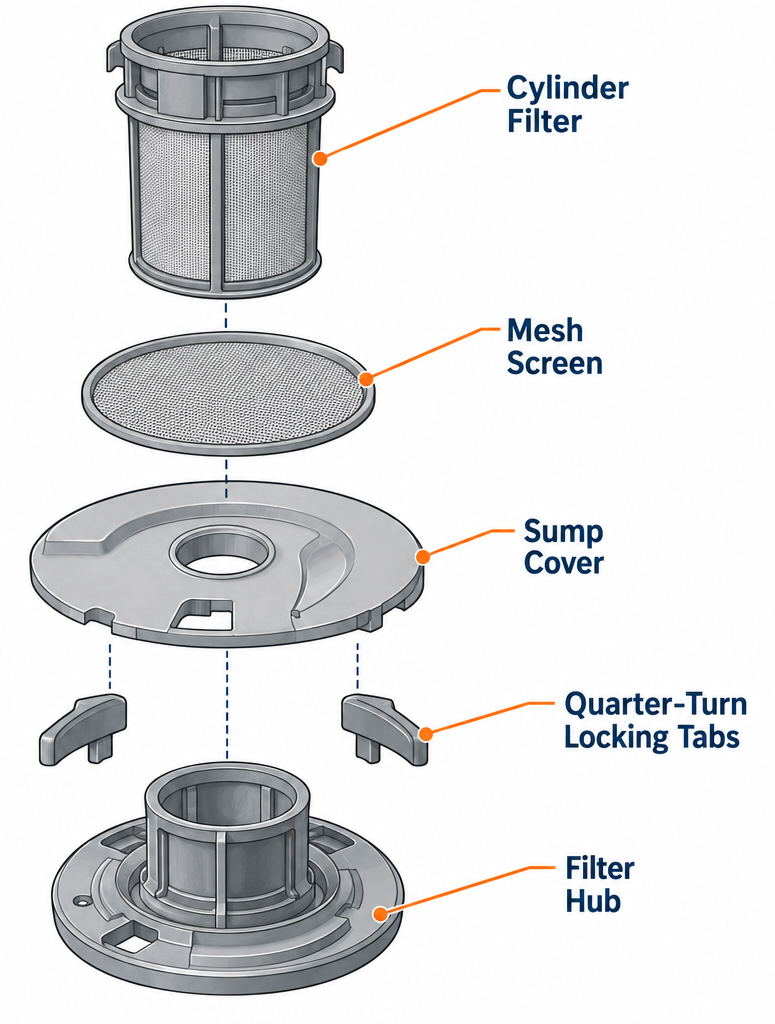
Nearly every dishwasher built in the last 15 years uses a manual-clean filter instead of a noisy hard-food grinder. On Bosch, Whirlpool, Samsung, LG, GE, and Frigidaire models the cylinder twists a quarter turn counterclockwise and lifts straight out. Under it sits a flat mesh screen that also lifts out on most models.
Run both under hot tap water. Squirt dish soap on a soft brush and scrub inside the cylinder, where a slimy brown film builds up. Rinse until water runs clear through the mesh. If the screen has greasy, caked-on residue, soak it for 10 minutes in hot water with a tablespoon of dish soap first.
Seat the flat screen, then drop the cylinder back in and twist clockwise until it locks. Pay attention here. A filter that is not fully locked lets food bypass into the pump, and that is the number one cause of a dishwasher that suddenly stops draining.
Pro tip
Keep a cheap toothbrush in the cabinet under the sink and rinse the filter every Sunday while the coffee brews. Thirty seconds a week means you never have to do the deep scrub.
Step 3: Clean the spray arms
The lower spray arm usually lifts straight off a center hub or unscrews with a plastic nut. The upper arm under the top rack is held by a snap-fit collar or a thumb screw. Check your model’s manual if it resists; forcing it cracks the hub.
Hold each arm up to the light. Every hole should show daylight. Push a toothpick through any that are blocked and shake out the grit. Hard water scale narrows the holes gradually, so dishes on the top rack come out dirtier while the bottom rack looks fine. Soak scaled arms in a bowl of vinegar for 20 minutes before you clear them.
Spin the arms on their hubs when you reinstall them. They should turn freely with a flick of a finger.
Step 4: Wipe the gasket, door edges, and dispenser
Open the door fully and look at the rubber gasket around the tub opening. Wipe it with a damp microfiber cloth and a drop of dish soap, and pull the fold back gently to clean the groove. Black spots are mildew. Scrub them with a toothbrush dipped in a 50/50 vinegar and water mix.
The bottom edge of the door, below the gasket, never gets sprayed during a cycle. It collects a surprising amount of greasy sludge. Same for the hinge area at the door corners. Wipe all of it.
Pop open the detergent dispenser and brush out caked tablet residue. A dispenser that will not snap closed usually has a crumb of old detergent wedged in the latch. Wipe the rinse-aid cap too, and top up the reservoir while you are there.
Step 5: Run a vinegar cycle or use a dishwasher cleaner
Fill a dishwasher-safe glass measuring cup with 1 cup of white vinegar and set it upright on the top rack. Leave the machine otherwise empty. Run the hottest, longest normal cycle, with heated dry off. The vinegar dissolves mineral scale and cuts grease on the tub walls and under the racks.
Prefer a product? Dishwasher cleaner tablets like Affresh work differently. They contain citric acid and surfactants that slowly dissolve over the cycle and target the same limescale and grease. Drop one tablet in the bottom of the empty tub, not the dispenser, and run a normal hot cycle. A box of six runs $6-9 at most grocery stores, so each cleaning costs about a dollar.
Do not pour vinegar directly into the sump or the detergent cup. Appliance makers caution that repeated contact with straight vinegar can harden rubber seals and hoses over years of use. A cup in a bowl once a month is fine; weekly direct dosing is not.
Pro tip
Run the kitchen sink hot for 30 seconds before you start any cleaning cycle. The dishwasher fills with whatever temperature is sitting in the pipe, and cold water does half the job.
Step 6: Deodorize with baking soda
Once the vinegar cycle finishes, sprinkle 1 cup of baking soda evenly across the floor of the tub. Run a short, hot cycle, such as a quick wash or rinse and hold with heat. Baking soda neutralizes the sour odor the acid leaves behind and lifts light staining on the tub floor.
Open the door when the cycle ends and let the interior air-dry for an hour. A dishwasher that sits closed and wet between loads is a dishwasher that smells.
Step 7: Clean the exterior and control panel
For a stainless steel door, spray a microfiber cloth with a stainless cleaner, or use warm water with a drop of dish soap, and wipe with the grain. The grain runs horizontally on most dishwasher doors. Dry with a second cloth, again with the grain, to prevent streaks. A pea-sized drop of mineral oil on a cloth buffs out fingerprints and leaves a finish that resists them for a week or two.
Skip abrasive pads and chlorine-based sprays on stainless; both leave permanent marks. Plastic and painted doors clean fine with soapy water.
Wipe the control panel with a barely damp cloth. Spray cleaner directly on touch controls and it wicks behind the membrane, which is how you end up with a phantom “start” button.
What a clean dishwasher looks like
After the full job, the interior should smell of nothing, the tub floor should show bare steel or plastic with no gray film, and a glass run through the next normal load should come out clear with no grit on the rim. If it does not, run through the troubleshooting table below.
Troubleshooting
| Symptom | Likely cause | Fix |
|---|---|---|
| Still smells after cleaning | Food trapped in drain hose loop or garbage disposal knockout | Run the disposal with cold water and ice; check the hose high loop under the sink |
| Cloudy white film on glasses | Hard water scale, not dirt | Add rinse aid, use a dishwasher cleaner monthly, consider a water softener |
| Gritty residue on dishes | Filter not locked or spray arm holes clogged | Reseat the filter until it clicks; clear spray arm holes with a toothpick |
| Standing water in the tub after a cycle | Clogged sump or drain hose, or disposal knockout plug still in place | Clear the sump; if the disposal is new, knock out the plug |
| Rust spots on dishes | Chipped rack tines | Install a rack repair kit with tine caps |
| Top rack dishes dirty, bottom clean | Upper spray arm clogged or not spinning | Remove, soak in vinegar, clear holes, check it spins freely |
| Detergent tablet left in the cup | Dispenser blocked by a dish, or water too cold | Load tall items away from the door; run the sink hot first |
The same logic applies to your “washing machine.” Detergent residue, a dirty gasket, and a closed wet drum cause the identical smell, and the fix is nearly the same.
When to call a pro
Water pooling under the machine, a drain pump that hums but will not drain after the sump is clear, error codes that persist after a power reset, or a burning smell point to a failed pump, heating element, or leaking door seal. Call an appliance repair technician. If the dishwasher is hard-wired and the problem is electrical, that work belongs to a licensed electrician.
FAQ
What is the best way to clean the inside of a dishwasher?
Clean the filter and spray arms by hand first, then run an empty hot cycle with a cup of vinegar on the top rack or a dishwasher cleaner tablet in the tub. The hand-cleaning matters more than the cycle. A cleaning cycle cannot push through a filter packed with food.
How does dishwasher cleaner work?
Most tablets and liquid cleaners use citric acid or similar mild acids to dissolve calcium and magnesium scale, plus surfactants that loosen grease from the tub, racks, and hidden plumbing. The product dissolves slowly across a full hot cycle so it reaches the sump, pump, and drain hose, areas you cannot wipe by hand.
What is soaking clean on a dishwasher?
Soaking clean, sometimes labeled “soak and scrub” or “pots and pans,” is a cycle that adds a pre-soak phase. The machine fills, sprays briefly, then pauses for several minutes so baked-on food softens before the main wash. It is for heavily soiled cookware, not for cleaning the dishwasher itself. Use the hottest normal cycle for that.
How long do dishwashers usually last?
Roughly 10 years is the common lifespan, with budget models often giving up around 7-8 and well-built units lasting 12 or more. Monthly cleaning, keeping the filter clear, and running hot water before each load are the three habits that push a dishwasher toward the long end of that range, because they keep the pump and heating element from working against scale and debris.