
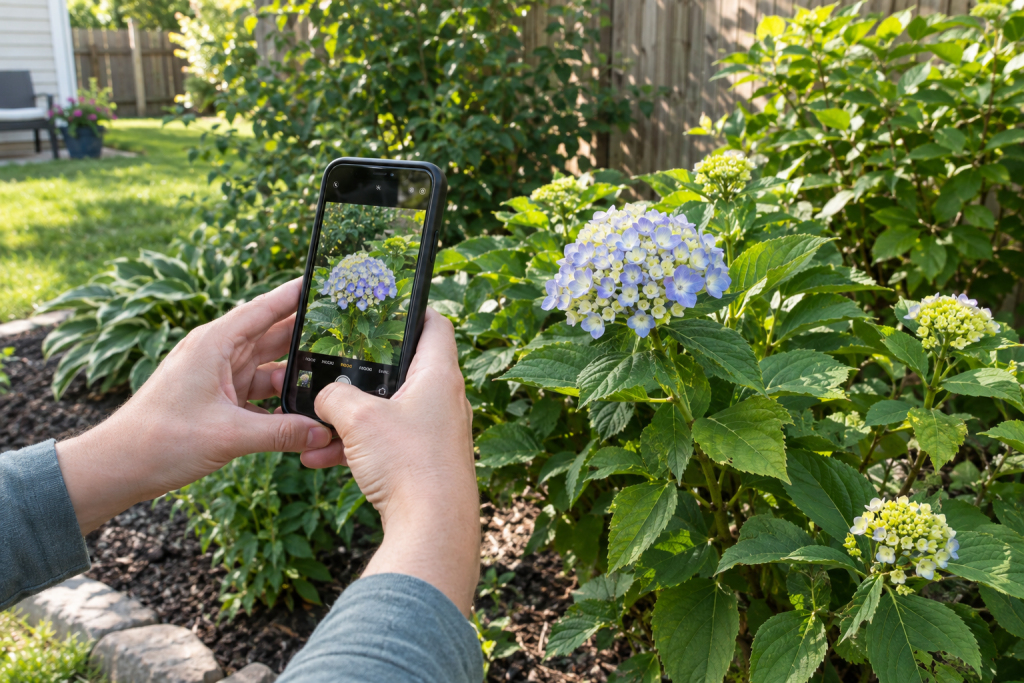
To find out what a plant is, photograph the flower, a leaf, and the whole plant, then run the pictures through a free identifier like Pl@ntNet, Google Lens, or iNaturalist. Treat the app’s top answer as a guess, confirm it against two or three physical traits, and you’ll have a reliable name in a few minutes. Below is the exact process I use, plus how to get a human expert to settle it for free when the apps disagree.
Quick steps: name an unknown plant
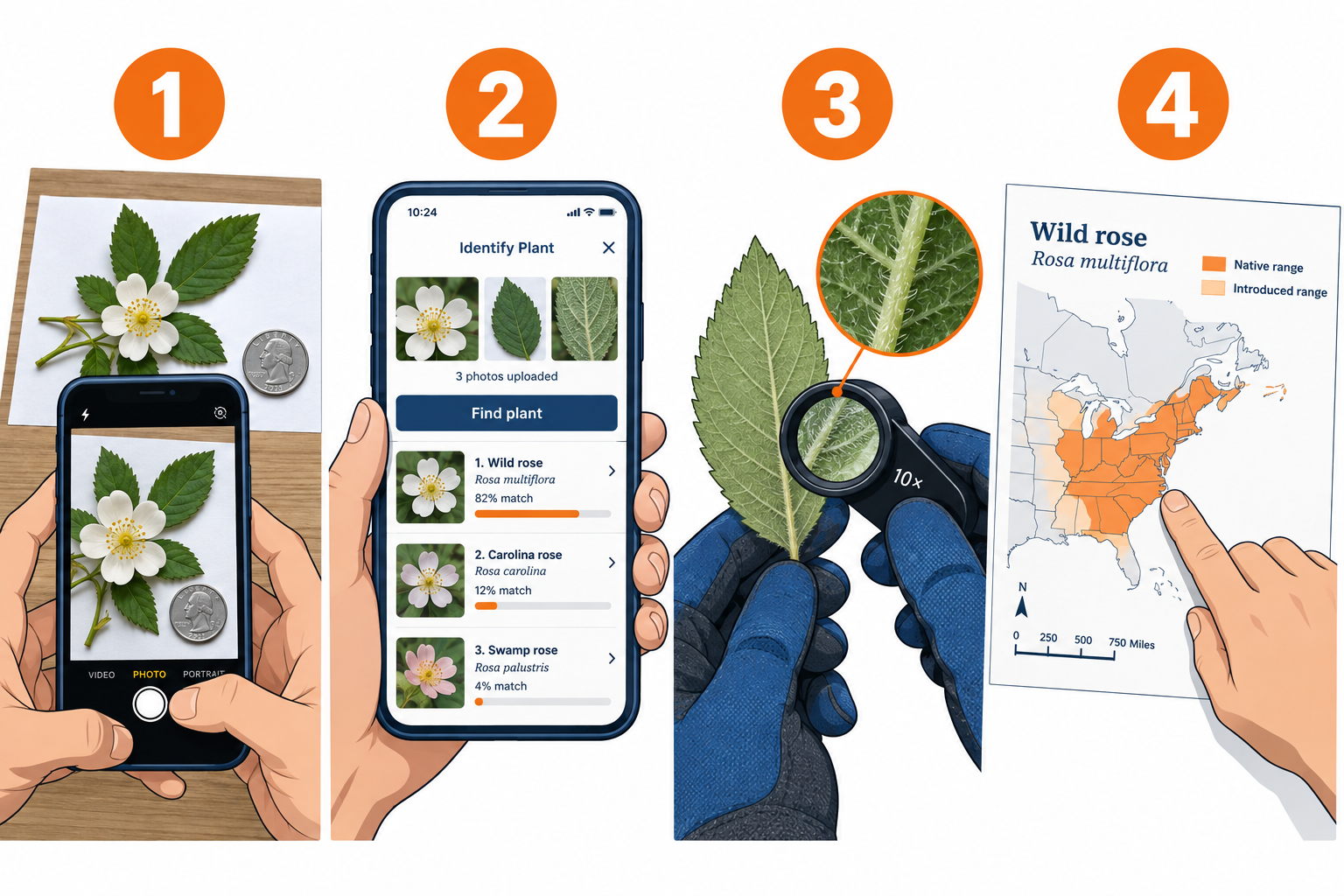
- Shoot four photos: flower, leaf (top and underside), stem or bark, whole plant.
- Upload to a free identifier (Pl@ntNet, Google Lens, or iNaturalist).
- Note the top two or three suggestions, not just the first.
- Check leaf arrangement, flower parts, and smell against each suggestion.
- Confirm the species actually grows in your region.
- Still unsure? Post to iNaturalist or email your extension office with the photos.
Tools and materials
- Smartphone with a decent camera (any model from the last 5 years)
- A coin or 6-inch ruler for scale in photos
- Sheet of plain white paper as a photo background
- 10x hand lens or loupe (optional, $5-10, for hairs and flower parts)
- Nitrile gloves if you plan to touch an unknown plant
- Zip-top bag for a leaf or flower sample
Safety first
Don’t touch or taste an unknown plant bare-handed. Poison ivy, poison oak, giant hogweed, and wild parsnip cause rashes or chemical burns from sap, and some common ornamentals are toxic to kids and pets. Wear gloves, and wash with soap and cool water if you contact any sap.
Step 1: Take photos that an app can actually read
Most bad identifications start with one blurry photo of the whole bush from six feet away. Apps match specific organs, so give them specific organs. I take these four shots every time:
- The flower, straight on, filling at least half the frame. Then a second shot from the side so the sepals and shape of the base show.
- One leaf, top and underside, laid flat on white paper with a coin beside it for scale.
- The stem or bark up close. Hairy, square, ridged, or smooth stems narrow things down fast.
- The whole plant with something in the frame for size, like your shoe or a fence post.
Shoot in daylight, tap the screen to focus on the part you want, and step back rather than zooming in digitally. If there’s fruit, seed pods, or berries, photograph those too. For trees, add a shot of the bud or twig in winter, because bare branches are what the app has to work with.
Pro tip
Photograph the leaf underside every time. Hair, vein pattern, and color on the back of a leaf separate look-alikes that match perfectly from the top, like black cherry (fuzzy brown hairs along the midrib) and chokecherry (hairless).
Step 2: Run the photos through a free identifier
These are the tools I trust, and all of them have a genuinely free tier:
Pl@ntNet is my first stop for wild plants and garden plants alike. It’s built by French research institutes and funded as a citizen science project, so there is no paywall and no trial clock. You tell it which organ you photographed (flower, leaf, fruit, bark), and it returns ranked matches with a confidence score. It also lets you pick a regional flora, which cuts down on matches from the wrong continent.
Google Lens is already on your phone if you have the Google app or an Android camera. It’s fast and surprisingly good on common garden and houseplants. It’s weaker on wild plants and grasses, and it tends to answer confidently even when it shouldn’t.
iNaturalist combines an automatic suggestion with a community of real botanists who review your observation. The computer vision guess comes up in seconds, and a human often confirms or corrects it within a day. The companion app, Seek, works without an account and is good for kids.
iPhone Visual Look Up works on any photo you’ve already taken. Swipe up on the picture in Photos and tap the leaf icon if it appears. It’s convenient but less accurate than the dedicated apps.
PictureThis and Plant.id are polished and accurate, but they run on a subscription after a short free trial. I use them when the free tools disagree, then cancel. Plant.id in particular is an API aimed at developers, so its web interface gives a handful of free trial identifications and then expects payment.
Upload the same photos to two different tools. If Pl@ntNet and iNaturalist agree on a species, I’m usually done. If they disagree at the species level but agree on the genus, I move to Step 3.
Step 3: Confirm with physical traits, not just the photo match
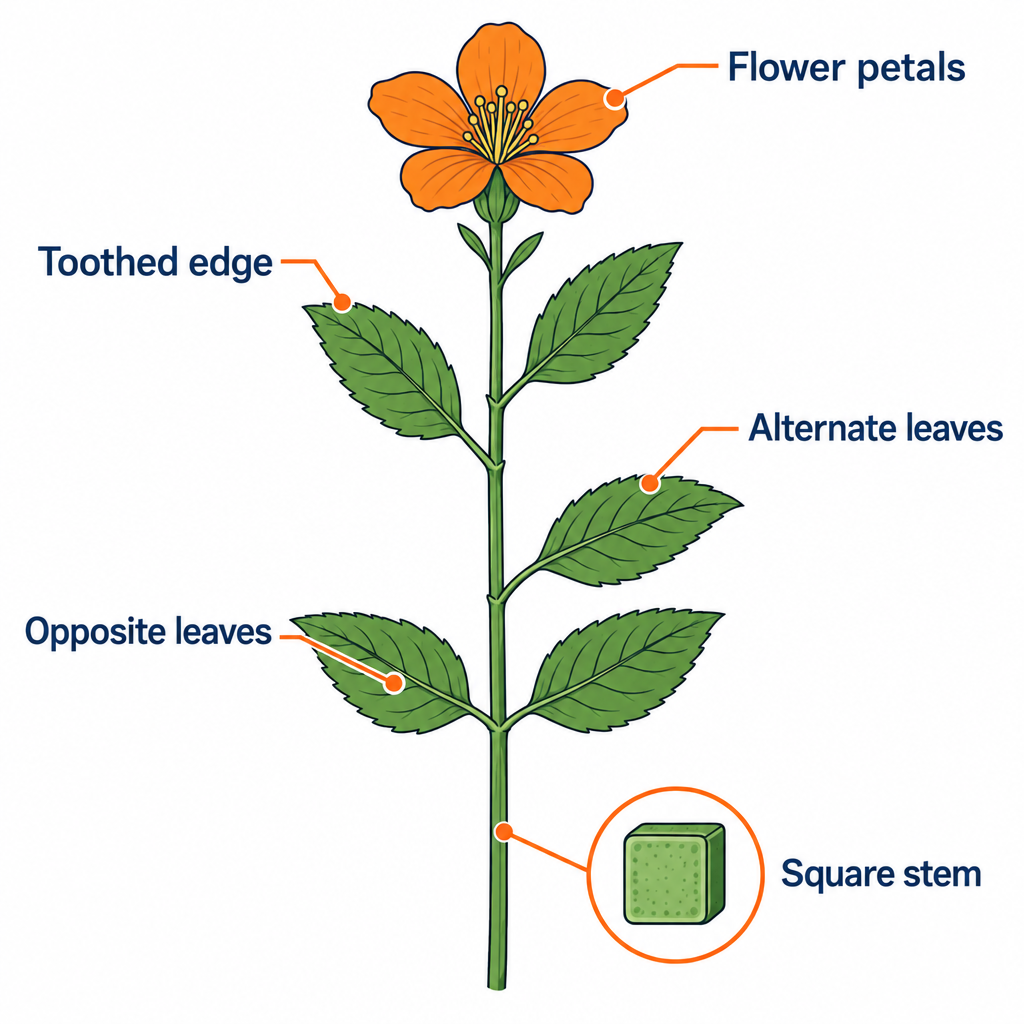
An app gives you a candidate. The plant itself gives you proof. Check these features against a description of the suggested species:
Leaf arrangement. Look at where leaves attach to the stem. Opposite (two leaves per node, directly across), alternate (staggered), or whorled (three or more at one node). This single trait eliminates huge groups. Maples, ashes, dogwoods, and honeysuckles are opposite; most everything else is alternate.
Leaf shape and edge. Simple or compound (one blade or several leaflets on a single stalk). Smooth edge, toothed, or lobed. Count the leaflets on compound leaves. “Leaves of three, let it be” is the poison ivy rule for a reason.
Flower parts. Count petals. Three or six usually means a monocot (lilies, irises, orchids). Four or five means a dicot. Look at whether petals are separate or fused into a tube, and whether the flower is symmetrical like a daisy or lopsided like a snapdragon.
Stem. Square stems with opposite leaves almost always mean the mint family. Roll the stem between gloved fingers to feel it.
Smell. Crush a leaf (gloved) and sniff. Mint, onion, lemon, and the resinous scent of the herb rosemary are unmistakable. Carrot-family plants like wild parsnip smell of parsley.
Hairs, spines, and sap. Milky sap points toward milkweed, spurge, or dandelion relatives. A 10x hand lens shows hairs you’d never see otherwise.
This is also where “what type of flower is this” questions get answered. A big single bloom with five overlapping petals, a long central column of fused stamens, and glossy toothed leaves is a hibiscus, and the same traits separate hibiscus flowers from the hollyhocks and mallows apps often confuse them with.
Pro tip
Use a known plant as your calibration test. Photograph something you already recognize, like a spider plant on the windowsill or a dandelion in the yard, and see which app nails it. Whichever tool gets your test plants right is the one to trust on the unknown ones.
Step 4: Check that the species lives where you are
Apps are trained on worldwide photos, so they’ll happily suggest a Mediterranean shrub for a plant growing in Minnesota. Once you have a candidate, look up its range.
Pl@ntNet shows a distribution map for each species. iNaturalist shows a map of verified observations, which is the fastest way to see whether anyone within 100 miles has ever recorded it. In the US, the USDA PLANTS database maps every native and naturalized species by county, and it’s free.
If the species has no records anywhere near you, go back to the app’s second or third suggestion. Garden plants are the exception, since nurseries sell plants far outside their native range, but wild plants in a field, ditch, or woodlot should match the regional flora.
Also note the date. Bloom time is a trait. A yellow daisy-like flower in late September is far more likely a goldenrod or sunflower relative than a spring species that looks similar in photos.
Step 5: Ask a human when the tools disagree
Some plants are genuinely hard. Grasses, sedges, willows, asters, and anything without a flower can stump every app. These free options get you a real expert:
iNaturalist community. Post the observation with all four photos and location. Mark the app’s suggestion as “needs ID.” Experts in your region browse new observations and often respond within hours. Once at least two identifiers have weighed in and more than two-thirds of them agree on a species-level ID, the record becomes “research grade.”
County extension office. Nearly every US county has a Cooperative Extension office tied to the state land-grant university, and most run a Master Gardener help desk. Email the photos or drop off a sample in a zip-top bag. They answer identification questions for free, and they know the local weeds, natives, and invasives cold.
Facebook groups and Reddit. Groups like r/whatsthisplant get fast answers. Quality varies, so I only count an answer that two independent people agree on and that explains the diagnostic trait.
Local garden center or botanical garden. Bring a fresh sample. Staff at a good independent nursery see the same regional plants all year and often know the cultivar, not just the species.
When you post, include the location (state and habitat at minimum), the date, and whether the plant was planted or came up on its own. “Volunteer in a mulched bed, central Ohio, blooming mid-June” gets a better answer than a bare photo.
Troubleshooting
| Symptom | Likely cause | Fix |
|---|---|---|
| App gives a different answer every time | Photos too far away, poor lighting, or no flower | Reshoot one organ per photo, close up, in daylight; add the leaf underside |
| Two apps disagree at species level | Look-alike species within one genus | Compare leaf hairs, stem texture, and range map for each candidate |
| Suggested species doesn’t grow in my region | Worldwide training data | Check USDA PLANTS or iNaturalist map; try the next suggestion |
| Plant has no flowers and apps fail | Grasses, sedges, seedlings, winter twigs | Wait for bloom, or post to iNaturalist and your extension office with twig and bud photos |
| Houseplant matches many similar names | Cultivars of one species | Accept the species name; cultivar names rarely matter for care |
| Result says poison hemlock or Queen Anne’s lace | Dangerous look-alike pair | Hemlock has smooth, purple-blotched stems; Queen Anne’s lace has hairy green stems. Don’t touch either until sure |
Keep the ID once you have it
Write the botanical name, not just the common name, on a plant tag or in a notes app with the date and location. Common names overlap badly. “Black-eyed Susan” refers to at least two different genera depending on who’s talking, and “bluebell” means something different in Texas, Virginia, and England. The Latin binomial is the one name every reference, nursery, and disease guide agrees on.
If you’re identifying plants in your yard, keep a running list. A season of observations tells you what’s native, what’s an invasive you should pull, and which volunteers are worth keeping.
When to call a pro
Call Poison Control (1-800-222-1222) immediately if a child or pet has eaten any part of an unidentified plant; bring a sample or photo. Contact a certified arborist if the unknown plant is a large tree showing dieback, fungus at the base, or leaning, since that’s a safety question, not just an ID. Report suspected noxious weeds like giant hogweed or kudzu to your state department of agriculture, and send diseased crop or landscape samples to your state extension plant diagnostic lab, which typically charges a modest fee.
FAQ
What is the name of this plant if I only have a leaf?
You can still get close. Photograph the leaf flat on white paper, top and underside, with a coin for scale, and upload it to Pl@ntNet with “leaf” selected as the organ. Expect a genus-level answer for many plants. For a species-level name, wait for a flower or ask an extension office with a physical sample.
Which free plant identifier is most accurate?
In my experience Pl@ntNet and iNaturalist are the most accurate free options, and iNaturalist has the added advantage of human review. Google Lens is the most convenient and does well on common garden and houseplants. Run two of them and compare.
Can an app tell me what type of flower this is from a bouquet?
Usually, yes. Florist flowers like roses, lilies, alstroemeria, and chrysanthemums are heavily photographed and apps recognize them well. Shoot one bloom close up and a leaf if any are attached. Hybrid cultivars won’t get a cultivar name, only the species or genus.
How do I identify a plant disease or pest?
Photograph the damaged leaf top and underside plus the whole plant, then search by host plant and symptom rather than relying on a photo match. Your state extension service publishes fact sheets for common diseases by crop, and their plant diagnostic lab will test a mailed sample.
Is it safe to touch a plant while I’m identifying it?
Wear nitrile gloves until you know what it is. The common rash and burn plants in the US are poison ivy, poison oak, poison sumac, wild parsnip, and giant hogweed, and the burn from the last two is triggered by sunlight on the sap. Wash exposed skin with soap and cool water within minutes.