
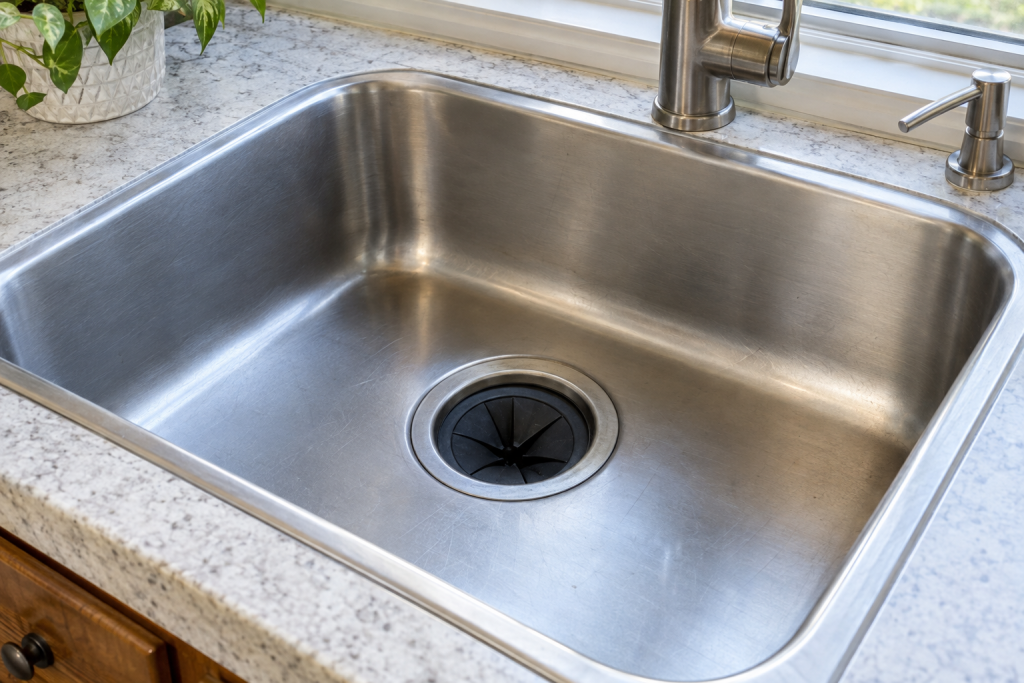
To clean a sink disposal, scrub the underside of the rubber splash guard, grind a tray of ice cubes with a half cup of rock salt, then flush with baking soda, vinegar and cold water. The whole job takes about 15 minutes with things you already have, and it clears the sour smell that most people blame on the “blades” when it is really trapped food under the baffle.
Quick steps: clean a garbage disposal
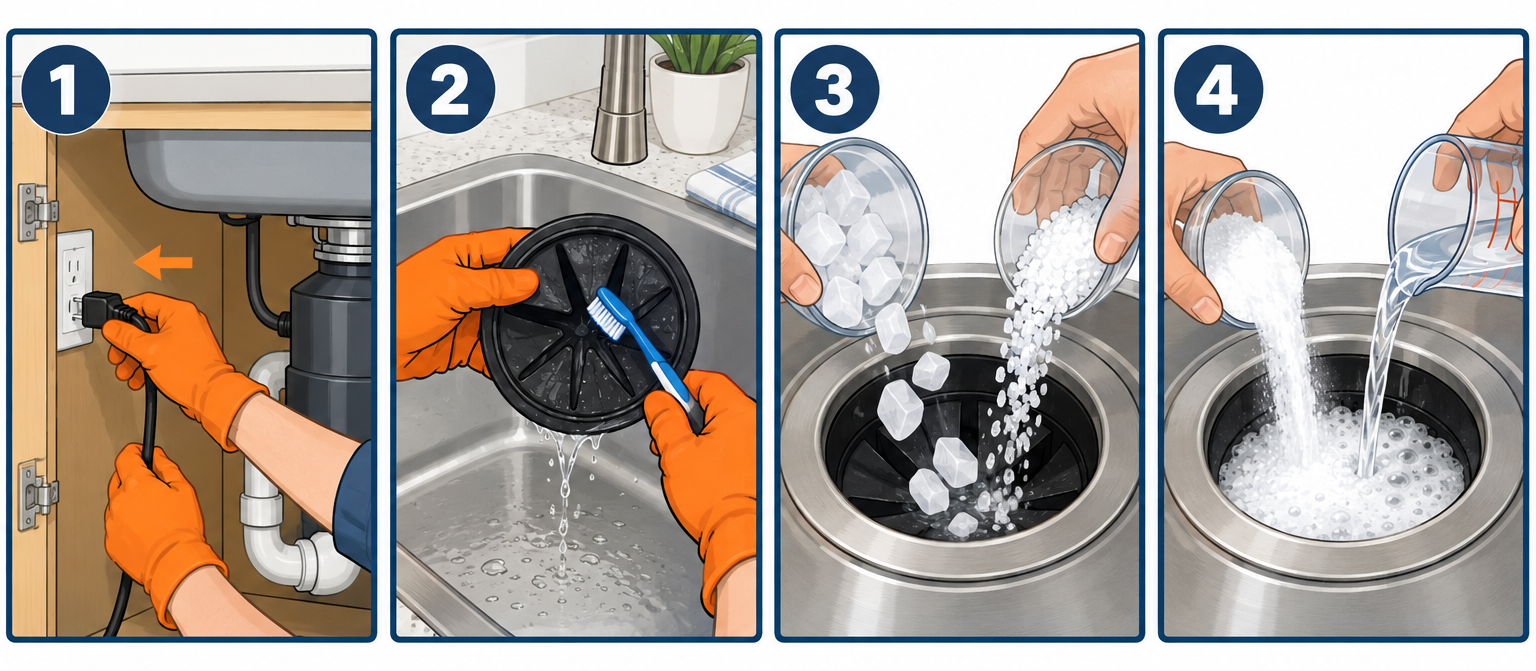
- Unplug the disposal or flip its breaker off.
- Pull up the splash guard and scrub both sides with dish soap.
- Scrub the grind chamber walls with a long-handled brush.
- Restore power, drop in 2 cups of ice and 1/2 cup rock salt, run with cold water.
- Pour in 1/2 cup baking soda, wait 5 minutes, add 1 cup white vinegar.
- Flush with cold water for 30 seconds, then grind citrus peels.
- Check under the sink for drips while you are down there.
Tools and materials
- Dish soap (any brand)
- Old toothbrush or a 2-inch bottle brush
- Long-handled dish brush or a disposal brush (about 10 inches)
- Ice cubes (about 2 cups)
- Rock salt or coarse kosher salt (1/2 cup)
- Baking soda (1/2 cup)
- White vinegar (1 cup)
- Lemon, lime or orange peels
- Flashlight
- Rubber gloves
- Optional: disposal cleaner pods such as Affresh or Glisten
Safety first
Cut power before you put a hand or brush anywhere near the drain opening. Unplug the cord under the sink, or switch off the breaker if it is hardwired. Test by flipping the wall switch; nothing should hum. Never reach into a disposal with the power on.
Step 1: Kill the power and find the real smell
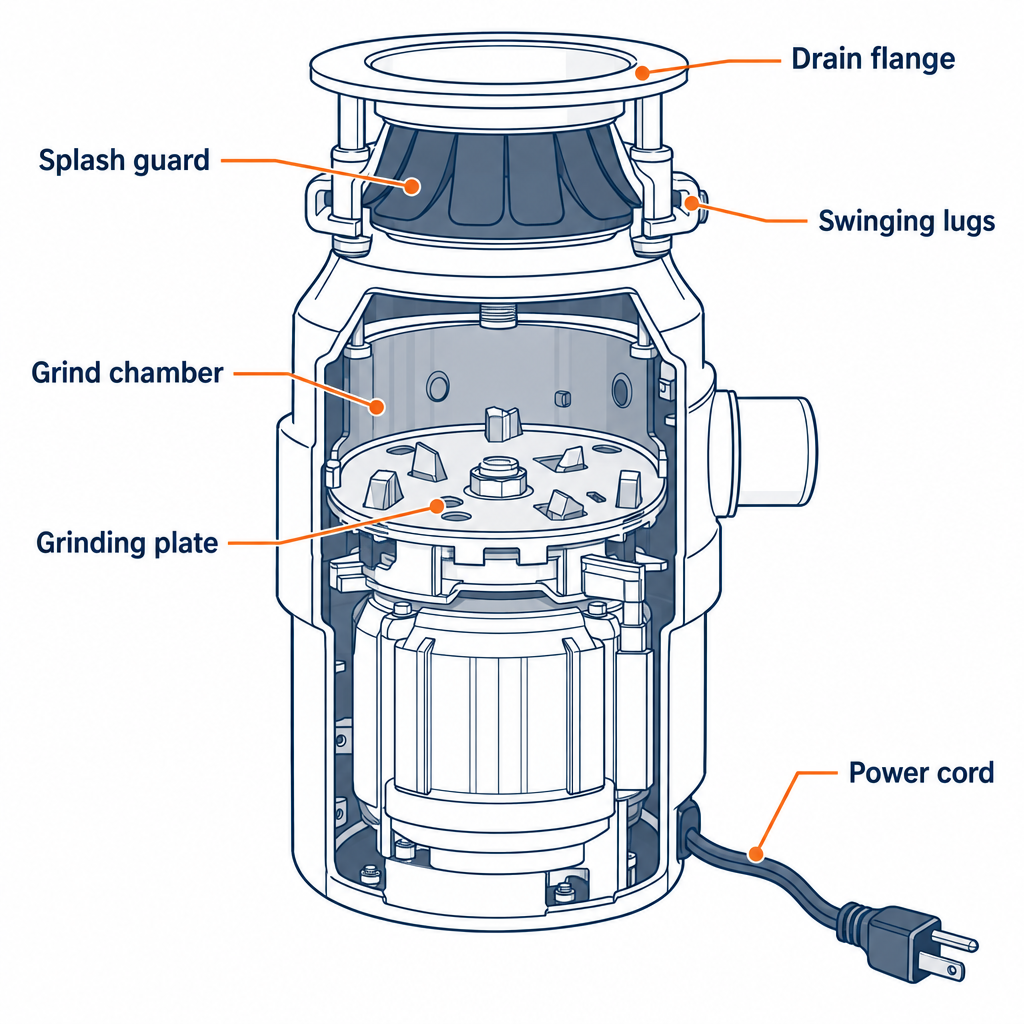
Most disposals plug into an outlet in the cabinet below the sink. Pull that plug. If there is no cord, the unit is hardwired and you need to flip the breaker, which is usually labeled “disposal” or paired with the dishwasher.
Flip the wall switch to confirm it is dead. Then grab the flashlight and look down the drain. You will see the rubber splash guard (also called the baffle), and below it the grind chamber with a spinning plate and two swinging metal lugs. There are no sharp blades, which matters because the gunk you smell is not on a cutting edge. It is coating the rubber and the chamber walls.
Smell the drain opening, then open the cabinet and smell near the unit body. Odor at the top means food under the baffle. Odor in the cabinet with a damp spot means a leak, and cleaning will not fix that.
Step 2: Scrub the splash guard
The underside of the splash guard collects a black, slimy film that causes 80 percent of disposal odors. On most InSinkErator and GE Disposall units, the guard lifts straight out of the sink flange. Hook a finger under one flap and pull up. Older or budget units may have a guard that is clamped under the flange and will not come out, so you have to clean it in place.
If it comes out, drop it in the sink with hot water and a squirt of dish soap. Scrub both sides with the toothbrush, paying attention to the creases between the flaps. If it stays put, fold each flap back with one hand and scrub the underside with the toothbrush in the other.
Rinse and set it aside while you do the chamber. A guard that stays slimy or has torn flaps costs $5-15 to replace and takes two minutes to swap.
Pro tip
Hold the splash guard up to a light after scrubbing. If the rubber looks cracked or feels gummy instead of firm, replace it instead of cleaning it again. A worn baffle lets water splash up and holds odor no matter how often you scrub.
Step 3: Scrub the grind chamber
With the guard out, you have a clear view of the chamber. Squirt dish soap down the opening, then work the long-handled brush around the walls, under the lip of the sink flange, and across the grinding plate. Spin the plate by hand with the brush to reach the lugs.
A 10-inch bottle brush works fine. Dedicated disposal brushes with a flared head cost about $5-8 and reach under the flange lip better, which is where food ends up wedged.
Rinse with cold water, then reinstall the splash guard with the flaps facing down and the rim seated evenly in the flange. Plug the unit back in or restore the breaker.
Step 4: Grind ice and salt
Run cold water at a moderate flow, dump in about 2 cups of ice cubes and 1/2 cup of rock salt, and turn the disposal on. It will sound loud and rough for 20-30 seconds while the ice breaks up. That is the point. The ice chips and salt crystals scour the chamber walls and the grinding plate, knocking loose the buildup the brush could not reach.
Keep the water running until the grinding noise smooths out, then let it run another 15 seconds. Cold water matters here. Hot water melts the ice too fast and softens any grease so it smears down the drain instead of breaking off.
Coarse kosher salt works if you have no rock salt. Table salt dissolves too quickly to help.
Step 5: Deodorize with baking soda and vinegar
Turn the disposal off. Pour 1/2 cup of baking soda down the drain and let it sit for 5 minutes. Then pour in 1 cup of white vinegar. It will fizz up into the sink basin, which is normal. The foam pushes into the splash guard creases and up under the flange where odors hide.
Let it work for 5-10 minutes. This combination is a deodorizer, not a degreaser. It neutralizes smell but will not cut through a chamber that is caked with fat, which is why the brush and ice come first.
Skip bleach and chemical drain cleaners. Bleach hardens grease and attacks the rubber seals; caustic drain openers can pit the grinding chamber and void the warranty on most units.
Step 6: Flush and freshen
Turn on the cold water, run the disposal for 30 seconds, and let the water run another 30 seconds after you switch it off. That clears the vinegar and loosened debris through the P-trap.
For a fresh scent, cut a lemon, lime or orange peel into 1-inch pieces and grind them with cold water running. The peel oil coats the chamber with a clean smell, and the rind texture gives the lugs something to work on. Whole citrus halves are too much at once on a 1/3 or 1/2 horsepower unit; feed pieces in a few at a time.
If you prefer a store-bought option, foaming disposal pods such as Affresh or Glisten run $4-8 for a pack of three to four. Drop one in, run hot water for a few seconds, and let it foam for a minute. They do a good job on the splash guard but still will not reach a slimy baffle like a toothbrush does.
Pro tip
Freeze vinegar in an ice cube tray and keep a bag of the cubes in the freezer. Grinding four or five of them once a week combines the scouring of ice with the deodorizing of vinegar in one 20-second step.
Step 7: Check under the sink before you close the cabinet
While the cabinet is open, run water into the disposal for a full minute and shine the flashlight on three spots: the sink flange where the unit bolts to the sink, the dishwasher inlet hose on the side of the unit, and the discharge elbow where the disposal meets the P-trap. Any drip means a gasket or a loose clamp, not a dirty disposal.
Also check that the dishwasher drain hose loops up high under the counter before it drops to the disposal. A hose that sags lets dishwasher water sit and stink, and the smell shows up at the sink. If the odor is strongest when the dishwasher drains, the problem is likely the dishwasher inside, not the disposal.
Keeping it clean between deep cleans
A disposal stays fresh if you run it right. Always run cold water before, during and 15-20 seconds after grinding. Feed food in gradually instead of dumping a full plate at once. Run the unit every day or two even with nothing in it, so standing water and residue do not go sour.
Keep these out of it: grease and oil, coffee grounds, potato and onion skins, celery and corn husks, pasta and rice, bones, fruit pits and eggshells in quantity. The fibrous and starchy items wrap around the lugs or turn into paste and build the exact layer you just scrubbed off. Compost or trash them.
Grind a handful of ice cubes once a week and do the full routine above once a month. If your household cooks a lot or runs a lot of dish scraps through it, every two weeks.
The same applies if you call it a garburator in Canada, a food disposal, or a dish disposal. They are all the same machine and respond to the same routine.
Troubleshooting
| Symptom | Likely cause | Fix |
|---|---|---|
| Still smells after cleaning | Slime on the underside of the splash guard, or a sagging dishwasher hose | Remove and scrub the guard again, or replace it; raise the dishwasher hose loop |
| Hums but will not spin | Jammed grinding plate | Cut power, insert a 1/4-inch hex key in the socket on the bottom, work it back and forth, then press the red reset button |
| Dead silent when switched on | Thermal overload tripped | Press the red reset button on the bottom of the unit; check the breaker |
| Water drains slowly | Clog in the P-trap or discharge pipe | Place a bucket, remove the trap, clear it, reassemble with hand-tight slip nuts |
| Drip under the sink | Loose flange, failed gasket or cracked housing | Tighten mounting ring and clamps; a leak from the body means replacement |
| Grinding takes much longer than it used to | Worn lugs or a clogged grind ring | Run ice and salt; if no improvement on a unit over 10 years old, plan on a new one |
When to call a pro
Call a plumber if water leaks from the disposal body rather than a joint, if the reset button trips repeatedly, if the unit trips the breaker, or if you smell burning. A new 1/2 HP unit runs $100-250 for the part and $150-300 for labor. Call an electrician if the outlet under the sink has no power or the unit is hardwired and you are not comfortable working in the box.
FAQ
How often should you clean a sink disposal?
Grind ice once a week and do a full scrub, ice and salt, and baking soda and vinegar cycle once a month. Scrub the splash guard any time you notice an odor.
Can you put bleach in a garbage disposal?
No. Bleach hardens grease into a stubborn coating and degrades the rubber baffle and seals. Vinegar, dish soap and citrus do the job without the damage.
Does lemon actually clean a disposal?
Lemon peel masks odor and leaves oil on the chamber, but it does not remove buildup. Use it as the last step after scrubbing and grinding ice, not instead of them.
Why does my disposal smell like rotten eggs?
A sulfur smell usually means food decaying under the splash guard or in a dishwasher hose that holds standing water. Clean the guard first. If the smell is in the cabinet and the floor is damp, you have a leak.
Should I use hot or cold water with a disposal?
Cold. It keeps fat solid so the disposal can chop it and flush it instead of smearing it on the chamber walls and drain pipe. Hot water is fine for a final rinse after cleaning.