
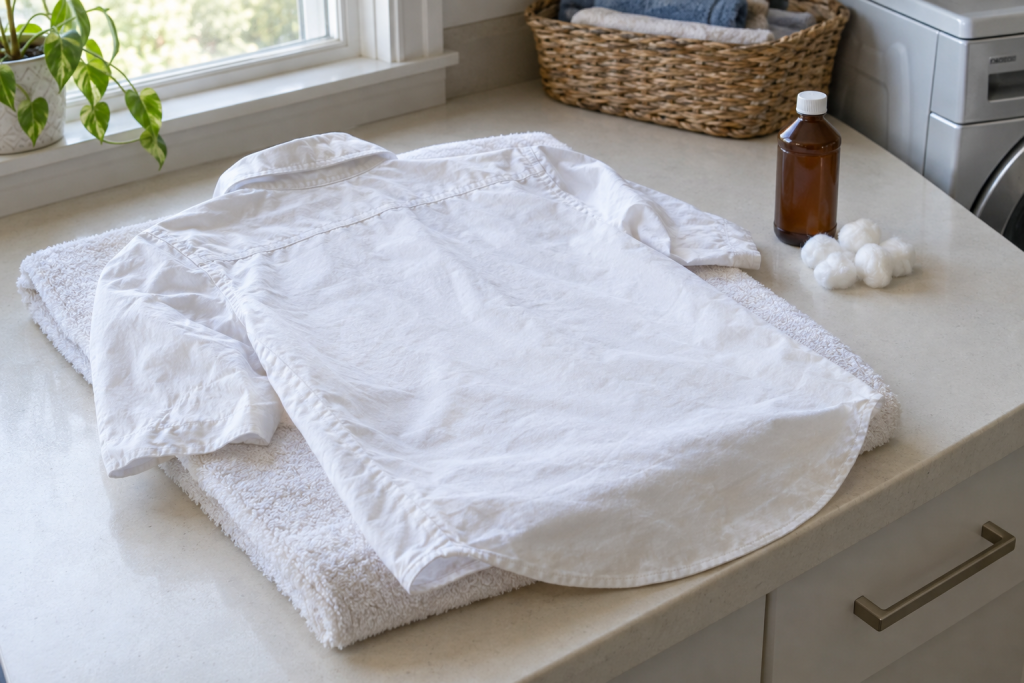
Plain 70% isopropyl rubbing alcohol dissolves the dye and oil carrier in most pen ink, so you blot it through the fabric onto a clean towel instead of spreading it around. Treat the stain before it ever sees a dryer and most ballpoint, rollerball and marker stains come out in one or two passes. Here is the exact sequence, plus what to do when alcohol alone is not enough.
Quick steps: lift ink with rubbing alcohol
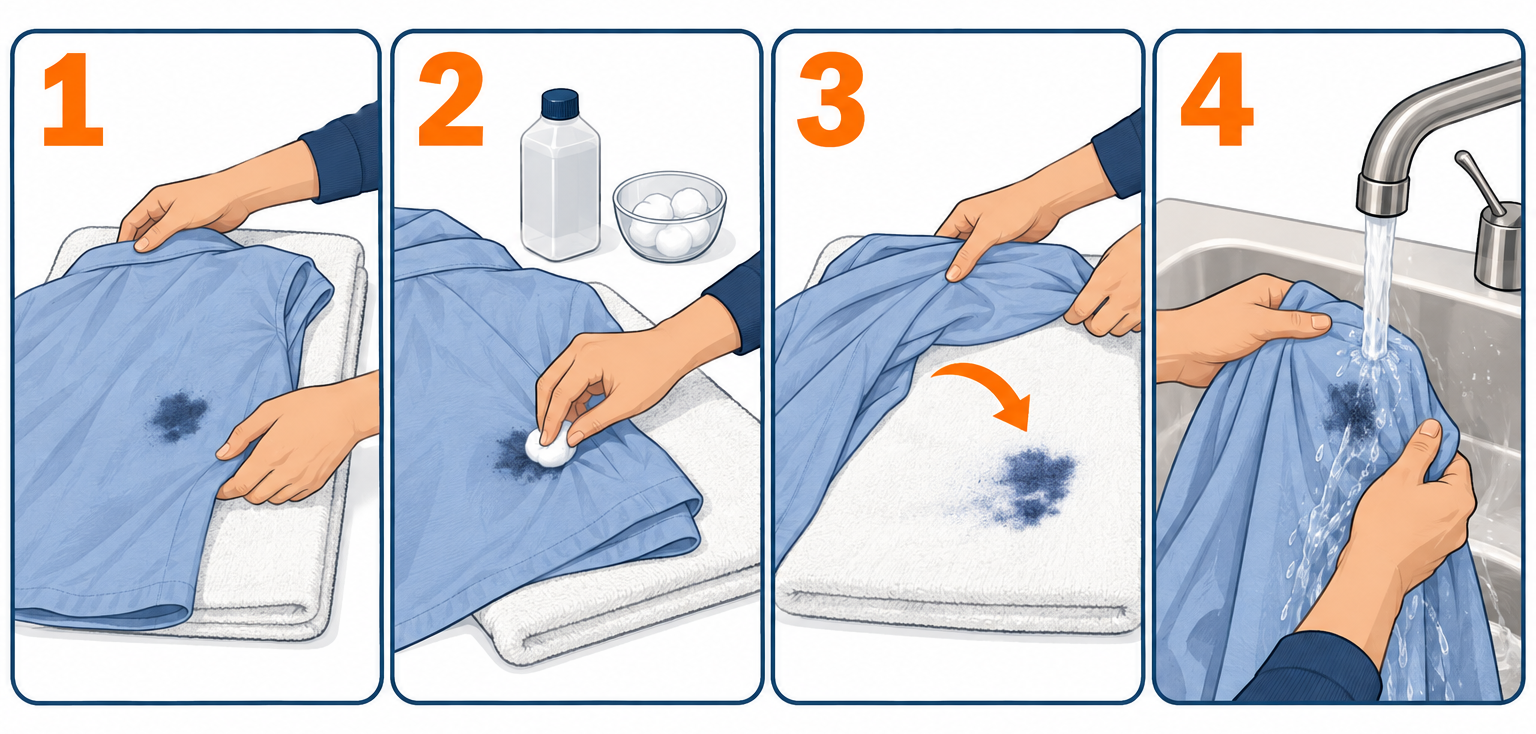
- Lay the stain face down on a folded white towel.
- Dab the back of the stain with alcohol on a cotton ball or cloth.
- Blot, move to a clean spot on the towel, repeat until no more ink transfers.
- Rinse the area under cold running water.
- Work a drop of dish soap into any shadow that remains.
- Wash in the warmest water the care label allows.
- Air dry and check. Repeat before any machine drying.
Tools and materials
- Isopropyl rubbing alcohol, 70% (91% for permanent marker or dried stains)
- Two or three clean white terry towels or paper towels
- Cotton balls, cotton swabs or a white microfiber cloth
- Liquid dish soap such as Dawn or Palmolive
- Laundry detergent you normally use
- Optional: oxygen bleach powder (OxiClean or store brand) for old stains
- Optional: spray bottle for large stains on carpet or upholstery
Safety first
Isopropyl alcohol is flammable and the vapors build up fast in a small bathroom. Open a window, keep it away from stove pilots and candles, and never treat a garment that is in or near a running dryer.
Why rubbing alcohol works on ink (and when it will not)
Ballpoint pen ink is a dye dissolved in an oily, greasy carrier so it flows smoothly across paper. Water alone does nothing to that oil. Isopropyl alcohol dissolves both the dye and the carrier, which is why it is the first thing dry cleaners reach for.
Permanent markers like Sharpie are themselves alcohol-based, so alcohol re-liquefies the ink the same way it went on. Gel pens and many rollerballs use pigment particles suspended in water, which is a different problem. Alcohol loosens the carrier but the pigment can stay trapped in the fibers, so you add dish soap and more patience.
The ink types you will meet, and what to use:
| Ink type | Common pens | Base | First treatment | Success rate from experience |
|---|---|---|---|---|
| Ballpoint | Bic Cristal, Paper Mate, most hotel pens | Oil-based dye | 70% rubbing alcohol | Very high if untreated by heat |
| Rollerball (liquid) | Pilot Precise, Uni-ball Vision | Water-based dye | Alcohol, then dish soap | High |
| Gel | Pilot G2, Sharpie S-Gel, Pentel EnerGel | Water-based pigment | Alcohol, then dish soap and oxygen bleach soak | Moderate |
| Permanent marker | Sharpie, Marks-A-Lot | Alcohol-based dye with resin | 91% rubbing alcohol | Moderate to high on cotton, low on synthetics |
| Felt-tip / washable marker | Crayola, Paper Mate Flair | Water-based dye | Cold water and dish soap, alcohol if needed | Very high |
| Fountain pen | Lamy, Pilot Iroshizuku | Water-based dye | Cold water first, then alcohol | High |
| Printer ink | Inkjet cartridges | Water-based dye or pigment | Dish soap, then alcohol | Moderate |
Step 1: Stop and check the fabric before you touch the stain
Pull the care tag and read the fiber content. Cotton, linen, polyester, nylon and most cotton blends tolerate rubbing alcohol fine. Acetate, triacetate and some rayon can lose their finish or go stiff and shiny where alcohol touches them. Silk and wool are high-risk fabrics for alcohol, which can cause fading, fiber damage, shrinkage or discoloration, so skip alcohol on both and use the dish soap method or a dry cleaner instead.
Find a hidden spot, such as an inside seam allowance or the underside of a hem. Dab it with alcohol on a cotton swab, wait two minutes, then press a white paper towel against it. If color comes off on the towel, or the fabric looks different once it dries, skip alcohol and go straight to the dish soap method or a dry cleaner.
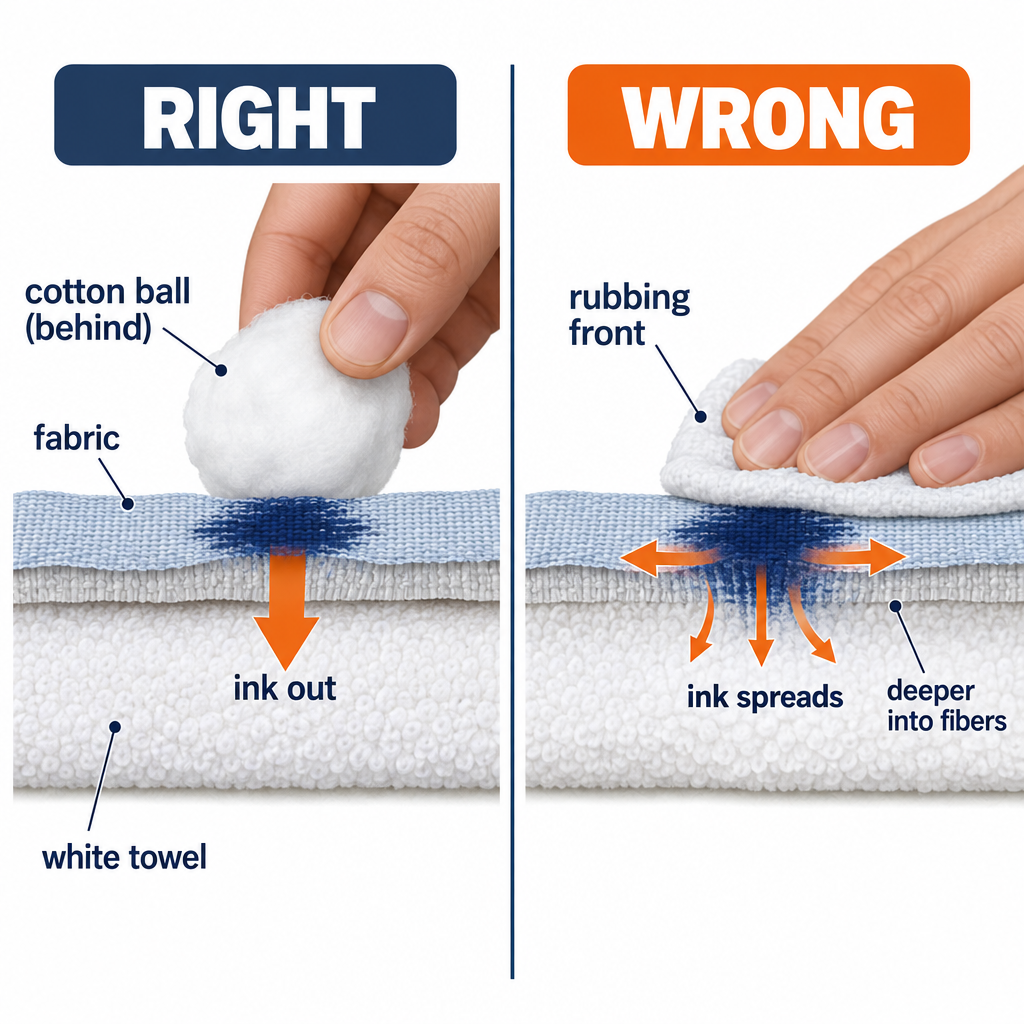
Do not rub the stain while you do this. Rubbing drives ink deeper and spreads it sideways. Everything in this job is blotting and dabbing.
| Fabric | Rubbing alcohol safe? | Notes |
|---|---|---|
| Cotton, denim, canvas | Yes | Can also take 91% and a soft brush |
| Polyester, nylon, spandex blends | Yes | Ink can bond to polyester, expect two or three rounds |
| Linen | Yes | Blot gently, linen fibers abrade |
| Silk | No | Alcohol can fade and damage the fibers; dish soap only or dry cleaner |
| Wool | No | Alcohol can shrink and discolor it; dish soap only or dry cleaner |
| Rayon, viscose | Test first | Weak when wet, handle gently |
| Acetate, triacetate | No | Alcohol and acetone both damage it; dry cleaner |
| Leather | No | Alcohol strips oils, use a leather-specific cleaner and condition after |
| Suede | No | Professional only |
Step 2: Set up so the ink has somewhere to go
Fold a white terry towel into four layers and lay it on a hard surface. Place the garment stain side down on the towel. You are going to push the alcohol in from the back of the fabric so the dissolved ink travels straight out through the front and into the towel, instead of deeper into the garment.
For a shirt or pant leg, slide a second towel or a piece of cardboard inside so ink cannot bleed through to the other layer. For a sleeve cuff, stuff it with paper towels.
Use white towels only. Colored towels can transfer their own dye once alcohol hits them, and you cannot tell how much ink is coming out if the towel is dark.
Step 3: Dab, blot, move, repeat
Soak a cotton ball or the corner of a white cloth with 70% isopropyl alcohol. Press it onto the back of the stain and hold for five to ten seconds. Lift it and look at the towel underneath. You should see a blue or black bloom where the ink transferred.
Shift the garment so the stain sits over a clean section of towel. Dab again with fresh alcohol on a fresh cotton ball. Keep going until the towel stops picking up color, which usually takes four to eight rounds on a fresh ballpoint mark about the size of a quarter.
Work from the outside edge of the stain inward. That keeps the dissolved ink from creeping outward into a bigger ring.
Pro tip
For a stain bigger than a few square inches, put the alcohol in a small spray bottle and mist the back of the fabric instead of dabbing. You get even coverage without flooding, and you waste less alcohol. A dollar-store 2 oz spray bottle works fine.
If the alcohol seems to be doing nothing after three rounds, the stain is either set by heat, gel pigment, or an older stain that has oxidized. Let the alcohol sit on the stain for two to five minutes before blotting, up to five to ten minutes on dried or permanent ink, and switch to 91% if you have it.
Step 4: Rinse in cold water
Once the towel comes up clean, hold the stained area under a cold running tap from the back side. Let the water push through for 30 seconds. You are flushing out any dissolved ink still suspended in the alcohol so it does not re-deposit as the alcohol evaporates.
Cold only at this stage. Warm water will not hurt the alcohol step, but if ink remains, heat helps it bond. Cold keeps your options open.
Squeeze the water out gently and look at the spot against a white background. A faint gray or blue shadow is normal at this point. Solid color means another alcohol round before you move on.
Step 5: Dish soap for the shadow that stays behind
Put one drop of blue Dawn or any grease-cutting dish soap directly on the damp shadow. Work it in with your fingertip or a soft toothbrush in small circles for 30 seconds. Dish soap grabs the oily carrier residue that alcohol leaves behind and lifts pigment particles from gel ink.
Let it sit for five minutes. Rinse under cold water again.
On stubborn gel or rollerball stains, mix a teaspoon of dish soap with a tablespoon of glycerin (sold in the pharmacy aisle for a few dollars) and let that paste sit for an hour. Glycerin softens dried pigment so the soap can get under it.
Pro tip
Keep the garment damp between steps. Once ink residue dries, it locks back into the fibers and you start over. If you need to walk away, lay a wet paper towel over the spot.
Step 6: Wash and inspect before any heat
Launder the garment in your normal detergent at the warmest temperature the care label allows, on its own or with similar colors. Add a scoop of oxygen bleach powder to the drum if the fabric is colorfast and the stain was old or heavy.
Pull it out of the washer and look at the spot while it is wet, then again after it air dries. Wet fabric hides faint stains. If anything remains, go back to Step 3. Never put a garment with a visible ink stain in the dryer. One hot cycle will set a faint shadow permanently, and no amount of alcohol will move it afterward.
Expected result on a fresh ballpoint stain: fully gone after one treatment and wash. Rollerball and permanent marker: usually gone after two rounds, with a possible faint trace on polyester. Gel pen: often needs three rounds plus an overnight oxygen bleach soak, and a very faint ghost can remain on light synthetics.
Dealing with dried and old ink stains
A stain that has been through the dryer, or sat for a week in a hamper, has had time for the carrier to evaporate and the dye to oxidize. Alcohol still works, it just needs more time.
Lay the garment face down on the towel exactly as before. Pour enough 91% alcohol onto the back to saturate the stain, cover it with plastic wrap so it does not evaporate, and wait 15 to 20 minutes. Then blot. Repeat twice. Most of the color will transfer on the second or third round.
Follow with the dish soap and glycerin paste for an hour, then soak the whole garment in a sink of warm water with two scoops of oxygen bleach for four to six hours or overnight. Wash as normal and air dry.
If an old stain fades to a faint gray but stops improving after three full cycles, that is as far as home methods go. A dry cleaner’s solvent spotter may finish it, or you accept the ghost.
Ink on carpet, upholstery and other surfaces
The same chemistry works off the laundry room, but you cannot flush from the back, so you blot from the front with more care.
For carpet, dab alcohol onto a white cloth, not directly onto the carpet, so you do not soak the backing. Press and blot straight down, lift, repeat. Follow with a cloth dampened in a teaspoon of dish soap in a cup of cold water, then blot with plain water, then press a dry towel on it with a heavy book overnight. Do not steam carpets with an ink stain in them until the ink is fully out. The steam temperature sets whatever is left.
Upholstery follows the same method but check the cleaning code tag first. “W” means water-based cleaners only, so use the dish soap and water method and skip the alcohol. “WS” (or “SW”) means both water-based and solvent cleaners are permitted, so alcohol and the dish soap rinse are both fine. “S” means solvent only, so alcohol is fine but the dish soap rinse is not. “X” means vacuum or light brushing only, with no liquids of any kind, so call a professional cleaner.
Hard surfaces such as laminate counters, plastic and sealed wood wipe clean with alcohol on a paper towel in seconds. Test painted or finished wood in a corner first, since alcohol can dull some lacquers.
Five other methods and how they compare
Rubbing alcohol is the fastest and cheapest, but these alternatives cover the gaps: when you have no alcohol in the house, when the fabric will not take it, or when ink type calls for something else.
| Method | Best for | Time | Cost | Fabric limits |
|---|---|---|---|---|
| Rubbing alcohol (70% or 91%) | Ballpoint, rollerball, permanent marker | 15 min | $1-4 per bottle | Not silk, wool, acetate, leather, suede |
| Hand sanitizer (60%+ alcohol) | Fresh ballpoint when you are away from home | 10 min | Free from your bag | Same as alcohol; gel types leave residue to rinse |
| White vinegar and cornstarch paste | Washable marker, light ballpoint on cotton | 1-2 hours drying | Under $1 | Avoid on silk |
| Milk soak | Light ballpoint on cotton and linen | Overnight | $1-2 | Any washable fabric; smells until washed |
| Dish soap and cold water | Washable marker, fountain pen, gel pen first pass | 10 min | Pennies | Safe on nearly everything |
| Oxygen bleach booster soak | Old, set or large stains after alcohol | 4-8 hours | $0.25 per scoop | Colorfast fabrics only, not wool or silk |
Hand sanitizer. Check the label for at least 60% ethyl or isopropyl alcohol. Rub a pea-sized amount into the stain, wait two minutes, blot with a napkin. Gel formulas leave aloe and glycerin behind, so rinse well when you get home. Foam types are weaker. Treat this as a stopgap that keeps the ink from drying, not a full fix.
Vinegar and cornstarch. Mix equal parts white vinegar and cornstarch into a thick paste, spread it over the stain, and let it dry fully. Brush off the dried crumbs and wash. The vinegar loosens dye while the cornstarch wicks it out of the fibers. It is slow and works mostly on cotton, but it is gentle.
Milk soak. Submerge the stained section in a bowl of whole milk overnight. Milk fat dissolves a little of the oil carrier in ballpoint ink. Results are modest, and you need a thorough wash afterward to get the sour smell out. Useful mainly for people who keep no alcohol or dish soap around.
Dish soap and cold water. For water-based inks, this is the right first move, not alcohol. Flush cold water through the back of the stain, work in a drop of dish soap, rinse, repeat. Washable markers come out fully. Fountain pen inks vary a lot by dye, so some lift completely and others leave a trace that needs a follow-up with alcohol.
Oxygen bleach booster. Not a standalone ink remover, but the right finisher for anything that leaves a shadow. Dissolve the powder in warm water per the scoop line on the tub, submerge the item for four to eight hours, then wash. Do not use chlorine bleach on ink; it can react with some dyes and turn the stain brown or yellow.
Tips that apply to every method
Act fast. Fresh ink takes one round. Week-old ink takes three. Dryer-set ink may never fully leave.
Blot, never rub. Every method above fails if you grind the ink sideways.
Cold water first for any stain you have not identified. If the mark turns out to be blood or another protein stain instead of ink, hot water cooks it in. Cold water is safe for both.
Check wet, check dry, check in daylight. Bathroom lighting hides faint stains.
Keep the dryer off until you are certain. This is the single most common reason a removable ink stain becomes permanent.
Work on a surface you do not mind getting ink on. A quarter-sized ballpoint stain can leave a palm-sized bloom on a towel.
Troubleshooting
| Symptom | Likely cause | Fix |
|---|---|---|
| Stain spread into a larger ring | Too much alcohol, or rubbing instead of blotting | Mist lightly from the outside in, blot straight down, flush with cold water |
| Alcohol does nothing after three rounds | Heat-set stain, or gel pigment | Switch to 91%, cover with plastic wrap for 15 minutes, then dish soap and glycerin paste |
| Fabric color faded around the spot | Non-colorfast dye lifted by alcohol | Stop. Rinse. Use dish soap only, or take to a dry cleaner |
| Stiff or shiny patch after drying | Acetate, triacetate or some rayon damaged by alcohol | Not reversible. Check care labels before treating next time |
| Faint gray shadow after washing | Residual pigment or carrier oil | Dish soap, then overnight oxygen bleach soak, air dry, repeat if improving |
| Stain turned brown or yellow | Chlorine bleach or hot water on dye | Oxygen bleach soak may lighten it; often permanent |
| Ink bled through to the back of a shirt | No barrier layer inside the garment | Treat the second spot the same way, then always slide cardboard inside |
| Stain gone wet, back when dry | Dissolved ink wicked back to the surface as it dried | Treat again, rinse longer, blot dry with a towel under pressure instead of air drying loose |
When to call a pro
Take it to a dry cleaner when the garment is silk, wool, acetate, leather, suede or anything with a structured lining or tailoring, when a test spot lifts the fabric’s own color, or when an old stain stops improving after three full rounds. For a sofa with an “X” cleaning code or a large ink spill on wool carpet, call an upholstery or carpet cleaning company and tell them it is ink so they bring a solvent spotter, not a steam machine.
FAQ
Can I use isopropyl alcohol for ink stains?
Yes, isopropyl alcohol is the same thing as rubbing alcohol and is the standard first treatment for ballpoint, rollerball and permanent marker. Use 70% for everyday stains and 91% for dried ink or Sharpie. Test a hidden seam first on rayon and anything dark, and never use it on silk, wool, acetate, leather or suede.
What is the best stain remover for ink stains?
For most pen ink on washable fabric, plain rubbing alcohol beats commercial sprays on both price and speed. Follow it with a drop of dish soap for the residue. Commercial products like Amodex and Carbona Stain Devils #3 are worth keeping if you deal with gel pen or marker stains often, since they combine solvents and surfactants that handle pigment inks better than alcohol alone.
What removes dried ink stains?
Saturate the back of the stain with 91% isopropyl alcohol, cover it with plastic wrap for 15 to 20 minutes so it does not evaporate, then blot into a white towel. Repeat two or three times, work in dish soap mixed with glycerin for an hour, then soak overnight in oxygen bleach before washing. Dried ink that has been through a hot dryer may only fade rather than disappear.
Does Dawn soap remove ink stains?
Dawn removes the oily carrier in ballpoint ink and lifts pigment from gel and washable marker ink, but it does not dissolve the dye itself the way alcohol does. Use it as the second step after rubbing alcohol, or as the only step on washable marker, fountain pen ink and fabrics that cannot take alcohol. One drop worked in with a fingertip, five minutes of dwell, then a cold rinse.
Will rubbing alcohol bleach my clothes?
Alcohol does not bleach fabric the way chlorine does, but it can dissolve some fabric dyes along with the ink, especially on dark cotton that has not been washed many times. That is what the hidden-seam test is for. If the test cloth comes away tinted, the garment is not colorfast to alcohol.
Can I use rubbing alcohol on ink in a washing machine load?
No. Alcohol needs to be concentrated on the stain and blotted out, and it evaporates before it can do anything diluted in a drum of water. It is also flammable, and the dryer that follows is a heat source. Treat the spot by hand, rinse, then wash normally.