
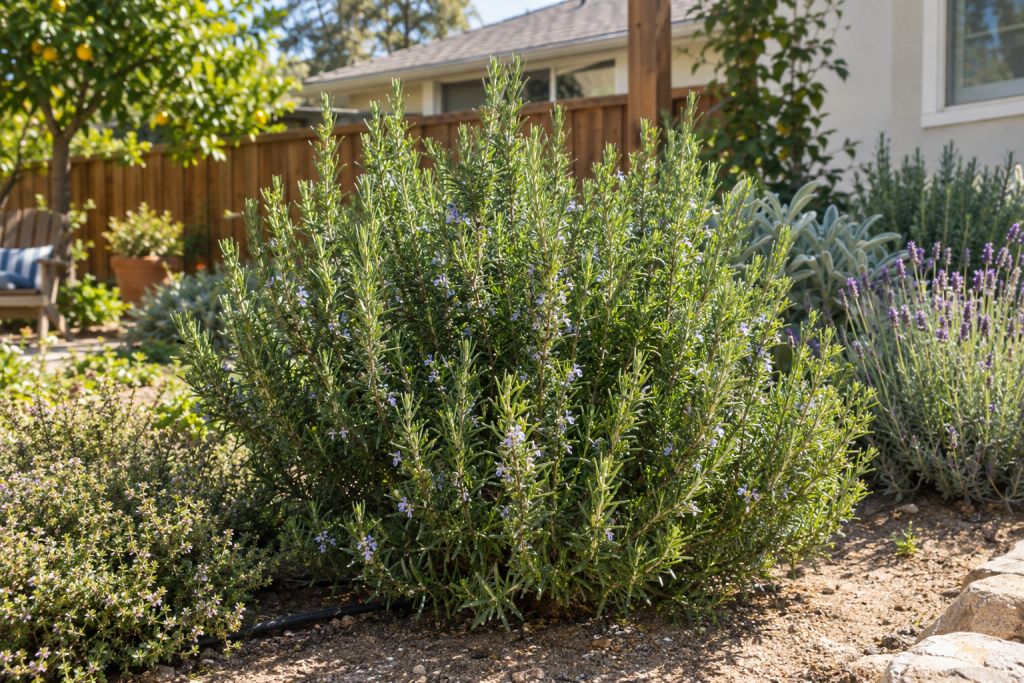
Rosemary grows best in full sun, fast-draining soil, and dry air, with water only when the top inch of soil is dry. Start from a nursery transplant rather than seed, plant after the last frost, and we will have a cutting-ready evergreen shrub by the end of the first summer.
Quick steps: grow rosemary
- Buy a 4-inch or 1-gallon transplant of a cultivar matched to our zone.
- Pick a spot with 6-8 hours of direct sun and soil that never stays wet.
- Amend heavy soil with 2-3 inches of coarse sand or grit, or use a pot.
- Plant at the same depth as the nursery pot, 24-36 inches apart.
- Water deeply, then let the top inch dry out between waterings.
- Prune by no more than one-third each spring after new growth starts.
- Harvest 4-6 inch sprigs from the tips and dry extras for the pantry.
- Bring tender varieties indoors before nights drop near 20°F.
Tools and materials
- Rosemary transplant (4-inch pot, $4-7, or 1-gallon, $10-18)
- Cactus and succulent potting mix (8 qt bag, $8-12) for containers
- Coarse builder’s sand or horticultural grit for in-ground beds
- 12-inch terracotta pot with drainage hole ($15-25) if growing in a container
- Bypass pruners (sharp, 5/8-inch cutting capacity)
- Hand trowel or spade
- Watering can or hose with a gentle nozzle
- Optional: soil pH test kit ($10-15), balanced 10-10-10 granular fertilizer
Calculators for this job
Step 1: Pick the right cultivar for our zone
This Mediterranean native was known for centuries as Rosmarinus officinalis. Botanists reclassified it as Salvia rosmarinus in 2017, so expect both names on nursery tags.
Standard rosemary is reliably hardy in USDA zones 8-10. A few cultivars survive zone 6 and 7 winters with mulch and a sheltered spot. Match the plant to the climate before anything else, because an unhardy plant dies the first January regardless of care.
| Cultivar | Hardiness | Habit | Mature size | Best use |
|---|---|---|---|---|
| ‘Arp’ | Zone 6 | Upright, open | 3-5 ft tall | Coldest climates, hedges |
| ‘Hill Hardy’ (Madalene Hill) | Zone 6-7 | Upright, dense | 3-4 ft tall | Cold climates, culinary |
| ‘Salem’ | Zone 7 | Upright, compact | 2-3 ft tall | Mid-zone gardens |
| ‘Tuscan Blue’ | Zone 8 | Upright, fast | 4-6 ft tall | Tall hedges, lamb and roasts |
| ‘Barbeque’ | Zone 8 | Straight upright stems | 4-6 ft tall | Skewers, cooking |
| ‘Blue Boy’ | Zone 8 | Dwarf mound | 1-2 ft tall | Windowsills, small pots |
| ‘Prostratus’ (creeping) | Zone 8 | Trailing | 1-2 ft tall, 4-8 ft wide | Walls, slopes, hanging baskets |
Skip seed unless we enjoy a project. Germination runs 2-4 weeks at 65-75°F, rates often sit around 30 percent, and a seedling needs a full season to reach the size of a $5 transplant.
Step 2: Choose a site with sun and sharp drainage
Rosemary needs 6-8 hours of direct sun. Less than six hours gives leggy stems, pale leaves and weak flavor, since the aromatic oils build up in strong light.
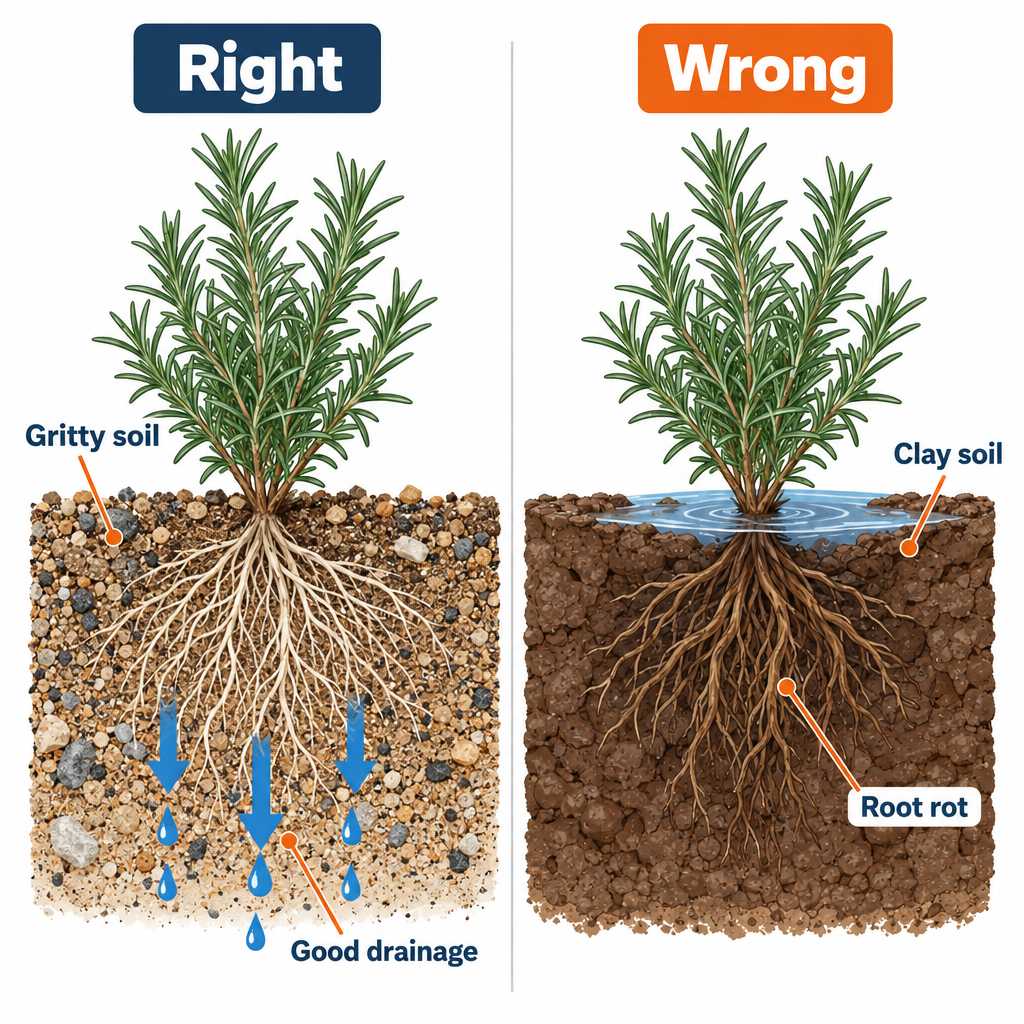
Drainage matters more than fertility. In its native scrub it grows on rocky, limey slopes where rain runs straight through. Wet feet cause root rot, the number one killer of rosemary in the US.
| Condition | Target | What happens outside the range |
|---|---|---|
| Sunlight | 6-8+ hours direct | Sparse, floppy growth under 6 hours |
| Soil pH | 6.0-7.5 | Yellowing in acidic soil below 5.5 |
| Soil type | Sandy loam or gritty mix | Root rot in clay or peat-heavy mix |
| Spacing | 24-36 inches (hedges 18 inches) | Powdery mildew when crowded |
| Water | Top inch dry before watering | Yellow lower leaves, mushy stems when overwatered |
| Winter minimum | 20°F (standard) to -10°F (‘Arp’) | Brown, brittle stems after a hard freeze |
Test clay soil the simple way. Dig a 12-inch hole, fill it with water, and time the drain. If water still stands after four hours, grow rosemary in a raised bed or a container instead.
Step 3: Plant it
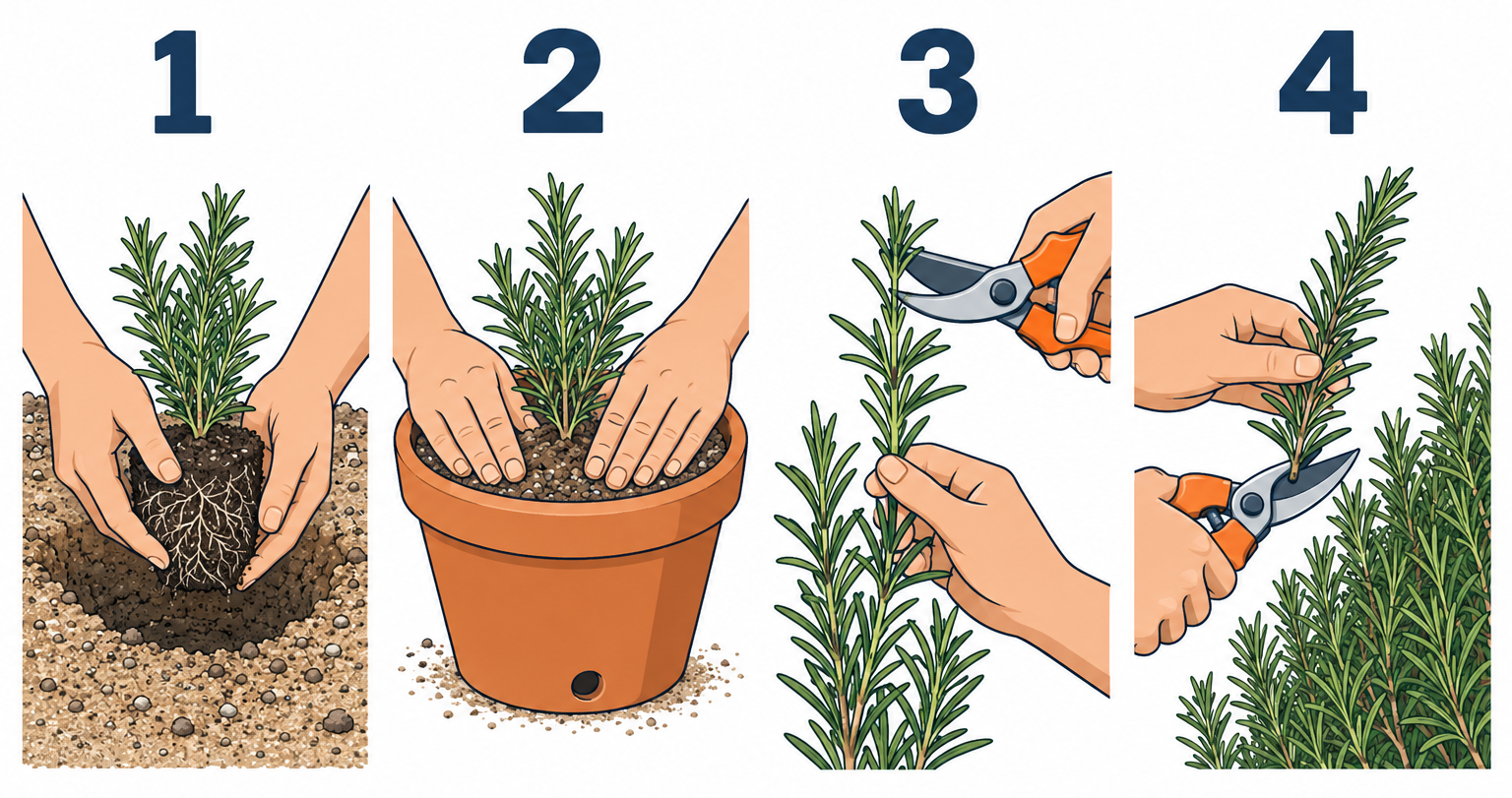
Dig a hole twice as wide as the root ball and exactly as deep. Planting deep buries the crown and invites rot.
For in-ground beds in average soil, mix 2-3 inches of coarse sand or pea gravel into the backfill. Skip compost or manure. Rich soil produces soft, watery growth with little scent.
For containers, use a cactus and succulent mix straight from the bag. Terracotta beats plastic because the clay wicks moisture out of the soil between waterings. A 4-inch transplant goes into a 10-12 inch pot and will fill it in one season.
Set the plant, backfill, and firm the soil with our hands. Water slowly until it runs out of the drainage hole or settles the soil around the roots. Hold off on mulch, or use a 1-inch layer of gravel rather than wood chips to keep the crown dry.
Pro tip
Loosen the root ball before planting. Nursery rosemary is often pot-bound, and circling roots left alone will keep circling for years. Score the sides with a knife or tease out the bottom third with our fingers.
Step 4: Water and feed lightly
New transplants need water every 2-3 days for the first two weeks while roots establish. After that, water only when a finger pushed 1 inch into the soil comes out dry. In the ground that may be once every 1-2 weeks; in a terracotta pot during July it may be every 3-4 days.
Water the soil, not the leaves. Wet foliage in still air encourages powdery mildew.
Fertilizer is nearly optional. In-ground plants rarely need any. Container plants benefit from a single spring feeding with 10-10-10 at half the label rate, or a tablespoon of fish emulsion in a gallon of water every 6 weeks through summer. Stop feeding by late August so growth hardens before cold weather.
Step 5: Prune for shape and bushiness
Prune in spring once new growth shows, and again lightly after flowering. Never remove more than one-third of the plant at once, and never cut into bare old wood. Rosemary does not resprout from leafless stems the way a privet does.
Pinch the growing tips of young plants every few weeks. Each pinch forces two side shoots, which is how a spindly 4-inch start becomes a dense 2-foot mound by fall.
Hedges and topiary take shearing well, but shear only the current year’s soft growth. Leave at least 2 inches of green leaves below every cut.
Pro tip
Our regular harvesting is pruning. If we cook with rosemary every week, we rarely need a separate pruning session. Take sprigs from all over the plant rather than one side, and the shape stays even.
Step 6: Harvest, use fresh and dry the surplus
Start harvesting once the plant is at least 12 inches tall and established, typically 3-4 months after planting from seed, or about 6 weeks after a transplant shows new growth. Cut 4-6 inch sprigs from the tips with pruners, taking no more than a quarter of the plant at a time. Morning harvests after dew dries carry the most oil.
Fresh rosemary is at its best with lamb, roast chicken, potatoes, focaccia and anything on the grill. Strip leaves backward off the stem, then chop finely because whole leaves stay needle-tough even after cooking.
Dried rosemary keeps its flavor far better than dried basil or parsley. Three methods work:
| Method | Temperature | Time | Notes |
|---|---|---|---|
| Hanging bundles | Room temp, 60-70°F, dark and airy | 1-2 weeks | Bundles of 6-8 sprigs, rubber-banded |
| Dehydrator | 95-115°F | 4-8 hours | Lowest setting keeps oils intact |
| Oven | 170°F or lowest setting, door cracked | 1-2 hours | Check every 20 minutes for scorching |
Leaves are done when they snap instead of bend. Strip them, store whole in an airtight jar away from light, and crush just before cooking. Dried rosemary holds good flavor for about 12 months. Use 1 teaspoon dried in place of 1 tablespoon fresh.
Beyond cooking, people have used rosemary for health purposes since antiquity. Greek students supposedly wore sprigs to sharpen memory before exams. Modern research on rosemary oils and memory is small and early, so treat these as pleasant folklore rather than a reason to grow it. Grow it for the kitchen and the bees.
Step 7: Overwinter and propagate
In zones 8 and warmer, in-ground rosemary needs nothing more than a gravel mulch and a dry winter site. In zone 7 with a hardy cultivar, plant against a south-facing wall and pile 4-6 inches of straw or evergreen boughs over the base around the first freeze.
Everywhere colder, grow in pots and bring plants indoors before nights hit the mid-20s. Give them our brightest south window or a grow light for 12-14 hours a day. Keep the room cool, 55-65°F, and water sparingly, roughly every 10-14 days. A small fan on low prevents the powdery mildew that plagues indoor rosemary.
Propagate from cuttings, not seed. In late spring or early summer, cut 4-6 inch tips of new growth that has just started to firm up. Strip the lower 2 inches of leaves, dip in rooting hormone, and stick in moist perlite or sand. Cover loosely with a plastic bag, keep at 65-75°F out of direct sun, and expect roots in 3-6 weeks. One mature plant can supply a dozen new ones every year.
Troubleshooting
| Symptom | Likely cause | Fix |
|---|---|---|
| Lower leaves yellow, stems soft near base | Overwatering or poor drainage | Let soil dry fully; repot in gritty mix; trim mushy roots |
| White powder on leaves | Powdery mildew from stagnant, humid air | Improve airflow, water at soil level, remove worst stems |
| Brown, brittle, dropping needles | Drought stress or winter cold damage | Deep water once; wait for spring before cutting back cold damage |
| Fine webbing, speckled leaves | Spider mites, common indoors | Rinse with a strong water spray; insecticidal soap weekly for 3 weeks |
| White cottony clumps in leaf axils | Mealybugs | Dab with rubbing alcohol on a cotton swab |
| Long, floppy stems with sparse leaves | Not enough sun | Move to full sun; pinch tips to force branching |
| No scent or flavor | Too much water or fertilizer | Cut feeding, water less, harvest in full sun |
| Plant died suddenly in a wet spring | Root rot (Phytophthora) | Replace with new plant in a raised bed or container |
When to call a pro
Growing rosemary never needs a pro. If we are planting a 50-foot rosemary hedge on a slope that holds water, a landscape contractor can grade and install drainage before planting, which costs far less than replacing dead plants.
FAQ
Does rosemary come back every year?
Yes. Rosemary is a perennial evergreen shrub that lives 10-20 years in zones 8-10. In colder zones it only returns if we choose a hardy cultivar like ‘Arp’ or bring the pot indoors.
How big does rosemary get?
Upright cultivars reach 3-6 feet tall and wide within 3-4 years. Dwarf types stay under 2 feet, and creeping forms spread 4-8 feet while staying low.
Can I grow rosemary indoors year-round?
Yes, but it is harder than outdoors. It needs a south window or a grow light, cool temperatures, dry air moved by a fan, and very careful watering. Most indoor rosemary that fails was overwatered.
Why is my rosemary turning brown?
Browning from the base up in soggy soil is root rot. Browning at the tips during hot, dry weather is drought. Browning all over after a hard freeze is cold damage, which may recover from the base in spring.
When should I plant rosemary?
Plant in spring once frost has passed and the soil has warmed. In zones 8-10, fall planting also works and gives roots a mild winter to establish before summer heat.