
Rust removal comes down to one choice: dissolve it with acid or a chelating soak, or grind it off mechanically. For most household items, a 24-hour white vinegar bath followed by a steel wool scrub, a rinse, and a quick coat of oil gets you back to clean, usable metal for under $10.
Quick steps: cleaning rust off metal
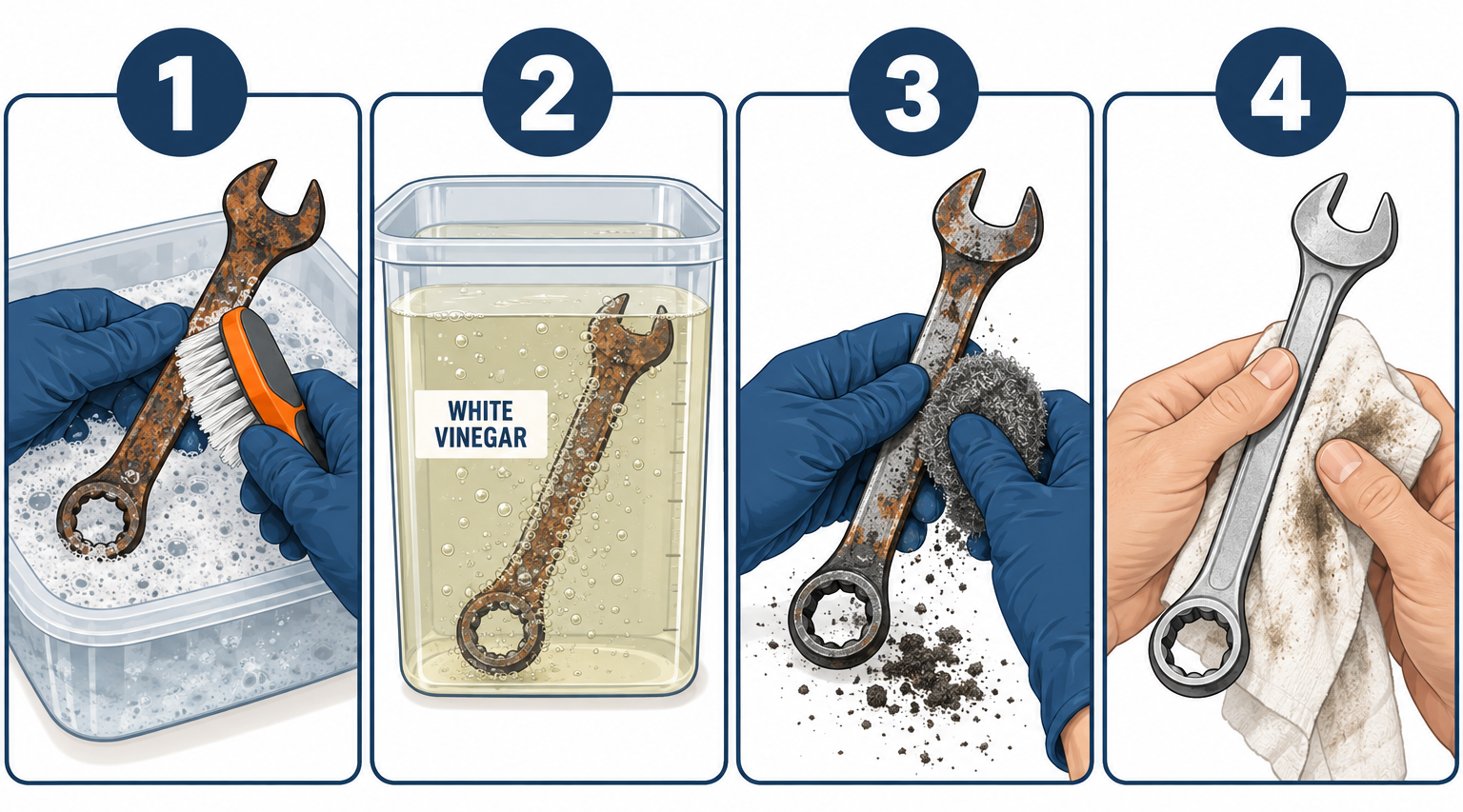
- Degrease the item with dish soap and knock off loose flakes with a wire brush.
- Pick a method based on rust depth: paste for surface spots, soak for coated parts, abrasives for pitting.
- Soak in white vinegar or a citric acid solution for 1 to 24 hours, checking every few hours.
- Scrub with steel wool or a brass brush while the metal is still wet.
- Rinse, then dip in a baking soda solution to neutralize the acid.
- Dry fast with a towel and a hair dryer, or in a 200°F oven.
- Coat with oil, wax or primer within 30 minutes to stop flash rust.
Tools and materials
- Distilled white vinegar (5% acetic acid, 1 gallon)
- Citric acid powder (1 lb bag) or a commercial rust remover like Evapo-Rust
- Baking soda (1 box) for paste and neutralizing
- 0000 steel wool, a brass wire brush and a stiff nylon brush
- Plastic tub or bucket large enough to submerge the item
- Nitrile gloves and safety glasses
- Microfiber towels and a hair dryer
- Light machine oil, paste wax or WD-40 for protection
- Optional: drill-mounted wire wheel or cup brush, 120 and 220 grit sandpaper
Calculators for this job
Safety first
Wear nitrile gloves and glasses with every method. Acids irritate skin, and wire wheels throw steel bristles. Work outdoors or near an open window, and never mix rust removers with bleach.
Step 1: Figure out how deep the rust goes
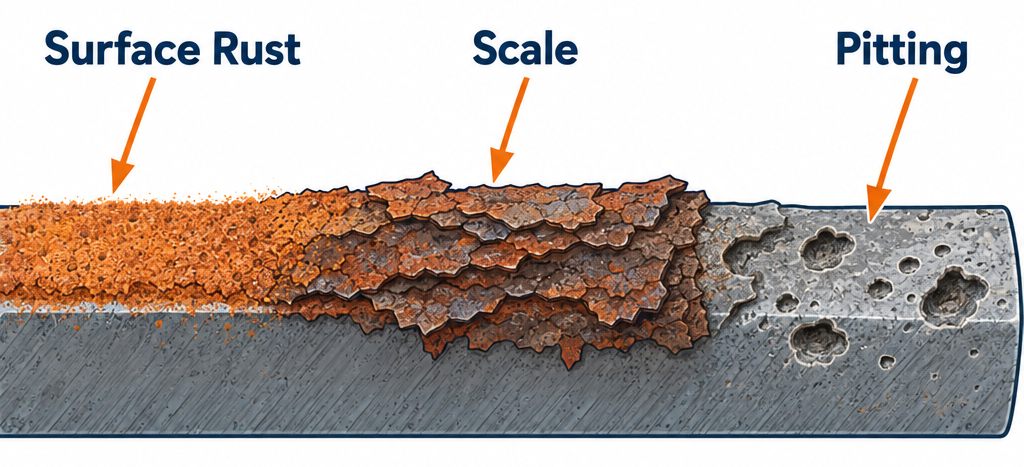
Rust is not one problem. The method that strips a rusty wrench will ruin chrome plating, and the paste that polishes a bike rim will barely touch a pitted hinge.
Run your fingernail across the worst spot. Orange dust that wipes off is surface rust, and a paste or a short soak handles it. A rough, flaky crust that catches your nail is scale, and that needs a long soak or abrasives. Pits you can feel after scrubbing are permanent. You can clean them and stop them spreading, but the metal is gone.
Then check what the metal actually is. Hold a magnet to it. Steel and cast iron grab the magnet and respond well to every method here. Aluminum, brass and copper don’t rust at all, so the “rust” is corrosion or staining from a rusty neighbor and needs only mild cleaning. Chrome or nickel plating over steel is the one that catches people out. The rust comes through pinholes in the plating, and acid will lift the plating around them.
Use this to pick your method.
| Rust level | Best method | Soak or work time | Cost |
|---|---|---|---|
| Light haze on plated or polished parts | Baking soda paste, or lemon and salt | 15 to 60 minutes | Under $2 |
| Surface rust on tools, hardware, cast iron | White vinegar bath | 4 to 24 hours | $3 to $4 |
| Moderate scale on small parts, springs, fasteners | Citric acid solution | 1 to 8 hours | $8 to $10 |
| Heavy rust on valuable or intricate items | Evapo-Rust or similar chelating soak | 1 hour to overnight | $25 to $30 per gallon |
| Heavy scale on flat, sturdy steel | Wire wheel, flap disc, sandpaper | 10 to 30 minutes | $8 to $15 |
| Large or deeply rusted iron (grates, anvils, garden tools) | Electrolysis | 6 to 24 hours | $10 if you own a battery charger |
Step 2: Degrease and knock off the loose stuff
Every rust remover works faster on bare metal. Oil, dirt and old grease shield the rust underneath, so you’ll be waiting twice as long and wondering why the soak isn’t working.
Wash the item in hot water with a squirt of dish soap. Dawn is fine. Scrub with a nylon brush, rinse and towel dry. For greasy tools and machine parts, a spray of degreaser or a wipe with mineral spirits first saves time.
Now go after the flakes with a brass or steel wire brush. You’re not trying to reach clean metal yet, just removing the loose scale so the acid can reach what’s bonded. On big flat pieces, a wire cup brush in a drill at low speed takes this from 15 minutes to 2.
Rusty bolts and nuts deserve a note here. Hit them with penetrating oil the night before, then break them loose with the correct size wrench, not an adjustable. If you’ve ever opened a toilet tank to swap a toilet flapper and found the tank bolts rusted solid, you know how a 10-minute job turns into an hour with a hacksaw.
Step 3: Pick your remover and start the soak
This is where the six methods split. Each one is covered in detail below, but the soaking rules are the same across all of them.
Submerge the item completely if you can. Half-submerged parts develop a clean line at the waterline and the top half stays rusty. Use a plastic tub, never metal, because the acid will go after the container too.
Check progress every few hours. Vinegar turns a weak tea color as it works, and you’ll see tiny bubbles rising off the rust. When the bubbles stop and the surface looks dark gray or black instead of orange, it’s done.
Don’t walk away from thin sheet metal or anything hardened. Springs, clip hardware, knife blades and high-strength bolts can suffer hydrogen embrittlement from a long acid soak, which makes them brittle. Limit these to 2 to 4 hours in acid, or use a chelating product like Evapo-Rust that doesn’t cause the problem.
Pro tip
Warm the vinegar or citric acid solution to around 120°F before you start, roughly as hot as your tap gets. Warm acid works about twice as fast as cold. A sunny driveway or a sink of hot water around the tub does the job.
Step 4: Scrub while it’s still wet
Pull the item out and scrub immediately. The rust that was bonded an hour ago now comes away as a black sludge, and that’s exactly what you want to see.
Match the abrasive to the surface. 0000 steel wool is safe on bare cast iron pans and raw steel, but keep it off enamel-coated cast iron, non-stick surfaces and delicate plating. A brass brush is softer than steel and won’t scratch chrome. A steel wire brush or green scouring pad is for raw steel and iron only. For stubborn spots, 220 grit wet-dry sandpaper used wet gives you a smooth finish.
If a spot won’t come clean, put the item back in for another few hours. Two shorter soaks with a scrub between them beat one marathon soak, because the scrub exposes fresh rust for the acid to attack.
Step 5: Rinse and neutralize
Rinse the item under running water until the water runs clear. Then dunk it for 1 to 2 minutes in a bucket of water with 2 tablespoons of baking soda per gallon mixed in. This stops any leftover acid from continuing to eat the metal, and it’s the step most people skip.
If you used a commercial rust remover, check the label. Chelating soaks like Evapo-Rust and WD-40 Specialist Rust Remover Soak are pH neutral and only need a water rinse. Phosphoric acid gels like Naval Jelly also need a thorough rinse, and the label says to never leave them on longer than 15 minutes.
Step 6: Dry it fast and protect it within 30 minutes
Freshly stripped steel is bare, porous and hungry for oxygen. Flash rust, a fine orange bloom, can show up in under an hour on a humid day. Speed matters more than any other part of this step.
Towel the item dry, then hit it with a hair dryer on high for a couple of minutes, paying attention to seams and threads where water hides. Small parts and cast iron can go in a 200°F oven for 15 minutes instead.
Then coat it. What you use depends on the item:
- Hand tools, hardware, hinges: a wipe of 3-in-1 oil, WD-40 or paste wax.
- Cast iron cookware: a thin coat of vegetable or flaxseed oil, wiped almost dry, then an hour upside down in a 450°F oven to reseason.
- Outdoor furniture, railings, grates: rusty metal primer such as Rust-Oleum Rust Reformer or a zinc-rich primer, then two coats of exterior enamel.
- Chrome and polished surfaces: carnauba paste wax or a chrome polish.
- Knives: food-safe mineral oil.
Skip the coating and you’ll be doing this again in a month.
The six rust removal methods in detail
Method 1: White vinegar bath
This is the workhorse for cleaning rust off metal at home. Distilled white vinegar is 5% acetic acid, costs around $4 a gallon for a store brand and considerably more for name brands, and will strip surface rust off tools, hardware, cast iron, garden shears and bike parts.
Submerge the item in straight vinegar. Don’t dilute it. Light rust lifts in 2 to 4 hours, and moderate rust needs overnight. Check at 8 hours and scrub. At 24 hours, pull it regardless, because vinegar keeps working on clean steel after the rust is gone and will leave a dull gray etch.
For items too big to submerge, soak paper towels or rags in vinegar, wrap the rusty area and cover with plastic wrap to stop evaporation. Replace them every 4 hours.
Expected result: a dark gray, slightly matte surface with no orange. Pits will remain but they’ll be clean. The vinegar smell on your hands is the price of admission.
Don’t use vinegar on chrome, nickel plating or aluminum for more than 15 minutes. It attacks all three.
Method 2: Citric acid solution
Citric acid is stronger than vinegar, works faster, doesn’t smell and rinses off clean. A 1 lb bag runs anywhere from about $4 to $8 from bulk suppliers online to $11 to $19 at the grocery store, often in the canning aisle.
Mix 1 tablespoon of citric acid per cup of hot water, roughly a cup of powder per gallon. Stir until dissolved. Submerge the parts and watch the fizzing start within minutes. Most items are done in 1 to 4 hours, with heavy scale finishing overnight.
This is the method for fasteners, springs, drill bits, chains and anything with threads or small gaps where you can’t scrub. The acid gets into every crevice. Keep springs and hardened steel under 4 hours and neutralize carefully.
The solution can be reused two or three times until it turns dark brown and stops bubbling. Pour spent solution down the drain with plenty of water. It’s biodegradable.
Method 3: Lemon and salt
Half the chemistry of citric acid with a built-in abrasive. This is for light rust on things you can’t soak: knife blades, a rusty ring on a stainless sink, hand tools with wooden handles, the chrome bracket on an outdoor ceiling fan that’s picked up spots.
Sprinkle a layer of coarse salt over the rust. Squeeze lemon juice over it until the salt is wet, and let it sit 1 to 2 hours. Scrub with the lemon rind or a green scouring pad, using the salt as grit. Rinse, dry and oil.
It won’t touch scale. If you’re scrubbing for more than five minutes with no progress, switch to a soak or an abrasive.
Method 4: Baking soda paste
Baking soda is only mildly alkaline and barely reacts with rust, so this method is mostly about the gentle abrasive. That makes it the right choice for chrome, plated bathroom fixtures, stainless appliances and anything where a scratch would show more than a rust spot.
Mix baking soda with just enough water to make a paste the thickness of toothpaste. Spread it thick over the rust and leave it for an hour. Scrub in small circles with 0000 steel wool or a damp microfiber cloth, rinse and buff dry.
Expect to remove light haze and stains. It won’t remove rust that has pitted through plating, and nothing really will. Once you have clean metal, protect it with paste wax so moisture can’t get back into the pinholes.
Method 5: Potato and dish soap
The classic test-kitchen method. Potatoes contain oxalic acid, the same active ingredient in Bar Keepers Friend, but in a much lower concentration. Cut a potato in half, dip the cut face in dish soap or baking soda, and rub it on the rust for a few minutes. Slice off the used face and repeat.
It genuinely works on very light rust, especially on knives and baking sheets, and it’s pleasant to tell people about. For anything beyond a faint orange haze, it’s a waste of a potato. If you want oxalic acid that actually works, buy a can of Bar Keepers Friend for about $3, make a paste and scrub. It outperforms the potato every time.
Method 6: Commercial rust remover
For valuable items, heavy rust, or anything with plating, hardened steel or detailed castings, a commercial product is worth the money.
Chelating removers (Evapo-Rust, WD-40 Specialist Rust Remover Soak, Metal Rescue) are the safest category. They bond with iron oxide and pull it into the liquid without attacking clean steel, plating, rubber or paint. They’re water-based, reusable until they turn black, and safe to touch bare-handed. Soak 30 minutes for light rust, overnight for heavy. A gallon costs $25 to $30 and will do a dozen small jobs.
Phosphoric acid gels (Loctite Naval Jelly, Ospho) are for rust you can’t soak, like a railing, a car panel or a trailer frame. Brush the gel on, wait 5 to 15 minutes, then rinse. The acid converts rust to iron phosphate and leaves a gray coating that primer bonds to. Never leave it on longer than the label says, and keep it off chrome and aluminum.
Rust converters (Rust-Oleum Rust Reformer, Corroseal) don’t remove rust at all. They chemically bond with it and turn it into a black, paintable surface. They’re the fast fix for outdoor furniture and fences where you’ll be painting anyway. Scrub off loose flakes first, brush on, let it cure 24 hours, then paint.
Mechanical removal: when scrubbing beats soaking
Heavy scale on flat, sturdy steel is faster to grind than to dissolve. A wire cup brush in a cordless drill ($8 to $12) clears a rusty shovel in five minutes. A 60 or 80 grit flap disc on a 4.5 inch angle grinder cuts through scale on a trailer frame or steel gate in seconds per square foot.
Use the lowest speed that works, keep the tool moving, and wear glasses and a dust mask. Wire bristles let go at speed and embed in skin. Rust dust is iron oxide and you don’t want it in your lungs.
Mechanical removal always leaves swirl marks and a bright, raw surface that flash rusts almost immediately. Have your primer or oil ready before you start. Finishing with a soak after grinding is a good combination for cast iron: the wheel does the heavy work and a 2-hour vinegar bath cleans the pits.
For sandpaper, work from 120 grit to 220 and finish with 400 wet if you want a polished look. Sand wet with a drop of dish soap in the water to keep the paper from clogging.
Electrolysis for large or badly rusted iron
This is the unique method that classic car and antique tool restorers use, and it costs almost nothing if you own a battery charger. It removes rust from cast iron skillets, vise bodies, grates and hand plane bodies with zero scrubbing and zero damage to the base metal.
You need a plastic tub, a 12-volt automotive battery charger (manual, not a smart charger that refuses to start without a battery), a piece of scrap steel for the anode, washing soda (sodium carbonate, sold as Arm & Hammer Super Washing Soda in the laundry aisle), and water.
Quick steps: electrolysis rust removal
- Mix 1 tablespoon of washing soda per gallon of water in a plastic tub.
- Hang the rusty item in the water with a wire, not touching the sides.
- Place a scrap steel plate (never stainless) in the tub, not touching the item.
- Clip the charger’s black negative lead to the rusty item and the red positive lead to the scrap steel.
- Turn on the charger at 2 to 10 amps and confirm bubbles rise off the item.
- Run 6 to 24 hours, then scrub the black residue off under running water.
- Dry immediately and oil or season.
Keep the polarity straight. Negative on the item you’re saving, positive on the sacrificial plate. Reverse it and you’ll dissolve your skillet. The process makes small amounts of hydrogen gas, so run it in a garage with the door open and nothing sparking nearby. The scrap steel gets eaten away and crusted over, and you’ll need to scrape or replace it every few sessions.
Never use stainless steel as the anode. It releases hexavalent chromium into the water, which is toxic and a problem to dispose of.
Troubleshooting
| Symptom | Likely cause | Fix |
|---|---|---|
| Soak doing nothing after 4 hours | Grease or old paint blocking the acid, or cold solution | Degrease, scrub, restart with warm solution |
| Orange bloom reappears within a day | Flash rust from slow drying or no protective coat | Re-scrub lightly with steel wool, dry with heat, oil or wax immediately |
| Metal turned dull gray and etched | Left in vinegar or citric acid too long | Buff with 0000 steel wool and oil; it’s cosmetic |
| Chrome lifting or flaking around rust spots | Acid got under the plating | Stop soaking, switch to baking soda paste or a chelating remover; lost plating can’t be restored |
| Black sludge coating the item after soaking | Normal; it’s converted rust | Scrub under running water |
| Pits remain after clean metal appears | Rust ate the steel away | Clean, protect and accept them, or fill with epoxy filler before painting |
| Spring or bolt snapped after cleaning | Hydrogen embrittlement from long acid soak | Replace the part; limit hardened steel to short soaks or use Evapo-Rust |
| Cast iron pan went rusty again after cooking | Seasoning wasn’t rebuilt | Oil, bake at 450°F for an hour, repeat 2 to 3 times |
When to call a pro
Call an auto body shop or a sandblasting service when rust has eaten through a car panel, trailer frame or structural steel. Call a structural engineer if rust has thinned a beam, lintel, deck ledger or post base. Don’t try to clean rust off a gas line, a water heater tank, an electrical panel or a pressure vessel; a plumber, electrician or appliance tech needs to inspect and most likely replace those.
FAQ
What is the fastest way to remove rust from metal?
A wire wheel on a drill, about five minutes for a hand tool. For a chemical method, warm citric acid at 1 tablespoon per cup of water removes light rust in under an hour. Baking soda and potatoes are the slowest and least effective of the common household options.
Does WD-40 remove rust?
Regular WD-40 loosens light rust and displaces water, which protects clean metal, but it won’t dissolve scale. WD-40 Specialist Rust Remover Soak is a different product, a chelating liquid that works like Evapo-Rust and removes heavy rust overnight.
Can I use vinegar on cast iron?
Yes, up to 24 hours, then scrub, rinse, dry in the oven and reseason right away. Bare cast iron flash rusts within an hour, so don’t leave a stripped pan sitting on the counter.
How do I remove rust from stainless steel?
Stainless doesn’t usually rust on its own. The spots are typically iron particles from steel wool, a knife or a scouring pad that rusted on the surface. Bar Keepers Friend or baking soda paste with a nylon pad clears them. Never use steel wool on stainless.
How do I stop metal from rusting again?
Keep it dry and keep it coated. Oil or paste wax on tools, enamel paint over primer outdoors, silica gel packets in the toolbox, and a reseasoned surface on cast iron. Rust needs water and oxygen, and the coating blocks both.
Will rust remover damage paint?
Acids and abrasives will. Chelating removers like Evapo-Rust are safe on most paint, rubber and plastic, which makes them the right pick for painted items with rusty hardware you can’t remove.