
To care for a peace lily, I give it bright indirect light, water it when the top inch of soil is dry, and keep it between 65 and 80°F. That covers about 90% of peace lily care. The rest is light feeding, a repot every year or two, and reading the leaves when something goes wrong.
Quick steps: peace lily care
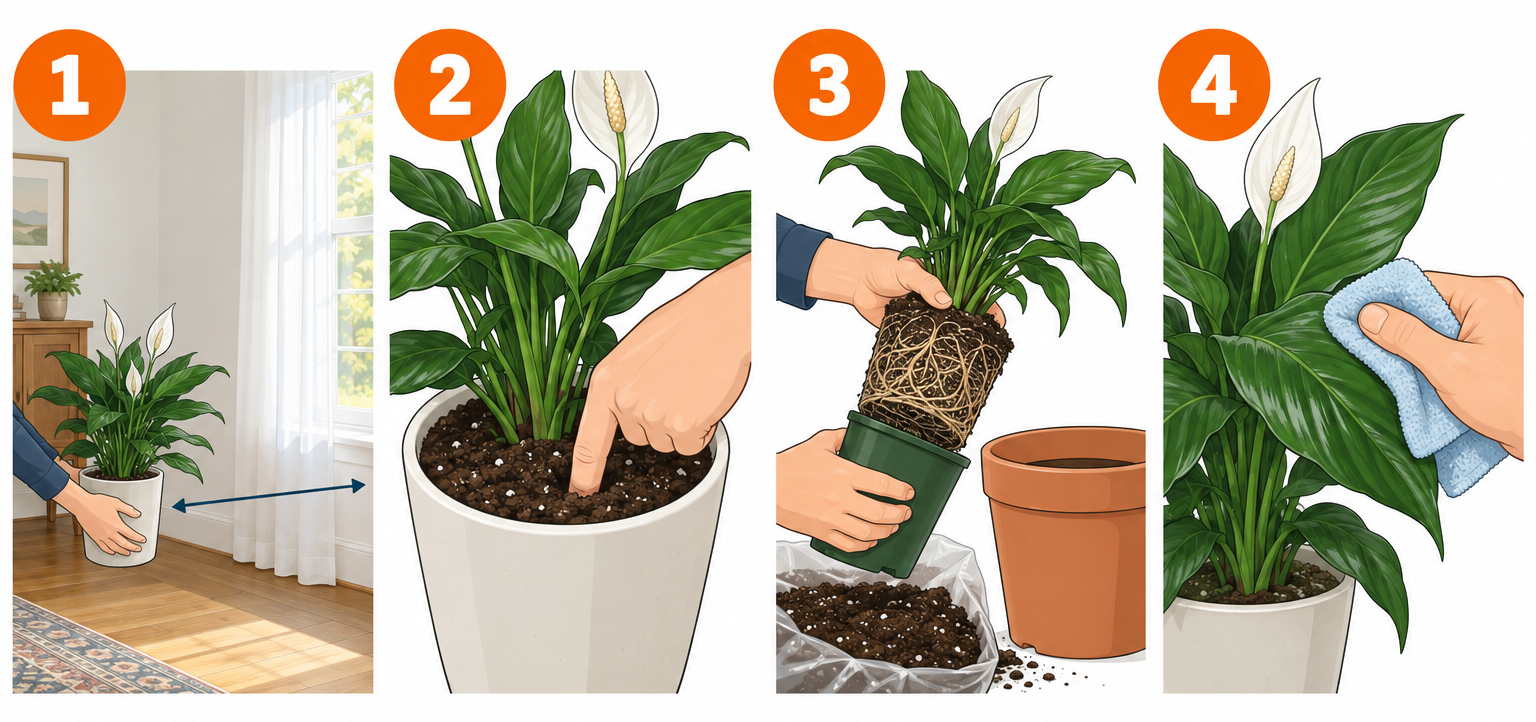
- Place it 3-6 feet from a bright window, out of direct sun.
- Water thoroughly when the top inch of soil feels dry.
- Use filtered, distilled or rain water if leaf tips brown.
- Keep it at 65-80°F and away from drafts and heat vents.
- Feed with half-strength houseplant fertilizer every 6 weeks, spring to late summer.
- Repot one size up, or divide, every 1-2 years in spring.
- Wipe leaves monthly and check undersides for pests.
Tools and materials
- Pot with drainage holes, 1-2 inches wider than the current one
- Peat- or coir-based potting mix plus perlite (about 3 parts mix to 1 part perlite)
- Balanced liquid houseplant fertilizer (such as 10-10-10 or 20-20-20)
- Watering can with a narrow spout
- Clean pruning snips or a sharp knife
- Soft cloth and a spray bottle
- Insecticidal soap (only if pests show up)
Safety first
Peace lilies contain insoluble calcium oxalate crystals that cause mouth and throat irritation if chewed. Keep the plant out of reach of children, cats and dogs, and wear gloves if your skin reacts to the sap.
Step 1: Pick the right spot
Spathiphyllum grows on the floor of tropical forests in Central and South America. In nature it lives in dappled shade, and that tells you most of what you need to know about placement.
The best place in my house is a few feet back from an east- or north-facing window. A west or south window works if a sheer curtain softens the light. Direct afternoon sun bleaches the leaves pale yellow and scorches brown patches into them within days.
Low light is where people get confused. A peace lily will survive in a dim hallway or office, which is why it has a reputation as an easy plant. However, it rarely blooms there. If you want the white flowers, it needs enough light to comfortably read a book by during the day.
Step 2: Water when the plant tells you
This is the step that kills most peace lilies, almost always through too much water, not too little.
I push a finger into the soil up to the first knuckle. If it’s dry at that depth, I water. In a typical home that works out to roughly once a week in summer and every 10-14 days in winter, but the finger test beats any calendar.
Water slowly until it runs out of the drainage holes, then empty the saucer after 15 minutes. Never let the pot sit in standing water.
Pro tip
A peace lily droops dramatically when it’s thirsty, then stands back up within a few hours of a good drink. If you’re a forgetful waterer, you can use that droop as your signal. Just don’t let it hit that point more than occasionally, because repeated collapses brown the leaf edges.
The flip side matters too. If the plant droops but the soil is wet, the roots are rotting, not thirsty. Adding more water makes it worse. Jump to the troubleshooting table below.
Step 3: Fix your water if the tips turn brown
Peace lilies are slightly sensitive to the salts, chlorine and fluoride in some tap water. The classic sign is crispy brown leaf tips on otherwise healthy leaves.
Leaving tap water out overnight lets chlorine dissipate, which helps a little. It does nothing for fluoride or dissolved minerals, though. If tips keep browning, I switch to filtered, distilled or collected rain water.
Every few months I also flush the pot. Run plain water through the soil for a full minute to wash out built-up fertilizer salts. A white crust on the soil surface or pot rim means it’s overdue.
Step 4: Keep it warm and humid
The comfortable temperature range is 65 to 80°F. Below about 60°F growth stalls, and cold drafts can blacken leaves. Watch for spots near exterior doors, drafty windows in winter, and the airflow from AC or heating vents.
Humidity is the other half. Peace lilies like 50% or higher, and most heated homes in winter sit well below that. Bathrooms with a window and kitchens are good spots. Otherwise I group it with other houseplants or set the pot on a tray of pebbles and water, keeping the pot base above the waterline.
Misting looks helpful but only raises humidity around the leaves temporarily, for roughly 30-60 minutes. I don’t bother with it.
Step 5: Feed lightly in the growing season
Peace lilies are light feeders. I use a balanced liquid houseplant fertilizer mixed at half the label strength, every 6 weeks from spring through late summer. No feeding in fall and winter when growth slows.
Overfeeding causes brown leaf tips and edges that look a lot like water problems. If you’re unsure, feed less. A healthy peace lily in good light needs very little.
Step 6: Repot or divide every 1-2 years
A peace lily is ready for a new pot when you see any of these:
- Roots circling the inside of the pot or poking out the drainage holes
- Water running straight through without soaking in
- The plant wilting 2-3 days after a full watering
- The plant looking top-heavy and tipping over
I repot in spring. Pick a pot only 1-2 inches wider than the old one. A pot that’s too big holds extra wet soil, and wet soil is what causes root rot. It must have drainage holes; a decorative pot without them can be used as a cover, with the plant in a plastic nursery pot inside.
Slide the plant out, loosen the outer roots with your fingers, and set it at the same depth it was growing before. Fill around it with fresh potting mix, firm it gently, and water well.
To keep the plant the same size, divide it instead. A mature peace lily is several crowns (clumps of leaves) growing together. Cut through the root ball with a clean, sharp knife so each section has at least 2-3 crowns and a good share of roots. Pot each one separately. Expect some drooping for a week or two while they settle.
Pro tip
Water the plant the day before you repot or divide. Moist roots hold together and tear less, and the plant recovers noticeably faster.
Step 7: Clean leaves, deadhead and check for pests
Those big, glossy leaves collect dust, which blocks light. Once a month I wipe both sides with a damp soft cloth, supporting the leaf with my other hand. Skip leaf-shine products, which can clog the leaf surface.
When a white flower (technically a spathe, wrapped around a central spike called a spadix) turns green or brown, cut its stalk off near the base. Do the same with fully yellow leaves.
The common pests are mealybugs (white cottony tufts), spider mites (fine webbing and speckled leaves), scale (small brown bumps) and fungus gnats (tiny flies around the soil). I check the leaf undersides while cleaning. Treat mealybugs, mites and scale with insecticidal soap every 5-7 days until they’re gone. Fungus gnats mean the soil is staying too wet, so let it dry further between waterings.
How to get a peace lily to bloom
Peace lilies usually bloom in spring and early summer, sometimes again later in the year. Many plants sold in stores were treated by growers to flower young, so it’s normal for a new plant to stop blooming for a while after you bring it home.
Three things bring the flowers back: more light (the most common fix), a plant that’s mature enough (generally a year or more old), and that light half-strength feeding through spring and summer. A slightly root-bound plant often blooms better than one in a roomy pot.
What to expect
With this routine, a healthy peace lily puts out new leaves from the center every few weeks in the growing season and holds deep green, upright foliage. In decent light you should see blooms each spring. Indoor plants usually top out between 1 and 3 feet tall depending on the variety, with large cultivars like ‘Sensation’ going bigger.
Troubleshooting peace lily problems
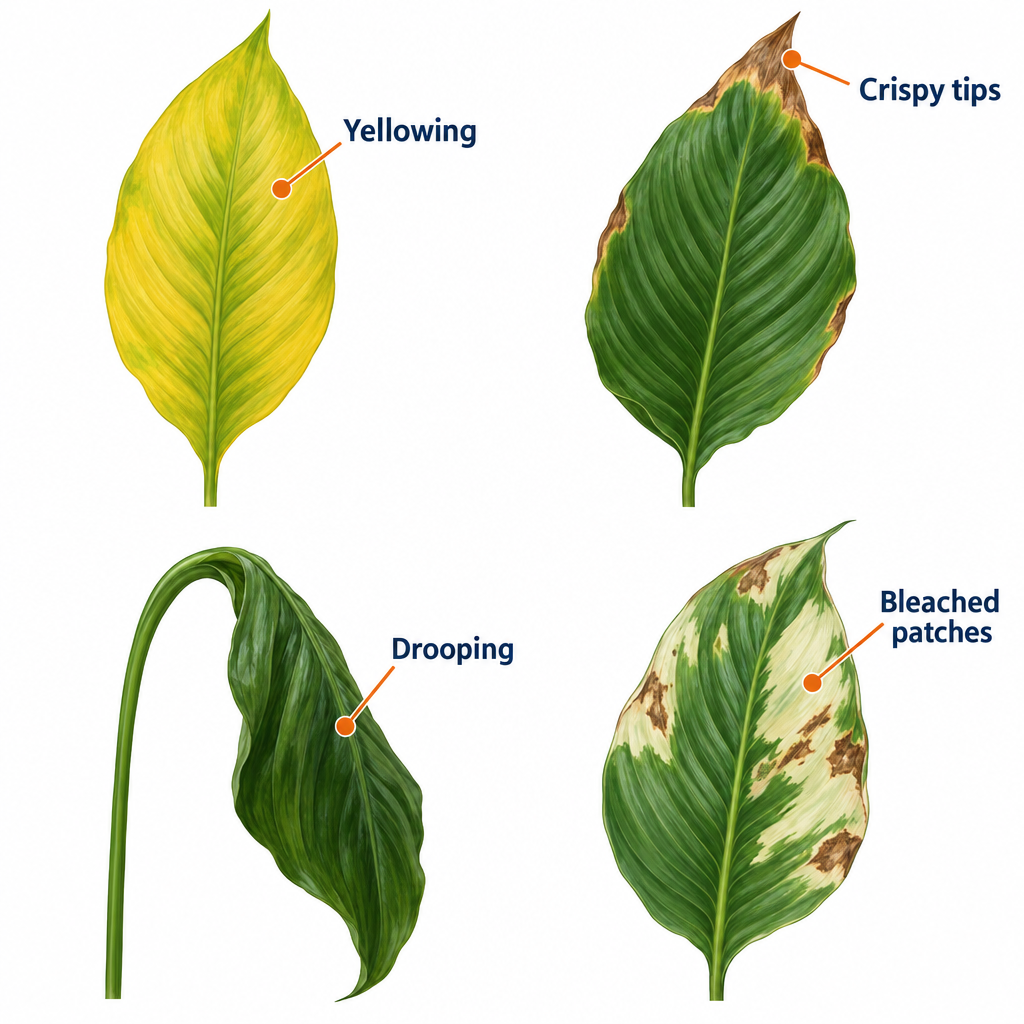
| Symptom | Likely cause | Fix |
|---|---|---|
| Whole plant droops, soil dry | Thirst | Water thoroughly; it should recover in a few hours |
| Droops, soil wet, mushy dark roots | Root rot from overwatering or no drainage holes | Trim rotted roots, repot in fresh mix, water less |
| Crispy brown leaf tips | Tap water chemicals, fertilizer salts, low humidity | Switch water source, flush soil, raise humidity |
| Yellow lower leaves | Old leaves dying naturally, or overwatering | Remove them; check soil moisture before watering |
| Pale, bleached or scorched leaves | Too much direct sun | Move farther from the window or add a sheer curtain |
| No flowers | Too little light, young plant | Move to brighter indirect light; feed in spring |
| Green flowers | Normal aging or excess fertilizer | Cut old blooms; reduce feeding |
| Webbing, speckled or sticky leaves | Spider mites, mealybugs or scale | Wipe leaves, spray insecticidal soap weekly |
| Black patches on leaves | Cold damage or drafts | Move away from doors, windows and vents |
When to call a pro
If a child or pet chews the plant and shows drooling, mouth pawing, vomiting or trouble swallowing, call Poison Control (1-800-222-1222) or the ASPCA Animal Poison Control Center (888-426-4435). For a plant that keeps declining despite good care, bring a photo and a leaf sample to your county extension office or a Master Gardener clinic, which can diagnose pests and diseases.
FAQ
What are the benefits of peace lily?
It handles lower light better than most flowering houseplants, tells you clearly when it needs water, and blooms indoors. Peace lilies appeared in NASA’s 1989 clean air study, but later research found you’d need an impractical number of plants to measurably clean the air in a real home. I treat it as a good-looking, forgiving plant, not an air purifier.
Where is the best place to put a peace lily in a house?
A few feet from an east- or north-facing window, or behind a sheer curtain at a south or west window. Bright bathrooms and kitchens are excellent because of the extra humidity. Avoid heat vents, cold drafts and direct afternoon sun.
Is a peace lily a good indoor plant?
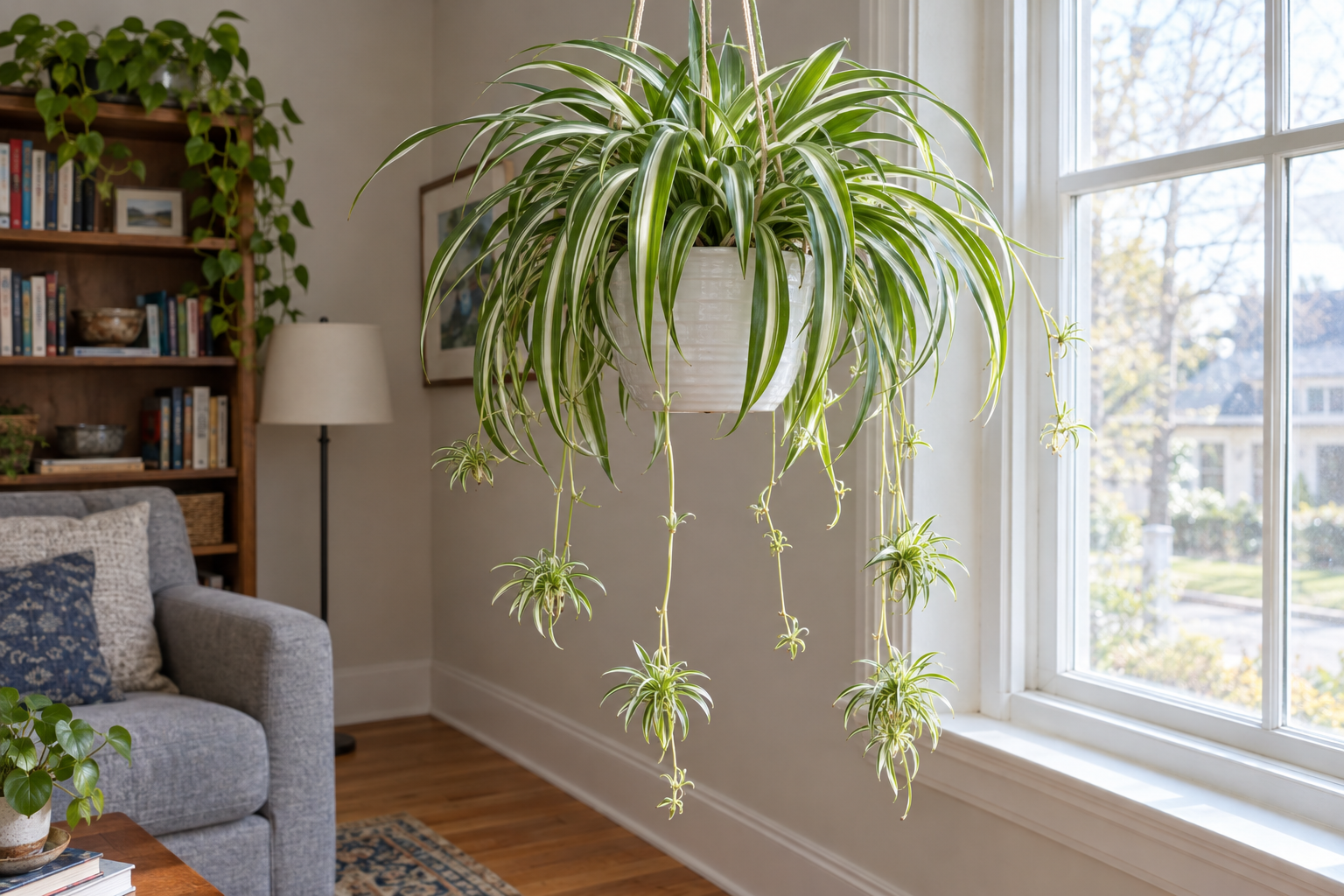
Yes, it’s one of the best for beginners. It tolerates a range of light, recovers fast from underwatering, and needs feeding only a few times a year. The one catch is pets: in a home with cats or curious dogs, a spider plant is a safer choice for similar conditions.
What are the disadvantages of peace lilies?
They’re toxic to pets and children if chewed, causing painful mouth irritation. They sulk in low light without flowering, react to tap water with brown tips, and rot quickly if overwatered. The pollen on blooms can also bother some allergy sufferers.
Is a peace lily a true lily?
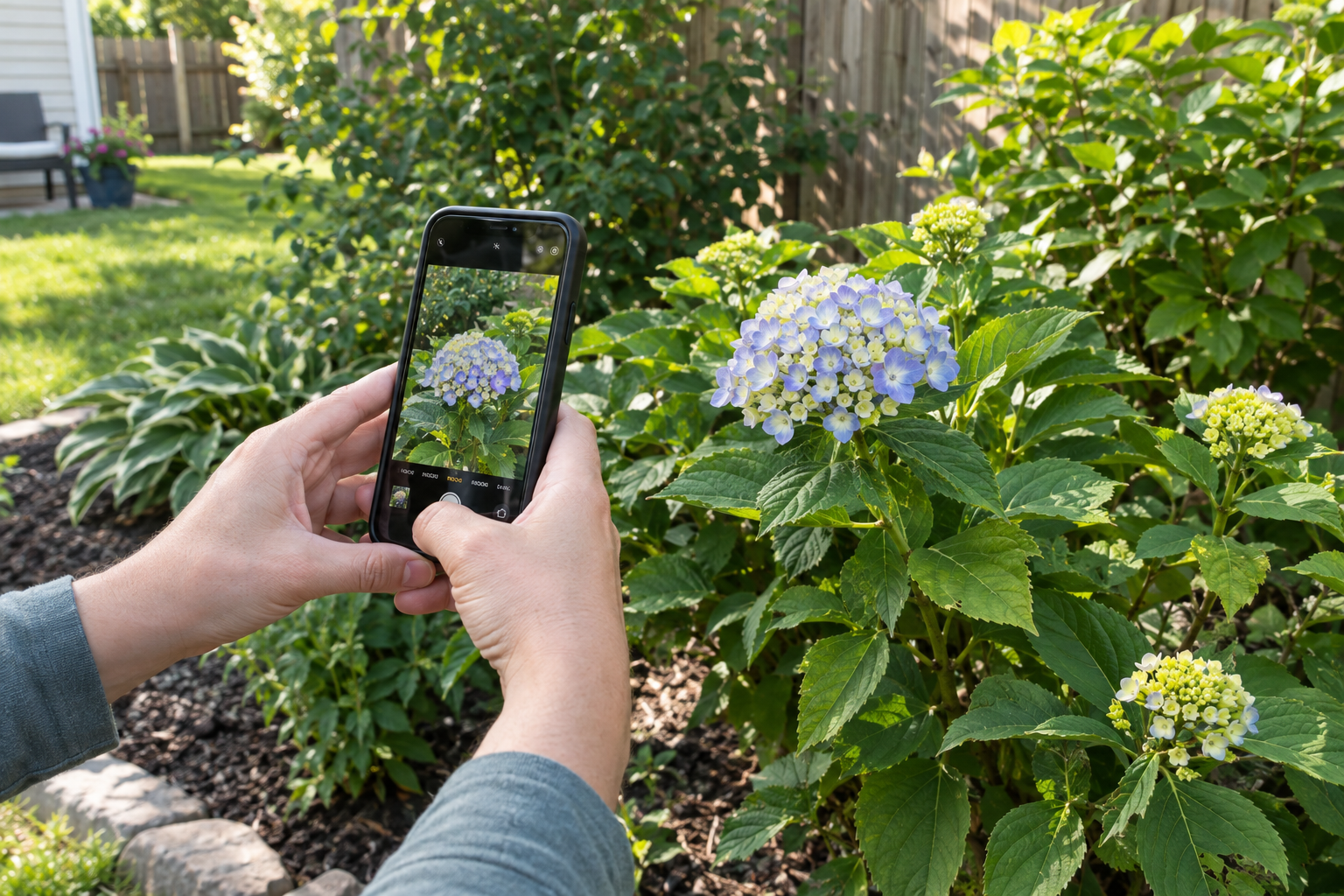
No. Spathiphyllum belongs to the arum family, the same family as calla lilies, not the true lily genus. That matters for cat owners: true lilies can cause kidney failure in cats, while peace lilies cause mouth irritation. If you’re not sure which plant you have, it’s worth taking a few minutes to identify plants and flowers properly before assuming it’s safe.