You get rid of fruit flies by removing whatever they are breeding in, then trapping the adults that are already flying while the last eggs die off. Traps alone never finish the job, because a single female lays hundreds of eggs in rotting fruit, a scummy drain or a wet recycling bin. Do both at once and a typical kitchen is clear in three to seven days.
Quick steps: clear a fruit fly infestation
- Confirm they are fruit flies, not drain flies or fungus gnats.
- Throw out or refrigerate every piece of ripe produce in the kitchen.
- Empty and scrub the trash can, compost pail and recycling bin.
- Scrub the sink drain and disposal, then treat with an enzyme drain cleaner.
- Set two or three apple cider vinegar traps near the worst activity.
- Wipe counters, under appliances and the floor around the trash daily.
- Keep traps up for a full week so the last hatch gets caught.
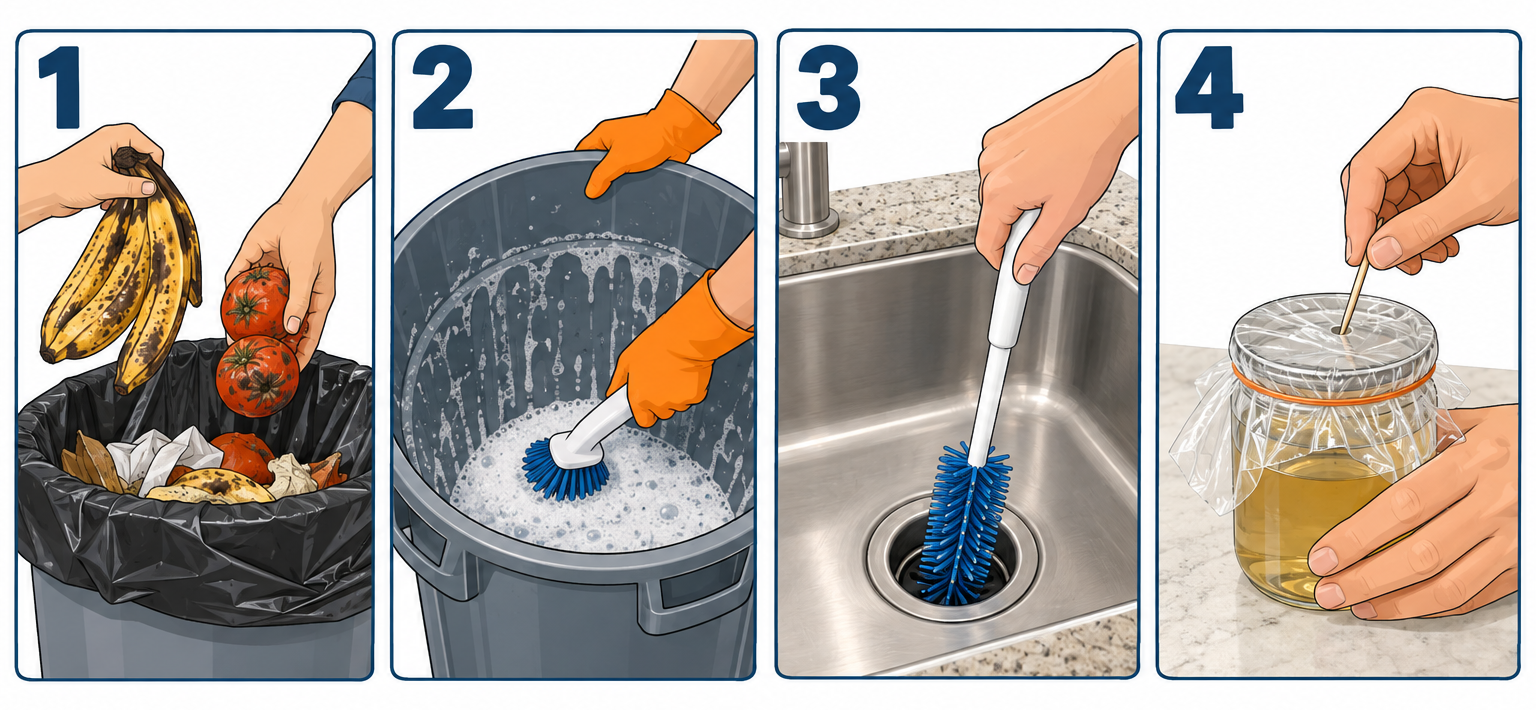
Tools and materials
- Apple cider vinegar (any brand, 16 oz bottle)
- Dish soap (Dawn or similar)
- Small jars or cups, 8 oz, and plastic wrap or a paper funnel
- Stiff drain brush or bottle brush, 1/2 inch to 1 inch diameter
- Enzyme or bio drain cleaner (Green Gobbler Fruit Fly Goodbye, InVade Bio Drain or Bio-Clean)
- Clear packing tape (for the overnight drain test)
- Trash bags, degreasing spray, microfiber cloths
- Optional: store-bought traps such as Terro Fruit Fly Trap or Zevo flying insect trap
Safety first
Never mix bleach with vinegar or any drain product; the combination releases chlorine gas. If you pour boiling water down a drain, do it slowly and never into a sink with standing water or into a garbage disposal that is running.
Step 1: Make sure you actually have fruit flies
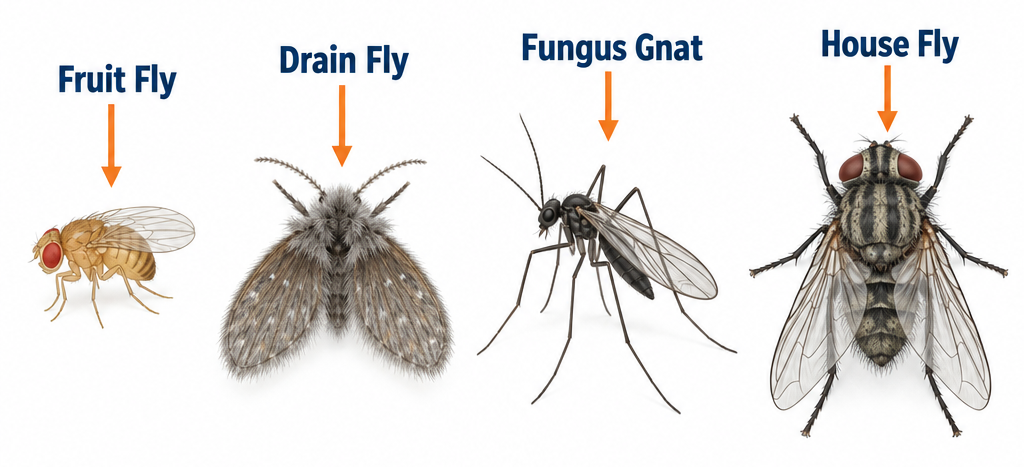
Three small flying insects get lumped together as “fruit flies,” and the fix is different for each. Spend two minutes looking before you spend an evening scrubbing the wrong thing.
Fruit flies are about 1/8 inch long, tan to light brown, with a rounded body and, on the common species, bright red eyes. They hover in a loose cloud over the fruit bowl, the trash or the sink and land in a slow, drifting way. Pull a banana out of the bowl and they scatter in every direction.
| Insect | Size and look | Where you find them | What fixes it |
|---|---|---|---|
| Fruit fly | 1/8 in, tan body, red eyes, rounded | Fruit bowl, trash, recycling, sink drain | Remove rotting food, clean drains, vinegar traps |
| Drain fly | 1/5 in, fuzzy, moth-shaped wings, gray | Resting on walls near a drain or floor drain, rarely over fruit | Scrub the drain film, enzyme cleaner |
| Fungus gnat | 1/8 in, black, long legs, looks like a tiny mosquito | Over houseplant soil, running across the potting mix | Let soil dry out, yellow sticky stakes, Bti mosquito bits |
| House fly | 1/4 to 5/16 in, gray with stripes, fast and loud | Windows, anywhere, buzzes you | Find the breeding source (trash, pet waste), fly swatter, window screens |
If what you have looks more like the second or third row, the vinegar trap will catch a few but will not end the problem. Drain flies need the drain film gone. Fungus gnats need dry soil. For the question of how to get rid of flies and fruit flies at the same time, the overlap is the trash can: a dirty can with meat scraps breeds house flies, and the same can with fruit scraps breeds fruit flies. Clean it and you fix both.
Pro tip
The overnight tape test tells you in one night whether a drain is involved. Dry the rim of the drain, lay a strip of clear packing tape across it sticky side down, leaving a gap for air, and check in the morning. Flies stuck to the underside mean that drain is a breeding site.
Step 2: Understand how fast they breed (and why traps alone fail)
A female fruit fly lays around 500 eggs over her life, usually in batches on the surface of anything fermenting. Eggs hatch in about a day. The larvae feed for five or six days, pupate, and emerge as adults. At a warm kitchen temperature of about 77°F the entire cycle takes roughly 8 to 10 days, and faster when it is hotter.
| Kitchen temperature | Egg to adult | What it means for you |
|---|---|---|
| 82°F and above | About 7 days | Summer kitchens turn a few flies into hundreds in a week |
| 77°F | 8-10 days | Standard timeline for most homes |
| 65°F | Roughly 2-3 weeks | Slows down but does not stop |
| Below 50°F | Development mostly stops | Why the refrigerator is your friend |
That timeline is the reason you keep seeing new flies two days after you threw out the bananas. Adults you trap today were born from eggs laid a week ago. Larvae still inside the trash can or the drain gunk will keep emerging for several more days after you remove the source. Plan on a full week of traps, not one night.
Step 3: Find and remove every breeding site
This is the part of the job that actually works, and the part most people skip. Fruit flies lay eggs on fermenting organic matter, which covers far more than fruit. Walk the kitchen with a trash bag and check each of these.
Produce. Anything ripe or past ripe goes in the refrigerator or in the outside bin tonight. Bananas, tomatoes, peaches, a split onion, the potatoes sprouting under the sink. Check the bottom of the fruit bowl for a leaking grape or a soft spot you cannot see from above.
Trash can. Pull the bag, then look at the can itself. Sticky residue on the bottom or a damp liner is enough to breed flies. Wash it outside with hot water and dish soap, dry it, and start a fresh bag. Do the same with any small countertop compost pail, which is the single most common hidden source in homes that compost.
Recycling bin. A beer bottle with a quarter inch of beer in it, a wine bottle, a soda can with syrup in the bottom, a yogurt tub not rinsed. Rinse everything before it goes in, and wash the bin.
Sink and disposal. The black slime that coats the inside of a drain pipe and the underside of the disposal splash guard is food and shelter for larvae. Step 4 covers this.
Everything else that stays wet. Run through this list; each one has caused an infestation I have been called about or dealt with myself.
| Hidden source | How to check | Fix |
|---|---|---|
| Mop head or wet rag | Smell it; sour means fermentation | Launder in hot water or replace |
| Under the refrigerator | Pull it out, look at the drip pan and floor | Empty and wash the pan, mop the floor |
| Spilled juice under the toaster or microwave | Lift each appliance | Degrease and wipe |
| Pet food bowl, especially wet food | Residue in the bowl or on the mat | Wash daily |
| Beer tap, kegerator, home brew | Drip tray, lines | Empty and clean the tray daily |
| Bag of onions or potatoes in the pantry | One rotten one at the bottom | Toss it, wipe the shelf |
| Damp area under the sink | Water stains, musty smell | Fix the leak first; if growth is present, remove the mold safely before anything else |
| Houseplant with fruit or rotting leaves | Dropped fruit on the soil | Clear the soil surface |
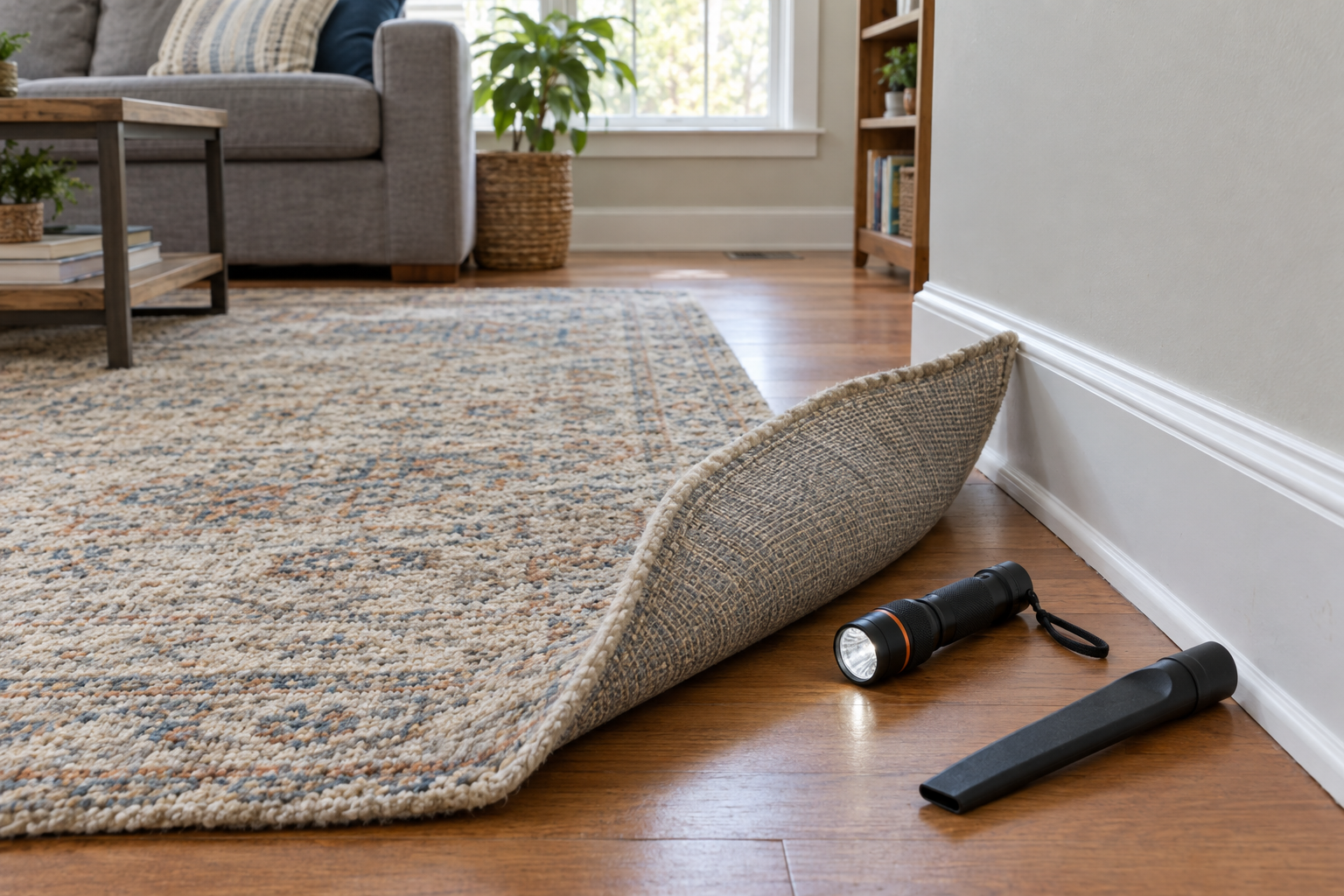
If you cannot find the source, use the flies themselves. Turn off the kitchen lights at night and come back with a flashlight an hour later. They settle near where they breed. A cluster on the cabinet door under the sink points at the drain; a cluster by the pantry points at produce.
Step 4: Clean the drains and disposal
Fruit flies and drain flies both breed in the organic film inside the drain, and pouring something down the pipe does not remove that film. You have to scrub it.
Start with the disposal. Unplug it or flip its breaker. Pull the rubber splash guard up and out if it is the removable type (most newer InSinkErator models are), and scrub both sides with dish soap and a brush. The underside is usually coated in black gunk. If the guard does not come out, fold each flap up and scrub underneath with a bottle brush.
Next, work a stiff bottle brush or drain brush as far down the drain as you can reach, which is usually 6 to 12 inches on a kitchen drain. Twist it against the pipe walls, pull it out, rinse, and repeat until it comes out mostly clean. Do the same on a bathroom sink if the tape test flagged it.
Then treat the pipe. An enzyme or bacterial drain product such as InVade Bio Drain, Green Gobbler Fruit Fly Goodbye or Bio-Clean digests the remaining film over several days. Pour the labeled dose (usually 4 to 8 oz) down the drain at night when the sink will not be used, and repeat for three to five nights. These cost roughly $10 to $25 and one bottle treats several drains.
Skip bleach. It kills some flies on contact but runs straight past the film without dissolving it, and the fumes are the worst part of the job. Boiling water helps a little on a metal drain but does nothing to the film under the disposal guard, and repeated boiling water is hard on PVC joints over time.
Finish by running the disposal with cold water and a handful of ice cubes for 30 seconds, which knocks loose anything the brush missed.
Pro tip
If a sink is barely used, such as a basement bar sink or a guest bathroom, the trap in the drain line can dry out and let sewer flies walk straight in. Run the water for 30 seconds once a week and pour a cup of mineral oil down the drain to slow evaporation.
Step 5: Set traps to catch the adults
With the source gone, the remaining adults are the only thing keeping the infestation alive. A homemade apple cider vinegar fruit fly trap catches them as well as anything you can buy, and you probably have the ingredients already.
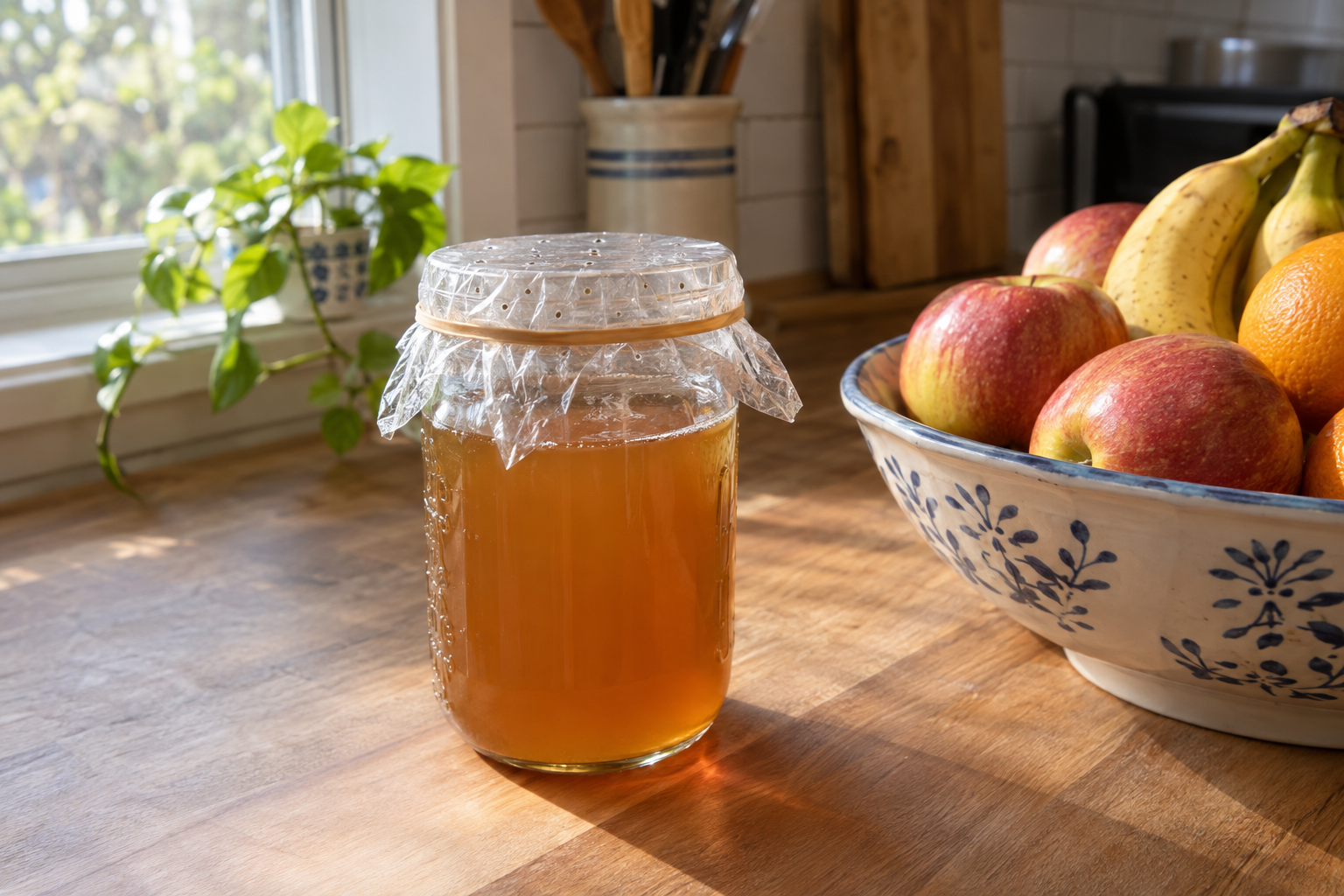
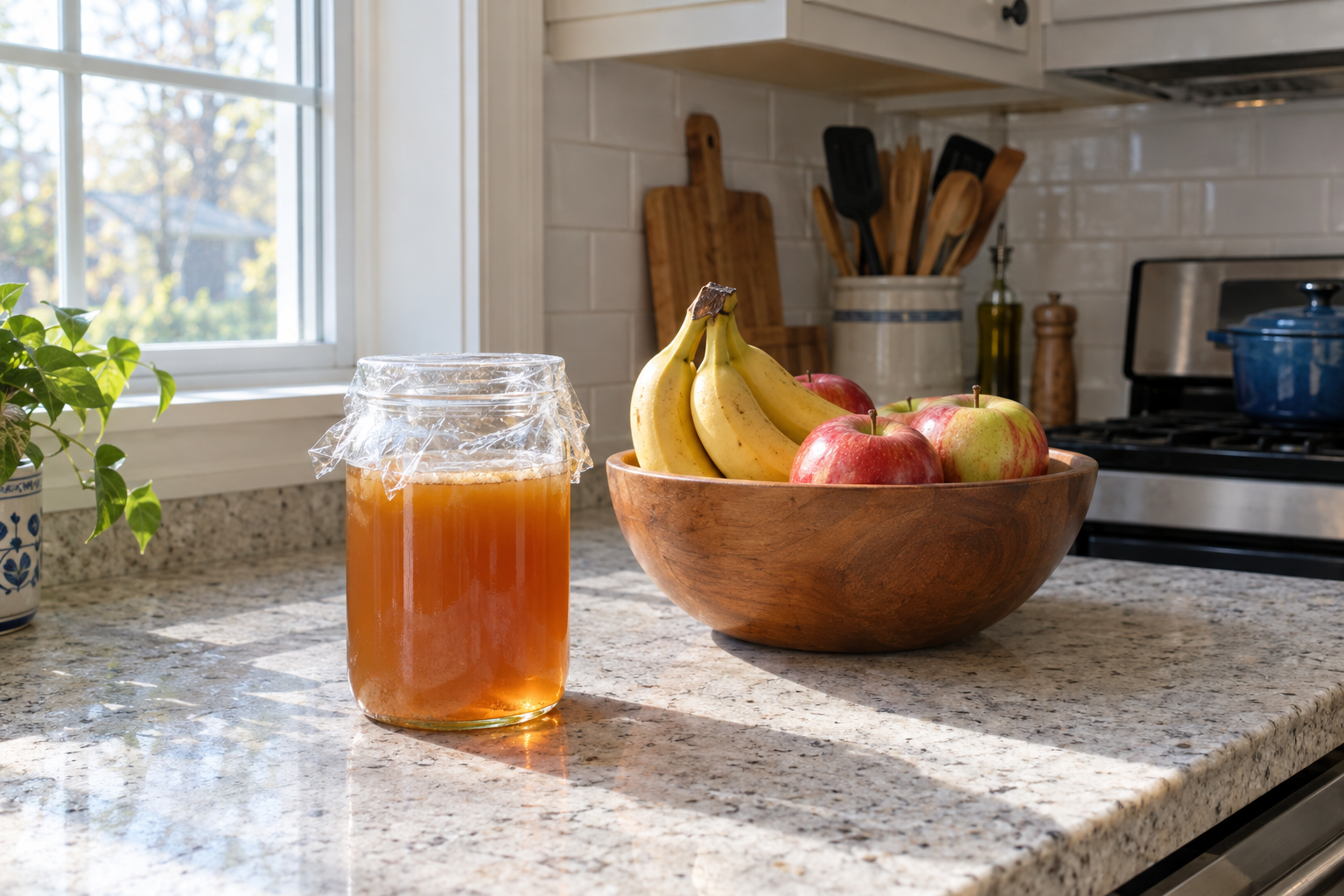
Pour about an inch of apple cider vinegar into a small jar or cup. Add two drops of dish soap and swirl gently. The soap breaks the surface tension so flies that land to feed sink instead of walking away. Leave the top open; the soap version works fine uncovered. If you want to be sure none escape, stretch plastic wrap over the top, rubber band it, and poke five or six holes with a toothpick.
Set two or three traps, not one. Put them where the flies are: next to the sink, beside the trash can, on the counter near the fruit bowl’s old spot. Keep them away from the open window, since you want the flies pulled toward the trap and not past it.
Refresh the vinegar every two or three days. Once it is full of dead flies or the smell fades, it stops working. Microwaving the vinegar for 10 seconds before you pour it makes it smell stronger and pulls flies faster on day one.
| Trap | Approximate cost | How it works | Best for |
|---|---|---|---|
| Apple cider vinegar + dish soap | Under $1 per trap | Flies land to feed and drown | Any kitchen; most reliable homemade option |
| Vinegar jar with paper funnel | Under $1 | Flies fly in through the narrow end and cannot find the way out | Catching live flies without soap |
| Overripe banana in a jar, plastic wrap with holes | Free | Fermenting fruit lures them in | Heavy infestations where vinegar fails |
| Red wine or beer dregs + soap | Free | Same as vinegar, stronger smell | Flies breeding in a recycling bin |
| Terro Fruit Fly Trap (2-pack) | About $7-10 | Liquid lure in an apple-shaped container, lasts about 30 days | Tidy countertop option, no refilling |
| Aunt Fannie’s FlyPunch | About $9 | Vinegar-based lure in a tub, lasts about 30 days | Same as above |
| Zevo flying insect trap (plug-in) | About $20, refills about $6 for 2 | UV light plus sticky cartridge | Catches fruit flies, gnats and house flies in one unit near an outlet |
| Yellow sticky stakes or cards | About $8 for 10-20 | Flies land and stick | Fungus gnats over houseplants, not great for fruit flies |
Store-bought traps earn their price in one situation: you do not want an open cup of vinegar on the counter for a week. They catch no more flies than the homemade version. A plug-in UV trap is worth it if you also get house flies and gnats, because it runs for months and sits out of sight next to the toaster.
Pro tip
Red wine is the fastest lure I have used. Pour the last half inch of a bottle into a cup with a drop of soap and set it beside the recycling bin. On a bad night it will have 50 flies in it by morning.
Step 6: Keep them from coming back
The source is gone and the traps are catching stragglers. Now hold the line for a week so the next generation never gets started.
Wipe counters, the stovetop and the sink every night. One juice ring under the cutting board is enough to restart the cycle. Rinse recyclables before they go in the bin. Empty the kitchen trash every day or two in warm weather, and keep the lid closed. Store any produce that is ripe in the refrigerator, and keep whatever you leave out in a bowl you empty and wash twice a week.
Give the drain its enzyme dose once a week for a month, then once a month as maintenance. Flies that come in on grocery produce (which is how most infestations start) find nothing to lay in and die within days.
Check window screens for gaps and keep the kitchen window closed in the evening during August and September, the peak months outdoors. If you have fruit trees, pick up dropped fruit, and keep the outdoor trash and compost bins at least 10 feet from the door.
What to expect, day by day
Day 1 after cleaning and setting traps: still plenty of flies, but the traps fill quickly. Day 2 and 3: a sharp drop as the adults die off. Day 4 through 7: a handful of new flies appear as the last larvae in whatever you missed emerge, and the traps catch them. Day 8 and beyond: none, provided you found every source.
If you are still seeing more than a few flies on day 7, you have a breeding site you have not found. Go back to the hidden source table and the flashlight test. Nine times out of ten it is the drain, the compost pail or something wet under an appliance.
Troubleshooting
| Symptom | Likely cause | Fix |
|---|---|---|
| Traps fill up but flies keep coming for weeks | Breeding site still active | Tape test every drain, pull out the refrigerator, check the recycling bin and mop |
| Flies ignore the vinegar trap | Wrong insect, or the trap is too far from the source | Confirm with the ID table; move traps to where the flies land; try red wine or a banana lure |
| Flies cluster on the wall near the sink but not the fruit | Drain flies or fruit flies breeding in the drain | Scrub the drain and disposal guard, enzyme cleaner for 3-5 nights |
| Tiny black flies over houseplants | Fungus gnats | Let soil dry 2 inches deep between waterings, yellow sticky stakes, Bti granules |
| Flies in a bathroom with no food around | Drain film in the sink, tub or an unused floor drain | Brush the drain, enzyme treatment, run water in unused drains weekly |
| Flies reappear every time you bring groceries home | Eggs arriving on produce | Rinse and refrigerate produce the day you buy it; keep one trap running on the counter |
| Flies in the basement or garage | Beer or soda cans in recycling, a fermenting bag of lawn clippings or a bin of fallen apples | Rinse cans, move organic waste outdoors, wash the bin |
| Flies only in the evening around the TV or lamp | Phototaxis at dusk, not a breeding site in that room | Keep working the kitchen; a plug-in UV trap in the living room catches the wanderers |
| Larvae (small white maggots) visible in the trash can | Heavy breeding in the can itself | Bag everything, scrub the can with hot soapy water, dry it in the sun |
Common mistakes
Fogging the kitchen with an aerosol spray. It kills the adults you can see, leaves the eggs and larvae untouched, and coats your counters and food prep surfaces in insecticide. Two days later the flies are back.
Setting one trap and waiting. One trap in a 150-square-foot kitchen catches the flies that happen to pass it. Three traps in the right spots catch most of the population.
Pouring bleach down the drain. It does not remove the film and the chlorine smell lingers for a day. A brush and an enzyme product do the actual work.
Leaving the compost pail on the counter. Even with a lid, a pail with three days of peels in it is a fruit fly nursery. Empty it daily or keep it in the freezer.
Quitting after two clear days. The eggs you missed are still developing. Keep the traps up for a week.
When to call a pro
Call a pest control company if flies persist past three weeks after you have cleaned every drain, bin and appliance, or if the flies are coming from a wall void, a floor drain you cannot reach or a broken drain line under a slab. A persistent sewer smell with drain flies points to a cracked pipe or a dry trap, and that needs a plumber, not an exterminator. A single pest control visit for small flies typically runs $150 to $300, with the national average around $200 to $250, and the technician’s main value is finding the source you could not.
FAQ
How do you get rid of fruit flies overnight?
You can knock the adult population down overnight with three vinegar-and-soap traps and a thorough counter wipe, but you cannot end the infestation that fast. Eggs already in the drain or trash will hatch over the next several days. Remove the sources the same night and the flies are gone within a week.
Why do I still have fruit flies after cleaning everything?
Almost always because one breeding site is still active, and the usual suspects are the sink drain, the garbage disposal splash guard, a compost pail, a wet mop or a spill under the refrigerator. Use the tape test on every drain and the flashlight test after dark to find where they settle.
Does apple cider vinegar really work on fruit flies?
Yes. Fruit flies are attracted to the smell of fermentation, and apple cider vinegar is fermented apple juice. Add two drops of dish soap so they sink when they land. Red wine and beer work just as well, and a piece of overripe banana in a covered jar works when the kitchen already smells strongly of other food.
What is the difference between fruit flies and drain flies?
Fruit flies are tan with red eyes and hover over food. Drain flies are gray, fuzzy and moth-shaped, and they rest on walls near a drain instead of flying around fruit. Both breed in drain film, so the drain cleaning step fixes either one, but only fruit flies respond well to a vinegar trap.
How do I get rid of fruit flies in the bathroom?
Bathroom fruit flies are almost always breeding in the sink or tub drain, or in a floor drain that has dried out. Brush the drain, treat it with an enzyme cleaner for three to five nights, and run water in any rarely used drain once a week to keep its trap full.
Can fruit flies come from the sink?
They can and often do. The slime coating the inside of a drain pipe and the underside of the disposal splash guard is exactly what larvae feed on. If flies keep showing up around a clean kitchen with no produce out, the drain is the first place to check.
Will fruit flies go away on their own?
Only if their food source dries up. Indoors, with a fruit bowl, a trash can and a damp drain, they have everything they need year-round. Remove the sources and they are gone in about a week. Leave the sources and they stay indefinitely.
Do fruit flies bite or carry disease?
They do not bite. They can carry bacteria from rotting material onto food surfaces, which is a reason to deal with them promptly, but they are a nuisance rather than a health threat in a normal home.