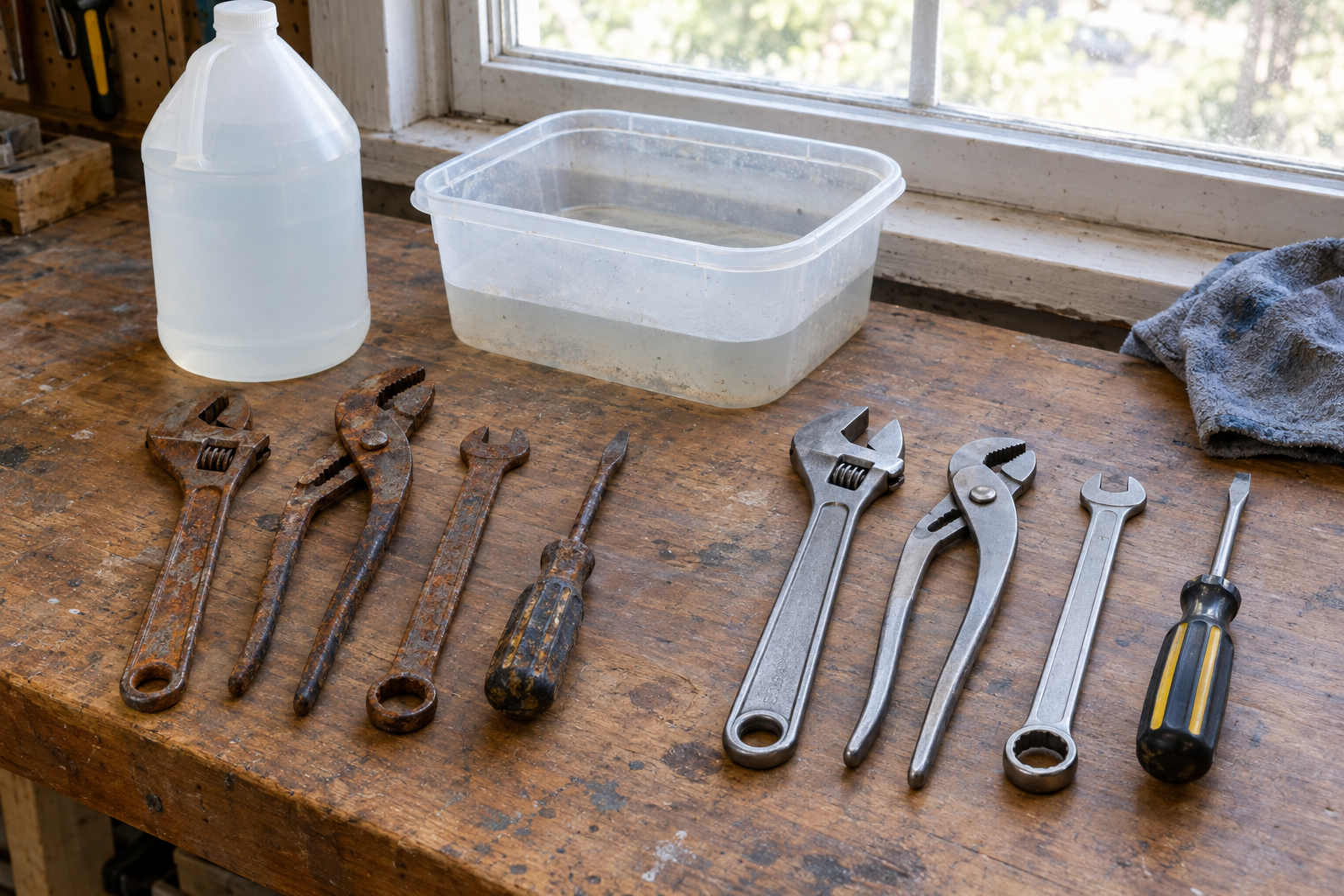
Submerge the rusty part in plain white distilled vinegar, let it soak for 1 hour for light surface rust or up to 24 hours for heavy scale, then scrub the loosened rust off with a brush or steel wool. Neutralize the acid with a baking soda rinse, dry the metal fast, and oil or paint it right away. Skipping that last step lets flash rust come back by morning.
Quick steps: remove rust with white vinegar
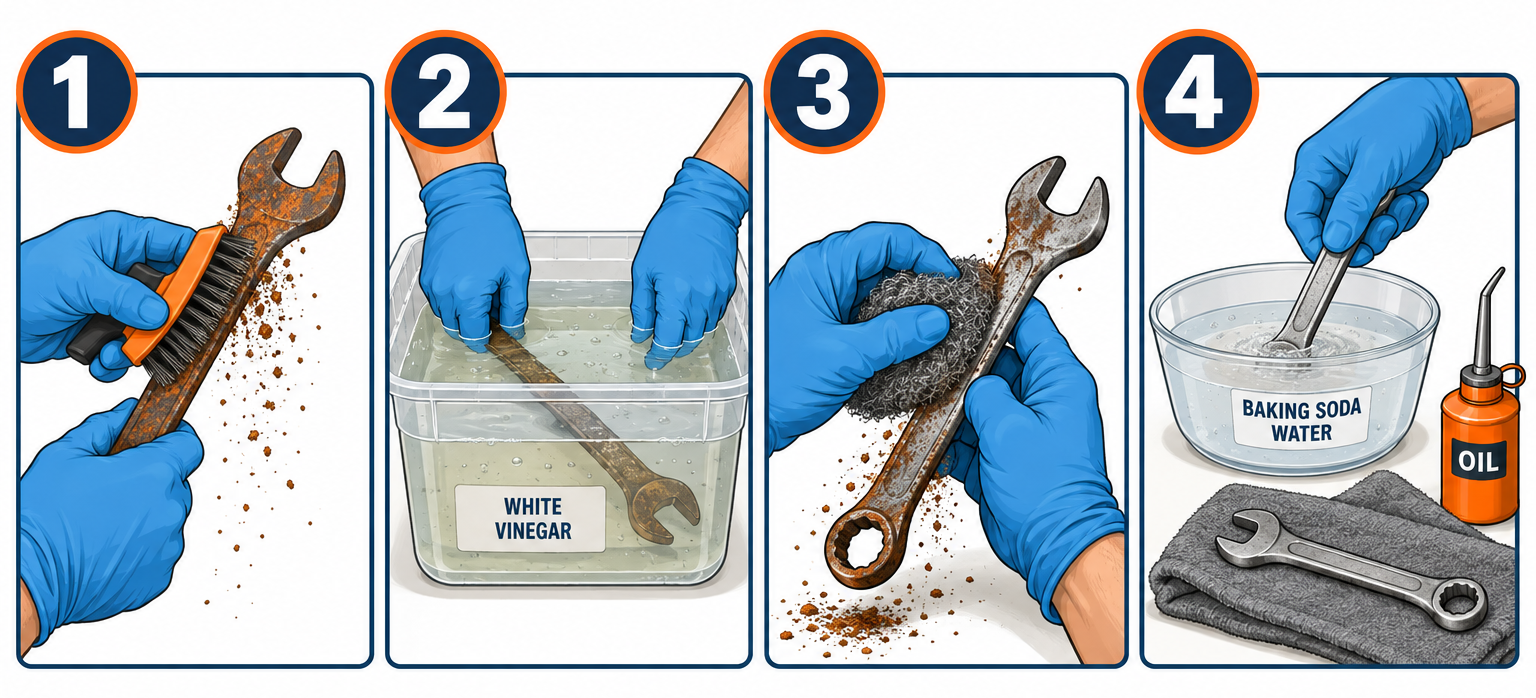
- Confirm the part is plain steel or iron, then degrease it.
- Knock off loose flakes with a wire brush.
- Submerge the part fully in white vinegar in a plastic or glass container.
- Soak 1-3 hours for light rust, overnight for moderate, up to 24 hours for heavy.
- Scrub with a brass brush or #0000 steel wool and rinse.
- Neutralize in baking soda water, then rinse again.
- Dry completely within minutes using a towel and a hair dryer.
- Coat with oil, wax or primer the same day.
Tools and materials
- White distilled vinegar, 5% acidity (1 gallon, about $3-5)
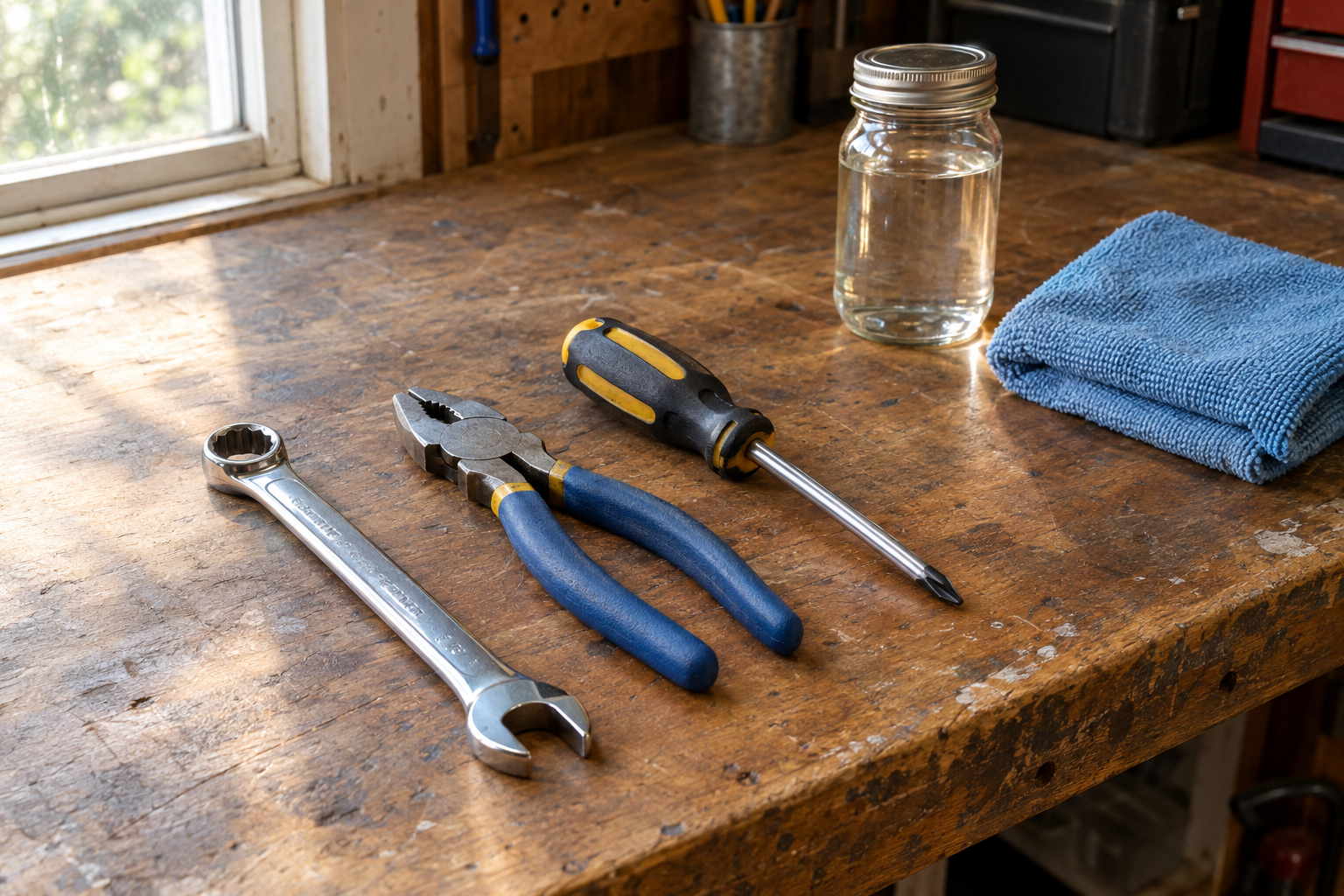
- Plastic tub, glass jar or heavy zip-top freezer bag (never a metal container)
- Nitrile gloves and safety glasses
- Dish soap or a citrus degreaser
- Brass wire brush, stiff nylon brush and an old toothbrush
- #0000 steel wool or a gray Scotch-Brite pad
- Baking soda (about 1/2 cup)
- Rags or shop towels
- Hair dryer, heat gun or a kitchen oven set low
- Protectant: WD-40, 3-in-One oil, Boeshield T-9, paste wax or rust-inhibiting primer
- Optional: table salt, plastic wrap, paper towels, coffee filters
Calculators for this job
Safety first
Wear nitrile gloves and safety glasses, and work with a window open or outdoors. Never mix vinegar with bleach (it releases chlorine gas), and keep 20-30% horticultural vinegar off your skin and out of your eyes because it burns.
Step 1: Check what the part is made of
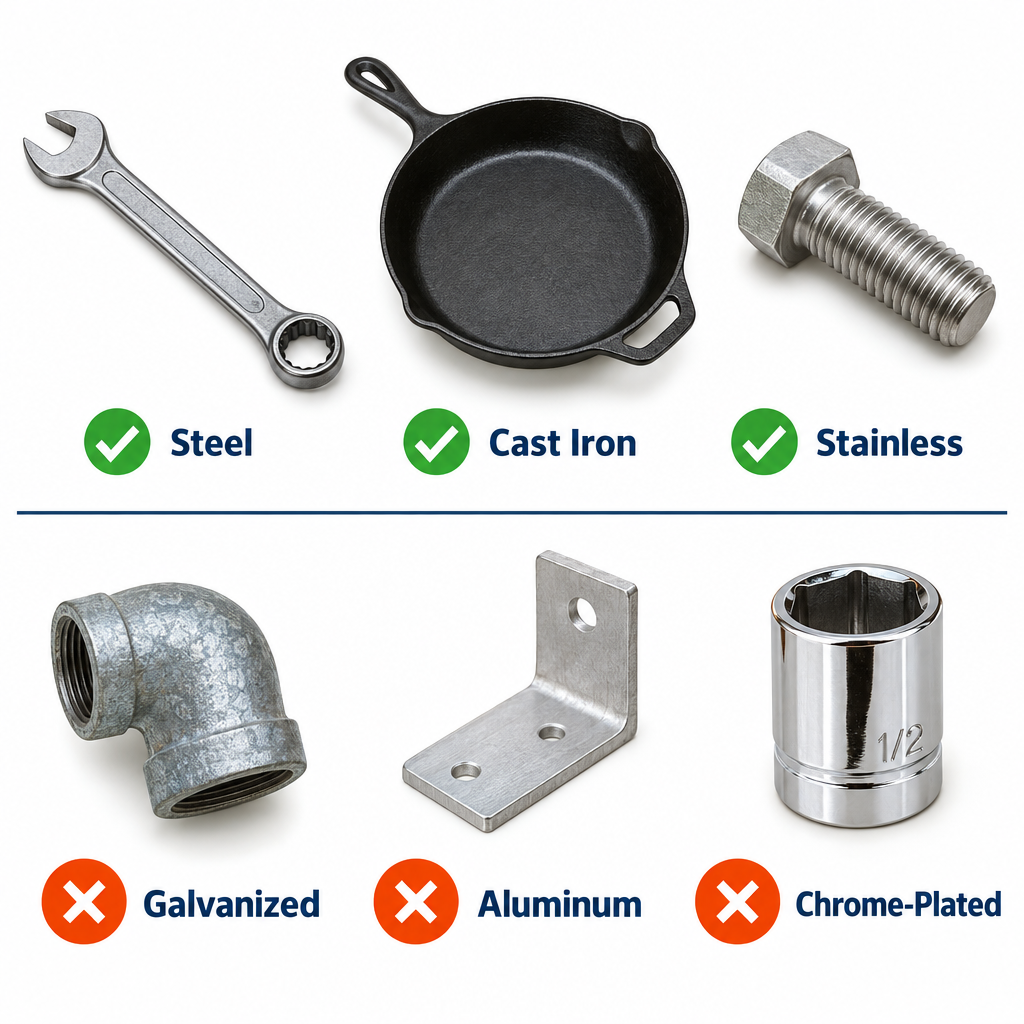
Vinegar works on iron and plain carbon steel. That covers most hand tools, cast iron skillets, nuts and bolts, old hardware, garden tools, bike chains and machinery parts. The acetic acid reacts with iron oxide and turns it into iron acetate, which dissolves or loosens enough to brush away. The catch is that the acid doesn’t stop at the rust. Once it eats through the oxide it starts on the bare metal underneath, which is why soak time matters so much.
Before you drop anything in a tub, check the metal against this list.
| Material or finish | Safe to soak in vinegar? | What happens |
|---|---|---|
| Plain steel, cast iron, wrought iron | Yes | Rust dissolves; bare metal turns dull gray |
| Stainless steel | Yes, short soaks | Surface rust stains lift quickly, often in under an hour |
| Galvanized steel | No | Acid strips the zinc coating that protects the steel |
| Aluminum | No for long soaks | Etches and darkens; aluminum doesn’t rust anyway |
| Chrome-plated tools | Brief wipes only | Acid creeps under the plating and can lift or flake it |
| Brass and copper | Short soaks only | Cleans tarnish, but long soaks can turn brass pinkish |
| Painted or powder-coated parts | Expect paint loss | Acid softens and lifts paint at the edges |
| Springs and hardened high-strength bolts | Avoid | Acid exposure can make hardened steel brittle |
A magnet helps when you aren’t sure. It sticks to steel and cast iron, and it won’t stick to aluminum, brass or copper. Stainless is mixed, since some grades are magnetic, but stainless rust is usually thin surface staining that wipes off.
Also look for things that shouldn’t get wet at all. Wood handles swell and crack if they sit in vinegar, so either remove them or set the part so the handle stays above the liquid. Etched logos and measurement markings on saw blades, squares and rules can fade, so soak those in short rounds and check them often. Precision measuring tools like calipers and micrometers are a poor fit for vinegar. Clean those with a light oil and a fine abrasive pad instead.
Step 2: Degrease and knock off loose rust
Vinegar can’t reach rust that’s under a film of grease, oil or old grime. A wrench that’s been sitting in a toolbox for years is usually coated in both, and an oily part will come out of the soak with rust-free patches next to untouched ones.
Wash the part in hot water with a good squirt of dish soap, or spray it with a citrus degreaser and wipe it down. Scrub threads and crevices with an old toothbrush. Rinse and let it drip.
Next, take a brass or steel wire brush to any thick, flaky scale. You’re not trying to finish the job here. You just want the loose, crusty layers gone so the vinegar spends its strength on the rust still bonded to the metal. On heavily rusted parts this step can cut soak time by several hours.
Pro tip
Take apart anything that comes apart before you soak it. Pliers, shears and hinges trap vinegar in the pivot, and that trapped acid keeps working long after you’ve rinsed the outside. If the pivot is seized, soak the whole tool, then work the joint back and forth while it’s still wet.
Step 3: Set up the vinegar soak
Pick a container just big enough to hold the part with the vinegar covering it by at least half an inch. Smaller containers mean less vinegar, so a tight fit saves you money.
- Small parts (bolts, screws, washers, small hardware): a glass mason jar or a quart zip-top freezer bag. Squeeze the air out of the bag so the vinegar wraps the parts.
- Hand tools (wrenches, pliers, chisels): a plastic shoebox-size storage tub or a loaf pan you never plan to cook in again.
- Long items (saw blades, machetes, files): a wallpaper trough or a length of 4-inch PVC pipe capped at one end and stood upright.
- Cast iron skillets: a plastic tub or a clean sink with the drain plugged, using a 50/50 mix of vinegar and water.
Never use a metal pan or bucket. The vinegar will attack the container along with your part, and you’ll get rust stains and a weaker solution.
Pour in straight white vinegar for most steel parts. Full-strength 5% vinegar is the standard, and it’s strong enough for anything short of thick scale. Cut it 50/50 with water for cast iron cookware and anything with plating or markings you want to protect, since the slower reaction gives you more control.
Adding salt is optional. Many restorers stir in about 2 tablespoons of table salt per quart, and it speeds the reaction a little on heavy rust. The downside is that salt itself promotes rust, so if you use it you have to rinse and neutralize thoroughly in Step 6. For light rust, skip it.
Warm vinegar works faster than cold. Using vinegar from a jug that’s been in a warm room, or setting the container in a sunny spot, makes a noticeable difference in winter. Don’t boil vinegar or heat it on the stove, because the fumes get harsh fast in a closed kitchen.
Drop the part in and make sure it’s fully submerged. Any area sticking out of the liquid will form a hard line where the rust stops, and sometimes it rusts worse right at the waterline.
Step 4: Soak for the right amount of time
Getting the time right is what separates a clean part from a pitted, etched one. Vinegar is slow and forgiving compared to commercial acids, but leaving steel in it for days removes good metal along with the rust.
| Rust level | What it looks like | Soak time | Check every |
|---|---|---|---|
| Light | Orange haze or spots; metal visible underneath | 30 minutes to 3 hours | 30 minutes |
| Moderate | Even brown coating; surface feels rough | 8-12 hours (overnight) | 4 hours |
| Heavy | Thick, bumpy scale; flakes when scraped | 12-24 hours | 6 hours |
| Severe | Deep crust, metal swelling or delaminating | 24 hours max, then scrub and repeat | 6 hours |
To check progress, pull the part out with gloves on and rub a test spot with steel wool. If the rust wipes away and you see gray metal, it’s done. If it’s still hard and brown, put it back.
You’ll see small bubbles forming on the metal as it soaks. That’s normal. The vinegar will also turn cloudy, then orange, then brown as it fills with dissolved iron. Some parts grow a black or dark gray film after a few hours. That smut is carbon and iron compounds left behind as the rust dissolves, and it wipes off during scrubbing.
Don’t push heavy rust past 24 hours in one go. Pull the part, scrub off what’s loosened, and soak again in fresh vinegar if needed. Two 12-hour rounds with a scrub in between beat one 48-hour soak every time, because the scrubbing exposes the next layer and the fresh vinegar hasn’t been weakened by dissolved iron.
Step 5: Scrub the loosened rust away
Take the part out of the vinegar and set it on an old towel or a few layers of newspaper. Work while it’s still wet, since the softened rust brushes off much more easily before it dries.
Start with the gentlest tool that gets results:
- Nylon brush or toothbrush for light rust and for threads.
- #0000 steel wool for flat surfaces and light pitting. It’s fine enough that it won’t scratch most tool steel noticeably.
- Brass wire brush for moderate rust. Brass is softer than steel, so it removes rust without gouging the metal.
- Steel wire brush or a gray Scotch-Brite pad only for heavy scale on parts where looks don’t matter, like garden tools or old bolts.
For threads, run a nut down a bolt or a bolt through a nut a few times while wet. That clears rust from the root of the threads faster than any brush.
Rinse under running water as you go so you can see what’s left. If stubborn patches remain, put the part back in the vinegar for another hour or two rather than scrubbing harder. Aggressive scrubbing on soft spots leaves bright scratches that look worse than the rust did.
What a finished part looks like
Set your expectations before you scrub. Vinegar won’t return steel to a mirror shine. Most parts come out a flat, even gray, sometimes darker in spots where the rust was deepest. Cast iron comes out a dull gunmetal gray with no seasoning left at all.
Pitting is the other surprise. Rust doesn’t sit on top of steel; it replaces it. Once the rust is gone, you’ll see the shallow craters it left behind. Vinegar can’t fill those, and on a hand tool they rarely affect function. If you want a polished finish, follow up with a buffing wheel and metal polish, or wet-sand with 400- then 600-grit paper on flat surfaces.
Step 6: Neutralize the acid and rinse
Vinegar left in pores, pits and threads keeps etching the metal and will pull moisture from the air. A quick neutralizing bath stops that.
Mix about 2 tablespoons of baking soda per quart of warm water in a clean container. Dunk the part or swish it around for a minute or two. You may see some fizzing in crevices; that’s the baking soda reacting with leftover acid, and it tells you the step was worth doing. When the fizzing stops, the acid is neutralized.
Rinse once more in clean water to wash off the baking soda residue. If you added salt in Step 3, give the part an extra-thorough rinse here and work the water into threads and joints.
Step 7: Dry the metal immediately
This is where most people lose the job. Freshly de-rusted steel has no protection at all, and bare iron that’s wet can grow a fresh orange haze, called flash rust, within minutes to a few hours depending on humidity. You want it bone dry before that happens.
Towel the part off right away, pressing into crevices. Then drive out the remaining water:
- Hair dryer or heat gun on medium for a minute or two, moving constantly. Keep a heat gun a few inches away and off plastic and rubber parts.
- Compressed air to blow water out of threads, pivots and holes.
- Kitchen oven at about 200°F for 10-15 minutes for all-metal parts like bolts, chisel blades and cast iron. This is the most reliable method for complex parts.
Cast iron skillets need the oven treatment anyway. Dry the pan on a burner or in the oven until all moisture is gone, then go straight to seasoning in Step 8.
Pro tip
Spray WD-40 on the part while it’s still slightly damp after towel-drying. The name stands for “water displacement,” and it pushes water out of pits and threads better than air drying alone. Wipe off the excess, then apply your longer-lasting protectant on top.
Step 8: Protect the metal so rust doesn’t come back
Bare steel will rust again the next humid day unless you seal it off from air and moisture. Choose a protectant based on how the part is used.
| Part | Best protectant | How to apply |
|---|---|---|
| Hand tools in a toolbox | Boeshield T-9 or 3-in-One oil | Thin coat, wipe off excess, recoat every few months |
| Woodworking tools and cast iron tool tables | Paste wax (Johnson’s or similar) | Thin coat, let haze 10 minutes, buff off |
| Knives, axes, garden tools | Camellia oil or mineral oil | Wipe on, wipe off; food-safe for kitchen blades |
| Cast iron cookware | Vegetable oil, shortening or flaxseed oil | Thin coat, bake upside down at 450-500°F for an hour, repeat 2-3 times |
| Outdoor hardware, railings, patio furniture | Rust-inhibiting primer and paint | Prime within a few hours of cleaning, then topcoat |
| Bolts going back into service | Light machine oil or anti-seize on threads | Coat threads before reinstalling |
WD-40 alone is a short-term fix. It displaces water and leaves a light film, but it evaporates over weeks. Use it as a first coat, then follow with oil, wax or paint for anything that won’t be used and wiped down regularly.
For painted metal, timing matters more than the brand. Prime the same day, ideally within a couple of hours of drying, before any flash rust has a chance to form. A rust-inhibiting primer from the Rust-Oleum or similar lines adheres well to vinegar-cleaned steel because the acid leaves a slightly etched surface.
How to remove rust from parts too big to soak
Car bumpers, grill grates, wheelbarrows, gates and table saw tops won’t fit in a tub. You can still use vinegar by keeping it in contact with the rust long enough to work.
The wrap method. Soak paper towels or old rags in white vinegar and press them flat against the rusty area. Cover them with plastic wrap or a trash bag and tape the edges so the vinegar can’t evaporate. Leave it 4-12 hours, re-wetting the towels if they start to dry. Peel it off, scrub, and treat as in Steps 6-8.
The thickened paste. On vertical surfaces where wet towels slide off, mix vinegar with enough flour or cornstarch to make a paste about the thickness of yogurt. Add a pinch of salt if you like. Spread it 1/8 inch thick over the rust, cover with plastic wrap, and leave it for a few hours. Scrape and scrub it off when it’s done.
The spray-and-scrub method. For light surface rust on large flat areas like a table saw top, spray vinegar on, let it sit 10-15 minutes, and work it with a gray Scotch-Brite pad. Wipe, neutralize with a damp baking soda rag, dry, and wax right away. Cast iron tool tops flash rust especially fast, so work in sections of about two square feet.
Grill grates are a common candidate. A large trash bag filled with vinegar, a grate and a twist tie can sit overnight in a utility sink. Scrub with a grill brush, rinse, dry over a hot grill, and oil lightly. If the bars are rusted through or crumble when brushed, replace the grates. Vinegar can’t restore metal that’s gone.
Rust stains on other surfaces
Rust doesn’t only show up on tools. Vinegar handles some household rust stains well and damages others.
Fabric. Rust stains on cotton and polyester often lift with vinegar and salt. Lay the stained area flat, sprinkle with table salt, saturate with white vinegar, and set it in direct sun for an hour or two. Check the fabric isn’t colorfast-sensitive by testing a hidden seam first. Rinse and wash normally. Don’t put the item in a dryer until the stain is gone, since heat sets rust. Lemon juice works the same way and is slightly stronger. Skip vinegar on silk and acetate.
Porcelain toilets, tubs and sinks. Vinegar handles light rust rings around drains and the toilet waterline. Shut off the toilet supply, flush to drop the water, and pack vinegar-soaked paper towels against the ring for a few hours. For heavier rust stains on porcelain, an oxalic acid cleaner like Bar Keepers Friend works faster. Recurring rust stains usually point to high iron in your water, which a water test and filter fix at the source.
Concrete. Vinegar can lighten fresh rust drips on a driveway or patio, but it also etches the cement paste and can leave a lighter blotch. Test a small area, use a stiff nylon brush, and rinse heavily. Commercial rust removers built for concrete give more even results on old stains.
Natural stone. Keep vinegar off marble, travertine, limestone and most granite countertops. The acid dissolves calcium-based stone and leaves dull, etched spots that need professional polishing. Use a stone-specific poultice instead.
Vinegar is also a popular pick for bathroom mildew, but rust and mold call for different approaches. If you find mold during a cleanup, look up how to remove mold safely before you start spraying anything.
Which vinegar works best for rust removal
Plain white distilled vinegar is the right choice for almost every rust job. It’s cheap, clear (so you can watch the part), and consistent from bottle to bottle. Grocery-store white vinegar is standardized at 5% acetic acid.
Cleaning vinegar sold in the cleaning supplies aisle runs 6% acidity. That 1-point bump makes it about 20% stronger, which shortens soak times a little. It’s worth buying if you’re doing a big batch of rusty hardware, and it costs about the same per gallon.
Apple cider vinegar has similar acidity and works on rust, but it’s more expensive, the color hides what’s happening in the tub, and the sugars leave a sticky residue. Save it for cooking or a fruit fly trap.
Horticultural vinegar at 20-30% acidity removes rust much faster, but it’s a genuinely hazardous product. It can burn skin and cause eye damage, and it will chew into good steel quickly if you lose track of time. If you use it, dilute it with water to around 10%, wear chemical splash goggles and nitrile gloves, and check the part every 15-20 minutes. For most homeowners, it’s not worth the risk.
Pickled juice, malt vinegar and wine vinegar all contain acetic acid but add colors, salts and sugars that make cleanup messier. Stick with white.
Reusing and disposing of the vinegar
You don’t need to dump vinegar after one soak. As long as it’s still clear-ish orange and the parts keep bubbling, it’s still working. Strain out flakes through a coffee filter and store it in a labeled plastic jug for the next job.
Here’s how to tell when it’s spent:
- It’s turned dark brown or muddy and opaque.
- Parts sit in it for hours with little or no bubbling.
- A thick sludge has settled on the bottom.
- Rust is coming off noticeably slower than it did on the first batch.
Used vinegar from household rust removal is mildly acidic water with dissolved iron. For the amounts most people use, pour it down a sink or toilet with plenty of running water. Don’t pour it on lawns or garden beds, where the acid and iron can harm plants and the soil around them. If you dissolved rust from parts coated in old lead paint, take the liquid to your local household hazardous waste drop-off instead.
Vinegar compared to other rust removers
Vinegar is the cheapest method and works for most jobs, but it isn’t the best for everything. Here’s how it stacks up against the other options at a hardware store.
| Method | Cost (approx.) | Speed | Best for | Main drawback |
|---|---|---|---|---|
| White vinegar | $3-5/gallon | Slow (1-24 hrs) | Tools, hardware, cast iron, bulk small parts | Attacks good metal if left too long |
| Citric acid powder | $8-15/lb (makes several gallons) | Moderate | Bulk parts, gentler on markings | Still an acid; needs neutralizing |
| Evapo-Rust | $25-35/gallon | Slow (overnight) | Antiques, springs, precision and plated parts | Higher cost; doesn’t work well cold |
| Oxalic acid (Bar Keepers Friend) | $3-6/can | Fast | Stains on porcelain, stainless, fiberglass | Toxic if swallowed; not for soaking |
| Naval Jelly (phosphoric acid gel) | $10-15/bottle | Fast (5-10 min) | Vertical surfaces, large items | Harsh; strong skin and eye irritant |
| Electrolysis | $20-40 setup | Moderate | Heavy rust on large cast iron and antiques | Requires a battery charger and careful setup |
| Wire wheel on a drill or grinder | $10-30 | Fast | Heavy scale on flat, durable parts | Removes metal; dangerous flying wires |
Evapo-Rust is a better pick than vinegar for springs, high-strength bolts, valuable antiques and anything with chrome plating or delicate markings. It’s a chelating agent rather than an acid, so it targets the iron oxide without attacking sound steel or creating brittleness risk in hardened parts. For a full rundown of every option for getting rust from metal, including electrolysis setups and mechanical methods, compare the methods side by side before you buy anything.
Troubleshooting
| Symptom | Likely cause | Fix |
|---|---|---|
| Rust barely changed after hours of soaking | Grease or oil on the surface, or very cold vinegar | Degrease thoroughly, move to a warm spot, add 2 tbsp salt per quart, soak again |
| Rust gone in some spots but not others | Part not fully submerged, or trapped air bubbles | Add vinegar, turn the part over, squeeze air out of bags |
| Orange haze reappeared overnight | Flash rust from slow drying or no protection | Wipe with #0000 steel wool and a drop of oil, dry fully, apply protectant immediately |
| Black or dark gray film on the metal | Carbon smut from dissolved rust | Scrub with steel wool or a Scotch-Brite pad during rinse; it comes off |
| Metal surface looks etched or frosted | Soaked too long or vinegar too strong | Polish with 400-600 grit sandpaper or metal polish; shorten future soaks |
| Deep pits visible after cleaning | Rust had already consumed that metal | Normal. Fill with epoxy or body filler if appearance matters, or leave it |
| Chrome or plating flaking off | Acid crept under the plating | Stop soaking; remove loose plating, protect bare areas with oil or clear coat |
| White fuzzy or chalky residue | Leftover salt or baking soda | Rinse again in clean water and dry thoroughly |
| Wood handle swollen or cracked | Handle soaked with the head | Let it dry slowly for several days, then oil with boiled linseed oil; replace if split |
| Cast iron pan looks gray and patchy | Seasoning was stripped along with the rust | Normal. Re-season with 2-3 rounds of oil and baking |
| Vinegar stopped working partway through | Solution saturated with dissolved iron | Strain or replace with fresh vinegar and continue |
When to call a pro
Stop and call for help if rust has eaten through load-bearing metal: steel beams, lally columns, deck ledger hardware or stair stringers need a structural engineer or licensed contractor. Rust-through on a vehicle frame or brake lines belongs at a body shop or mechanic. Rust inside a water heater tank or on supply pipes means a plumber, and a rusty electrical panel or breakers means a licensed electrician before you touch it. Antiques with collector value should go to a professional conservator, since acid soaks can permanently destroy original finishes and value.
FAQ
How long should I soak rusty metal in white vinegar?
Soak 30 minutes to 3 hours for light surface rust, overnight (8-12 hours) for moderate rust, and up to 24 hours for heavy scale. Check every few hours by rubbing a test spot with steel wool. For severe rust, soak 24 hours, scrub, and repeat in fresh vinegar rather than leaving the part in for days.
Can I leave metal soaking in vinegar for a week?
No. Once the rust is dissolved, vinegar starts eating the sound steel underneath, leaving an etched, frosted surface and deepening pits. A week-long soak can noticeably thin small parts like screws and leave them rough and weakened. Stick to 24-hour rounds with scrubbing in between.
Does vinegar and salt remove rust faster?
Slightly. Adding about 2 tablespoons of salt per quart speeds the reaction on heavy rust, which helps on bulk hardware. The trade-off is that salt promotes new rust if any is left behind, so you need a thorough baking soda rinse and a second clean-water rinse. For light rust, plain vinegar is enough.
Will white vinegar damage my cast iron skillet?
It won’t damage the iron if you limit the soak, but it will strip all the seasoning. Use a 50/50 mix of vinegar and water, check every 30-60 minutes, and pull the pan as soon as the rust wipes off. Then dry it on the stove or in the oven and re-season it right away with 2-3 thin coats of oil baked at 450-500°F.
Is Coca-Cola better than vinegar for rust?
No. Cola contains phosphoric acid, which does loosen rust, but it’s weaker in practice than vinegar and leaves a sticky sugar residue that attracts dirt. A gallon of white vinegar costs less than a 2-liter of soda and gives cleaner, more predictable results.
Does vinegar work on rust stains in clothes?
Yes, on cotton and most synthetics. Sprinkle salt on the stain, saturate it with white vinegar, and leave it in direct sunlight for an hour or two before washing. Test on a hidden seam first, avoid silk and acetate, and keep the item out of the dryer until the stain is completely gone, since heat sets rust permanently.
Can I reuse vinegar after removing rust?
Yes. Strain out rust flakes through a coffee filter and store it in a labeled jug. It’s still good as long as it’s orange rather than dark brown and parts keep bubbling when you drop them in. Once it turns muddy and stops working, pour it down the drain with plenty of running water.
Why did my tool rust again right after cleaning?
That’s flash rust, and it forms on freshly cleaned bare steel within minutes to hours if the part stays damp. Dry the part immediately with a towel and a hair dryer, heat gun or low oven, then apply oil, wax or primer the same day. A shot of WD-40 while the part is barely damp also helps push water out of pits and threads.